Journal
Why Is Rainbow Mountain Colourful? Minerals, Ice and the Palcoyo Stone Forest
Why is Rainbow Mountain colourful? Which minerals give each colour, what the ice story gets wrong, how to read the photos, and Palcoyo's stone forest.
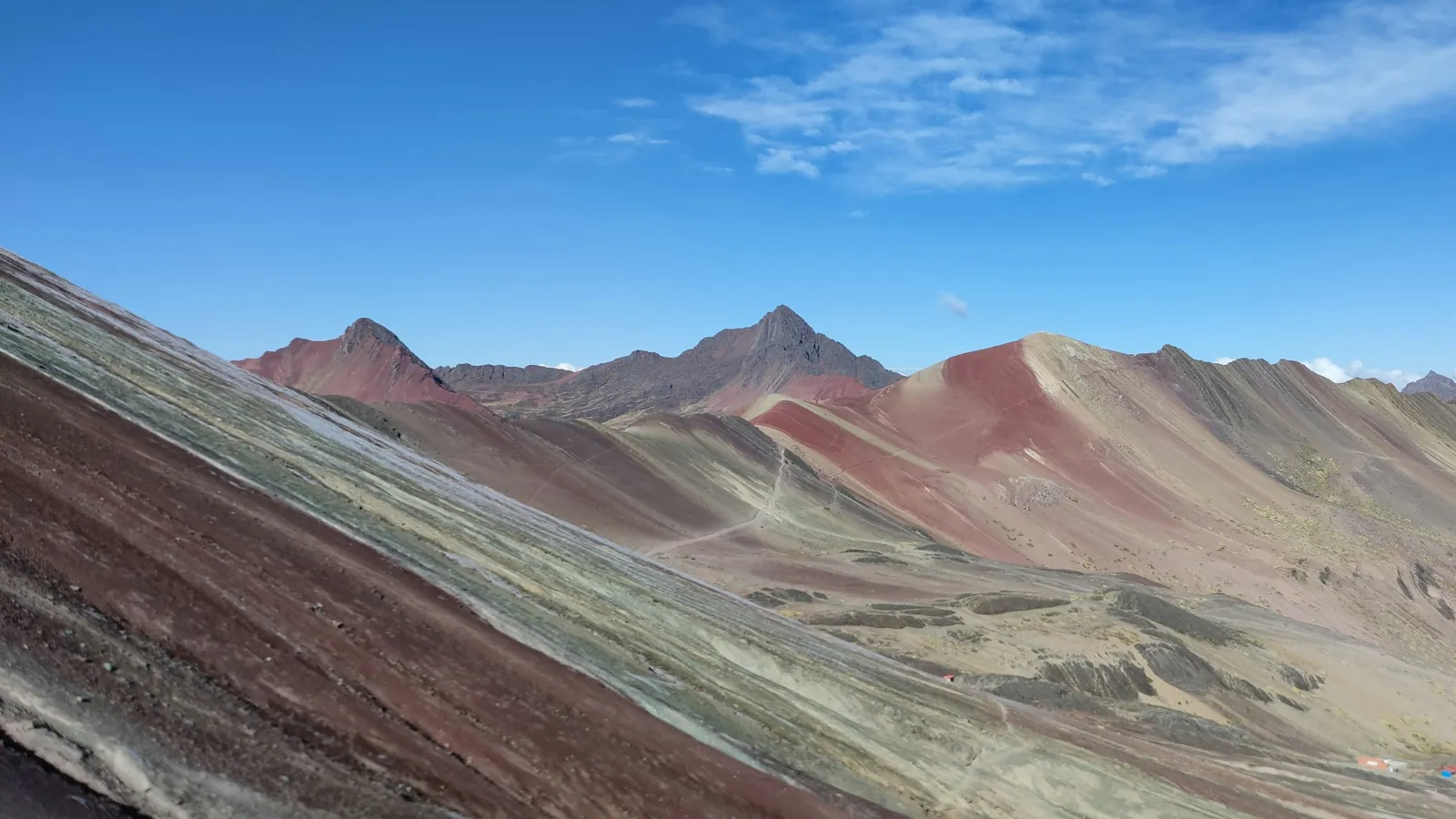
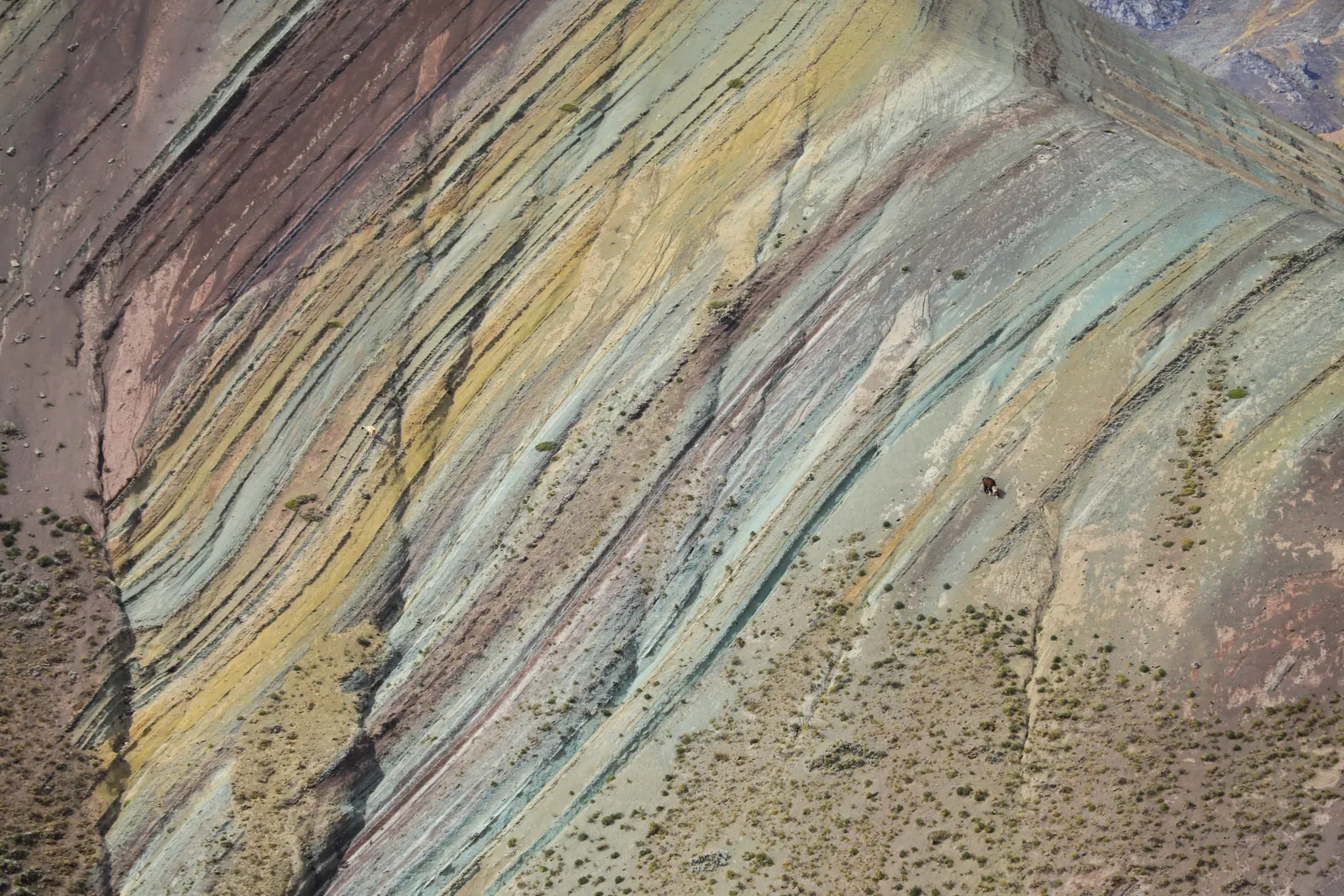
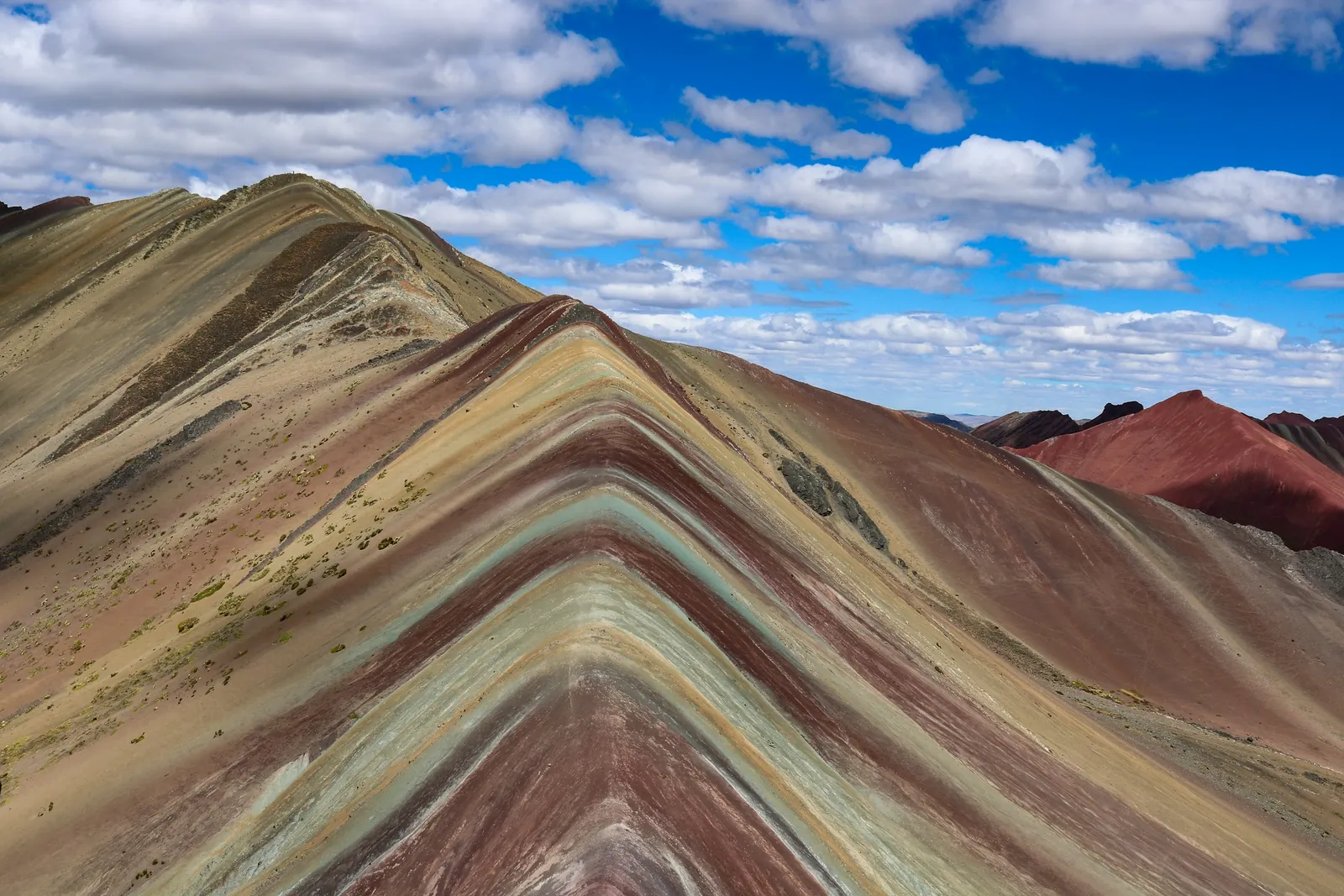
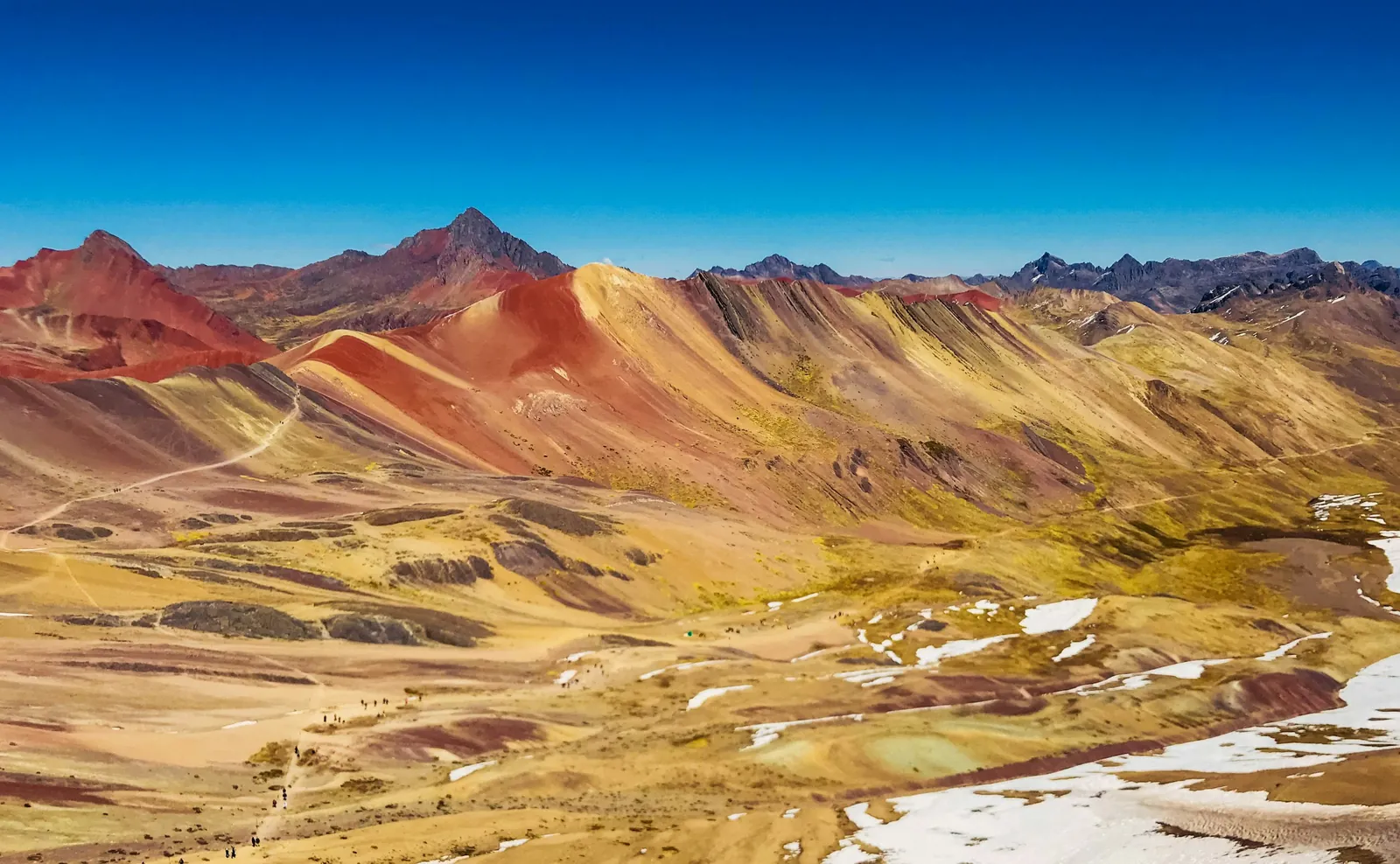
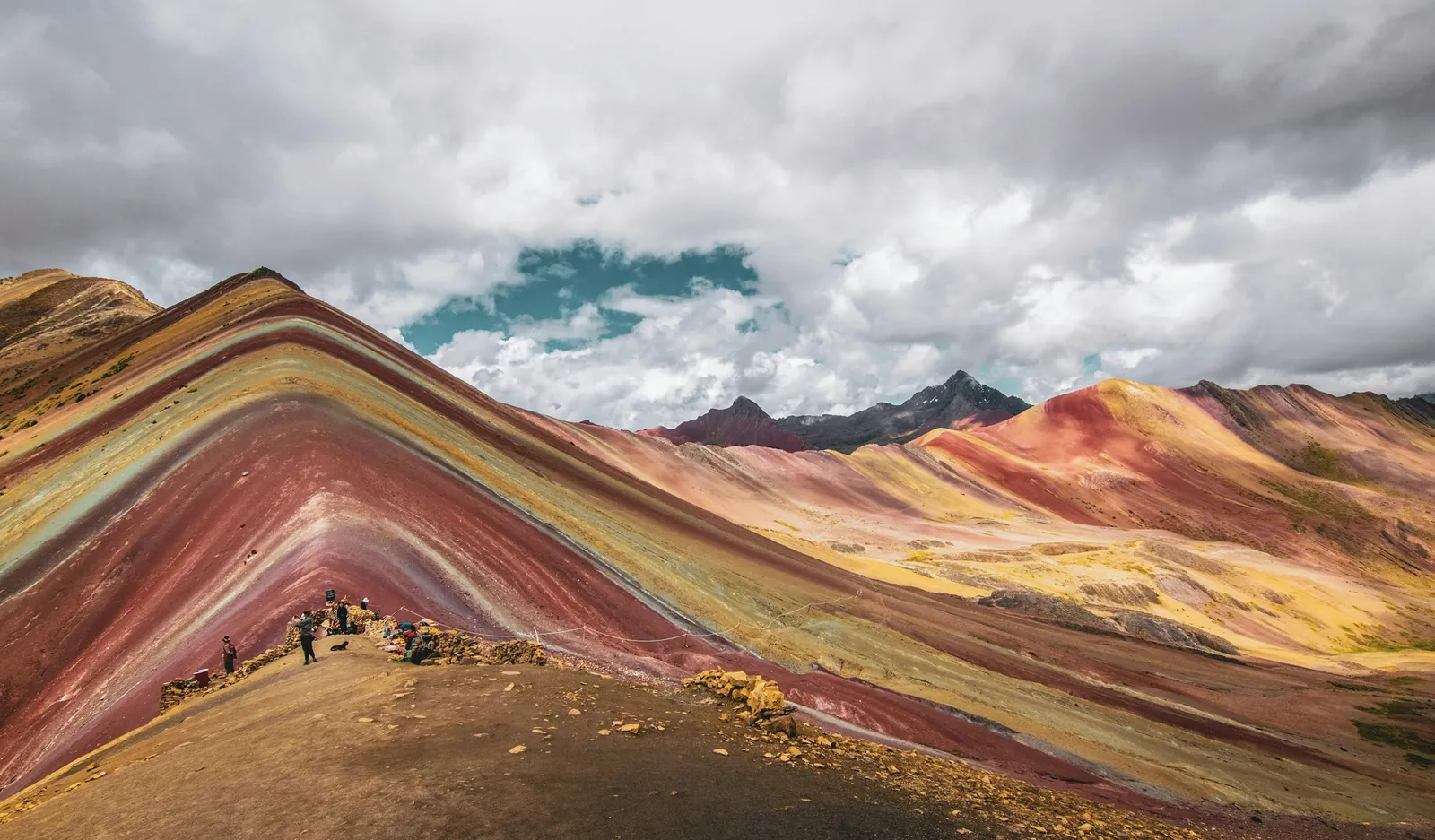
Rainbow Mountain is colourful because it is a stack of different sedimentary rocks, and each layer has weathered to its own colour. Iron-rich clays give the reds, quartz sandstone the whites, sulphide-bearing sandstone the mustard yellow. César Muñoz of the Sociedad Geológica del Perú told BBC Mundo in 2018 that the colours come from the oxidation of the minerals by the area's humidity, plus erosion. The article dates the sediments to between 65 and 2 million years ago.
That is the short answer. The longer one has two parts that circulate without sources: how the ice story is told, and how much to trust the photos. Where we found nothing solid, the text says so.
Rainbow Mountain minerals: which rock gives which colour
The most detailed breakdown we found comes from the Cultural Landscape office of Cusco's regional culture directorate, as reported by Andina in 2016. It is a descriptive list, not a published lab analysis, and our search turned up no INGEMMET or peer-reviewed study of Vinicunca's strata.
- Pink: red clay, mudstone and sandstone.
- White: white quartz sandstone.
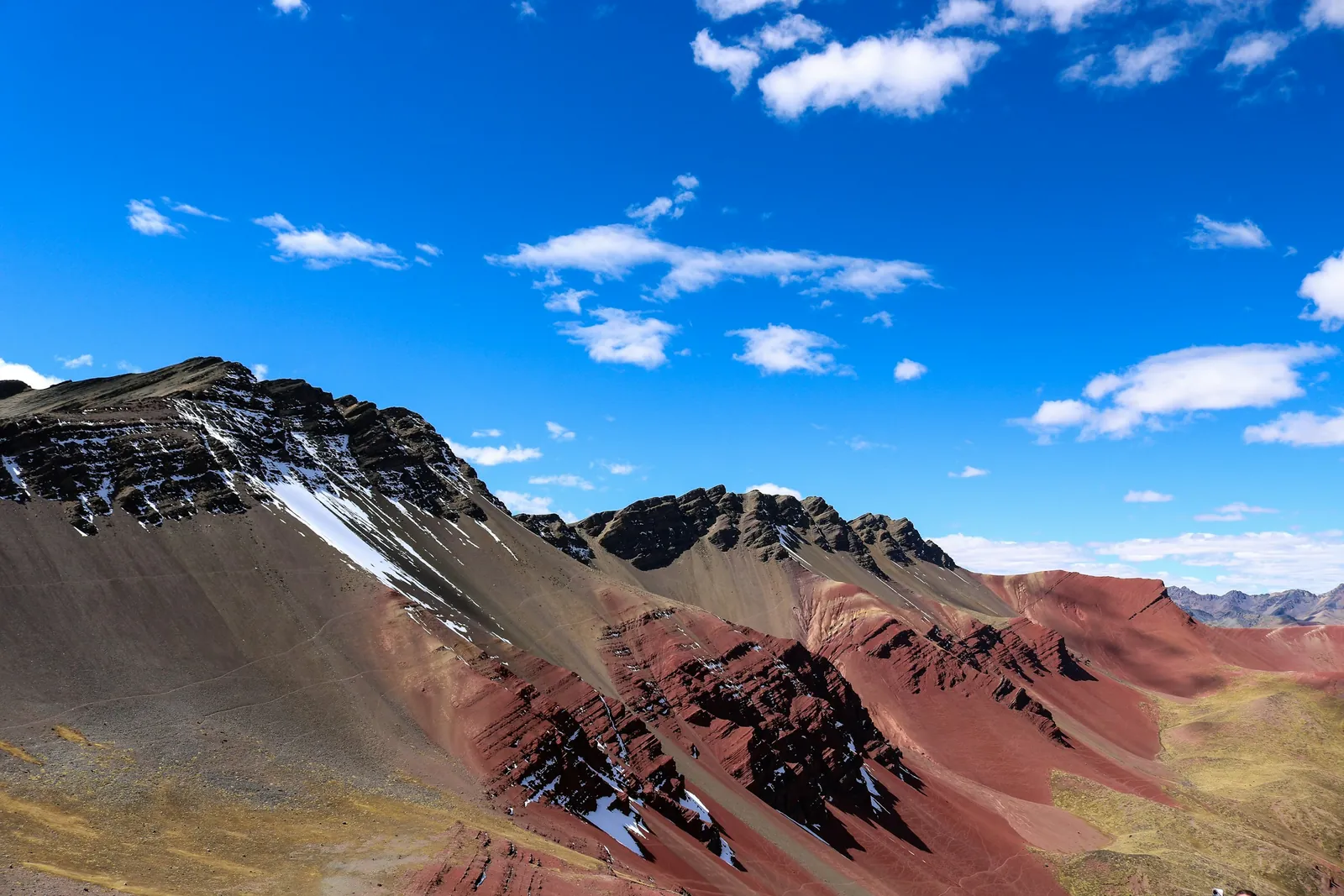
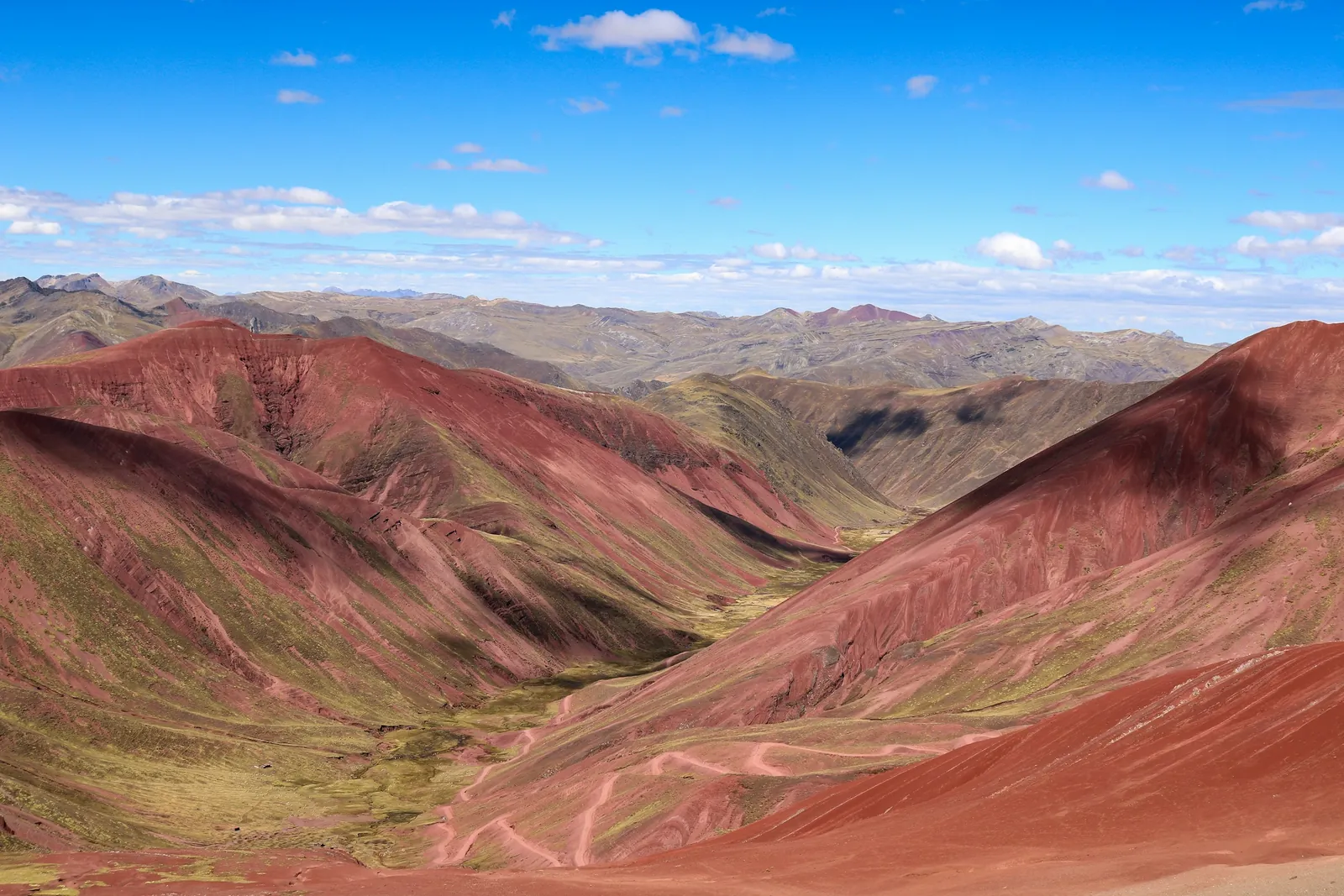
- Red: iron-rich clays from the Upper Tertiary.
- Green: phyllites and clays rich in iron and magnesium.
- Mustard yellow: calcareous sandstone rich in sulphide minerals.
- Brown, maroon and purple: limonite and marl rich in calcium carbonate.
- Earthy brown: manganese-bearing conglomerate from the Quaternary.
Treat the last line as unsettled. Other summaries of the same study say magnesium, not manganese. You will also see "14 minerals" repeated across travel blogs; we found no analysis behind that number.
Why the stripes stand on edge instead of lying flat is usually put down to the uplift of the Andes. That explanation appears in travel blogs, and we found no geological paper for it at either Vinicunca or Palcoyo, so we leave it as the likely story, not a finding.
Did melting ice reveal the colours?
The version you will read most often says climate change melted the ice that hid Vinicunca and the colours appeared. BBC Mundo put that to specialists in 2018, and they did not back it in full.
Juan Carlos Gómez, of the Instituto Geofísico del Perú, said the hill was partially covered by ice and had seasonal snow until the early 1990s. Fabián Drenkhan, of the Pontificia Universidad Católica del Perú, said that without evidence of what exactly happened on this mountain he would be careful about claiming it, though the glaciers around it have melted considerably. Local residents told Andina in 2016 that these hills were snow-covered in past decades.
So the stripes are rock millions of years old; they did not form when the ice left. A thinner snow line may have let more of them be seen. NASA's Earth Observatory, in a 2023 image of Peru's rainbow peaks, credits their hues to millions of years of erosion and weathering and draws no link to glacier loss.
Dates are where the story gets loose. Wikipedia, citing a Weather Channel piece, says the glacier caps melted in 2013. We found no scientific source for that year. What is documented is that visitors began arriving in numbers in early 2016, according to an official of the Pitumarca municipality quoted by BBC Mundo.
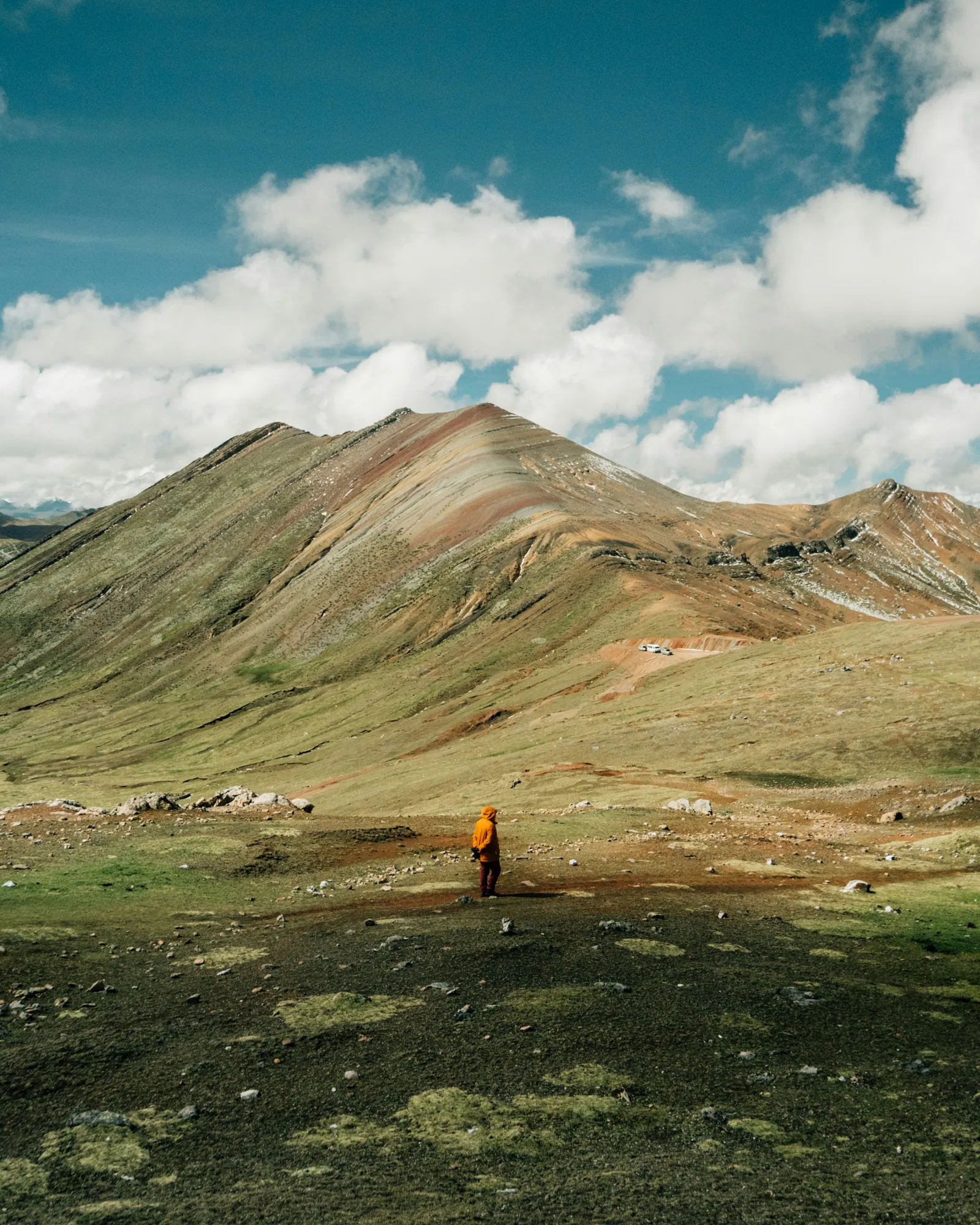
The photos, the light and the rain
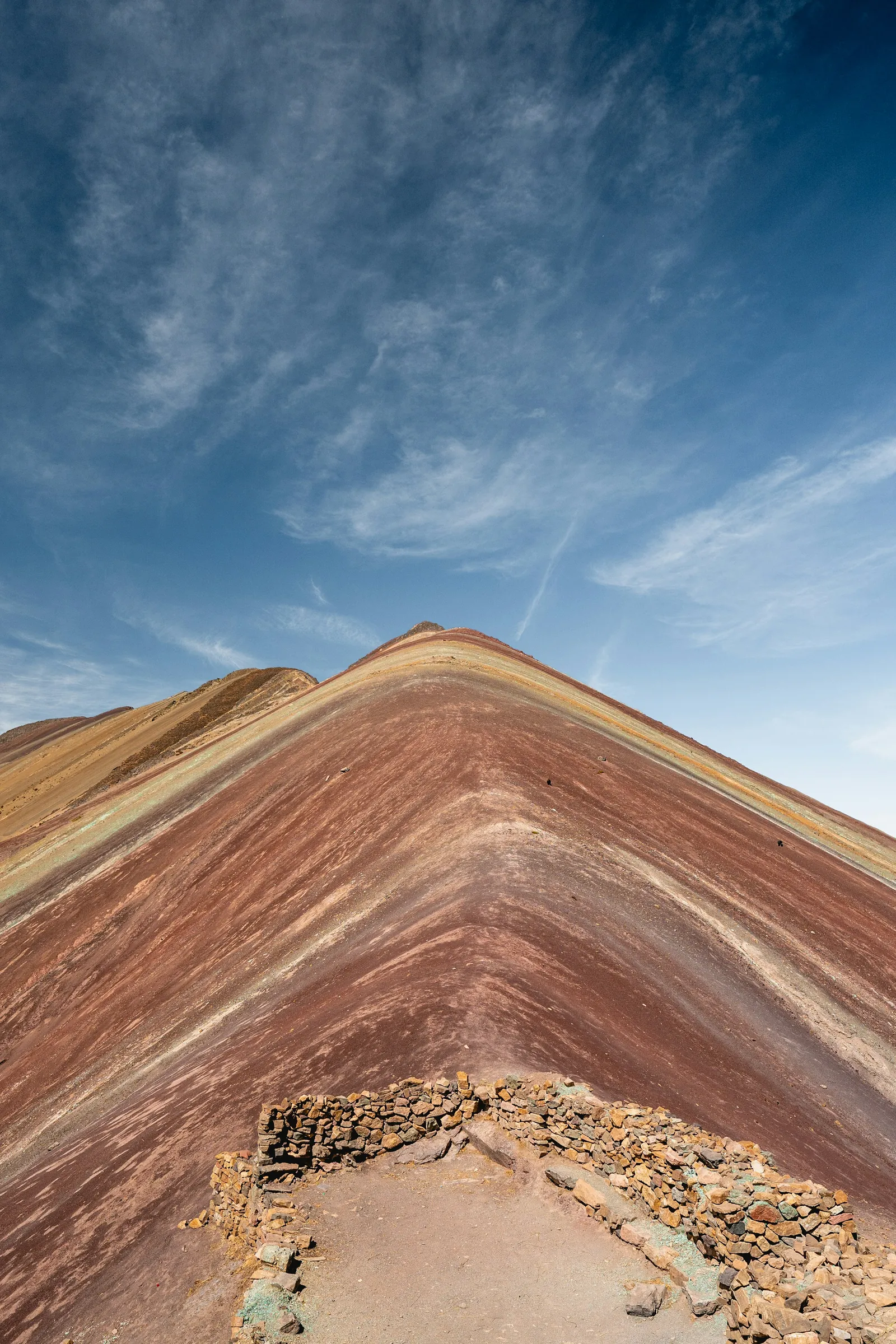
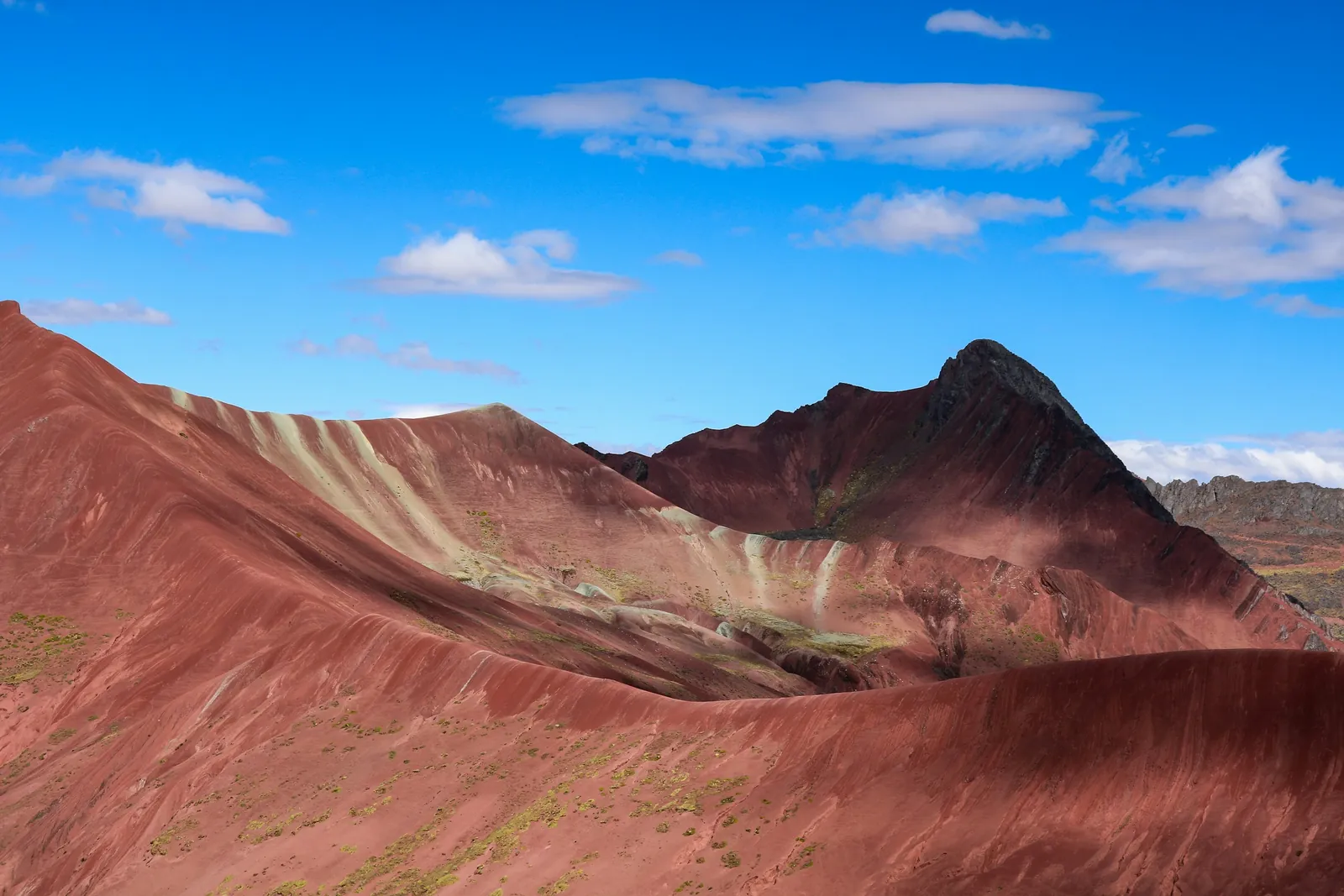
Real photographs of Vinicunca exist, and so do altered ones. Snopes checked a widely shared image in 2017 and found it showed a real place in Peru with colours that had been changed. If a picture looks like a highlighter, ask who took it.
Beyond retouching, we found no measurement of how the hour or the weather changes what you see. The rock does not change; the light on it does. Sources disagree on whether morning or afternoon is kinder, and most are tour blogs, so we will not name a magic hour. What we can give is our own schedule. On our private Rainbow Mountain day you are at the summit between 10:30 and 11:30, after a pickup at 04:00 to 04:30 and roughly three hours of driving. On the Palcoyo day it is 10:00 to 11:30.
For season, Peru's tourism board (PromPerú) names April to December, the dry months, as the more pleasant and sunny time for Palccoyo. Month-by-month weather, and why we would not go in the middle of the rains, is in our complete Rainbow Mountain guide.
Palcoyo's stone forest and its three striped peaks
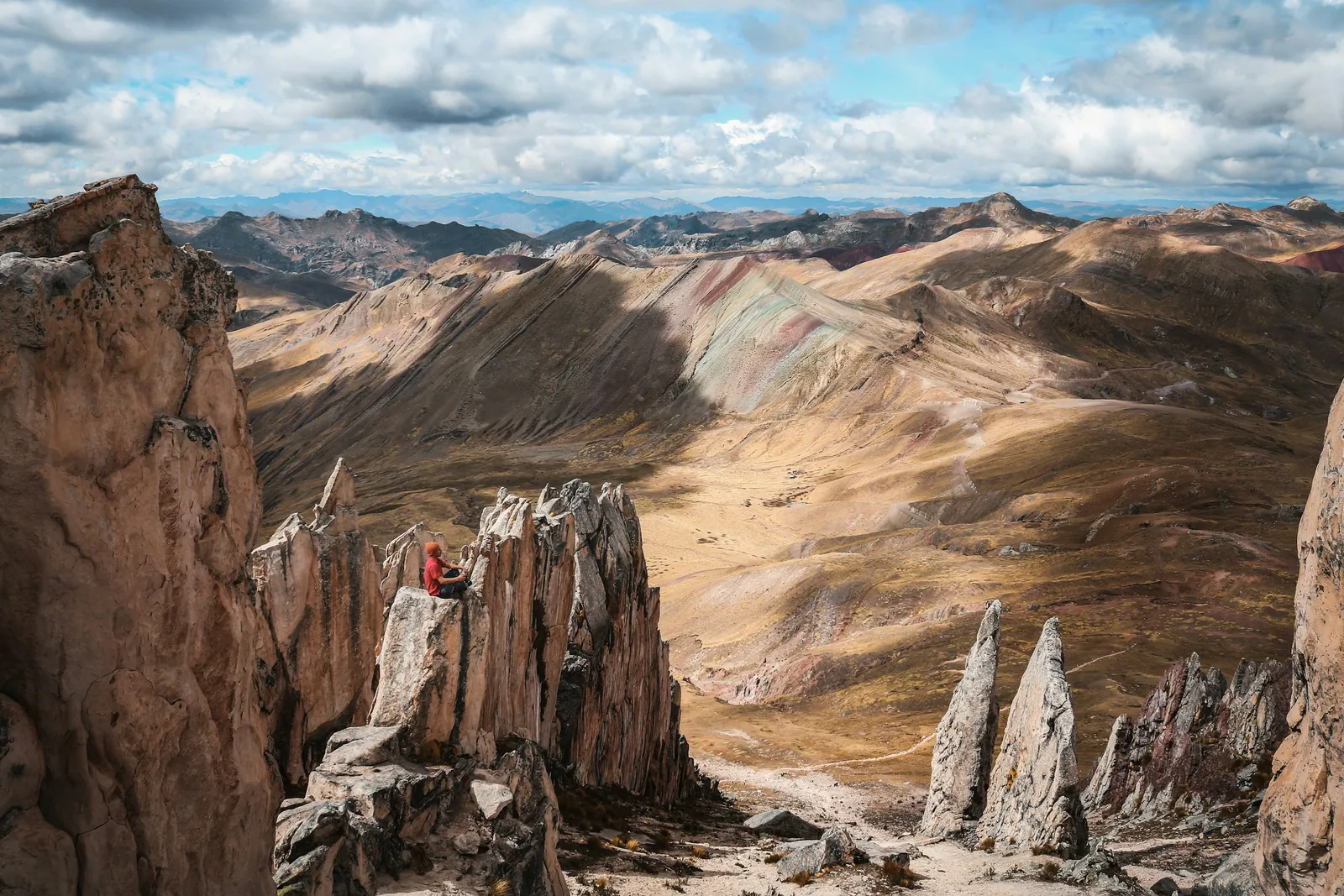
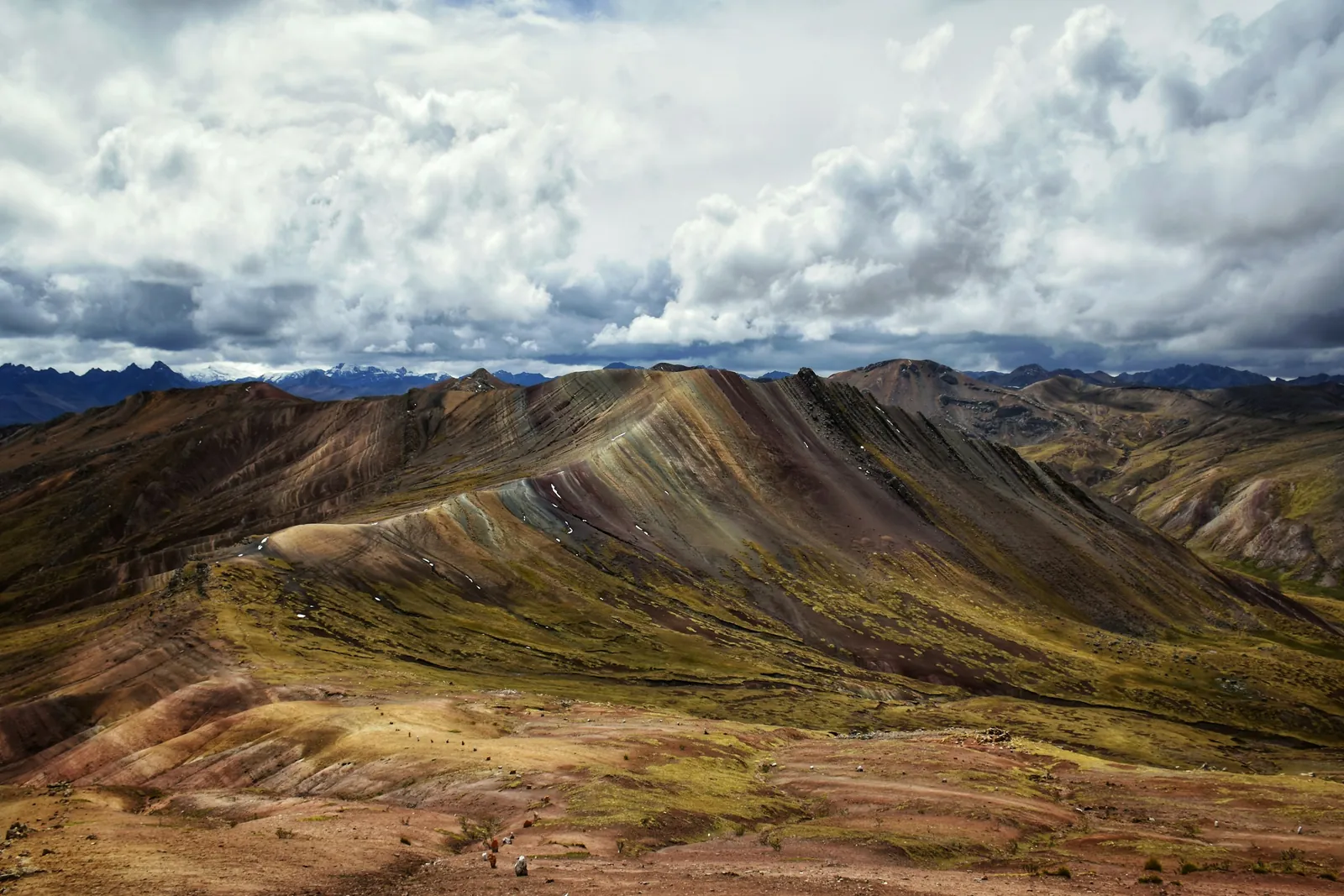
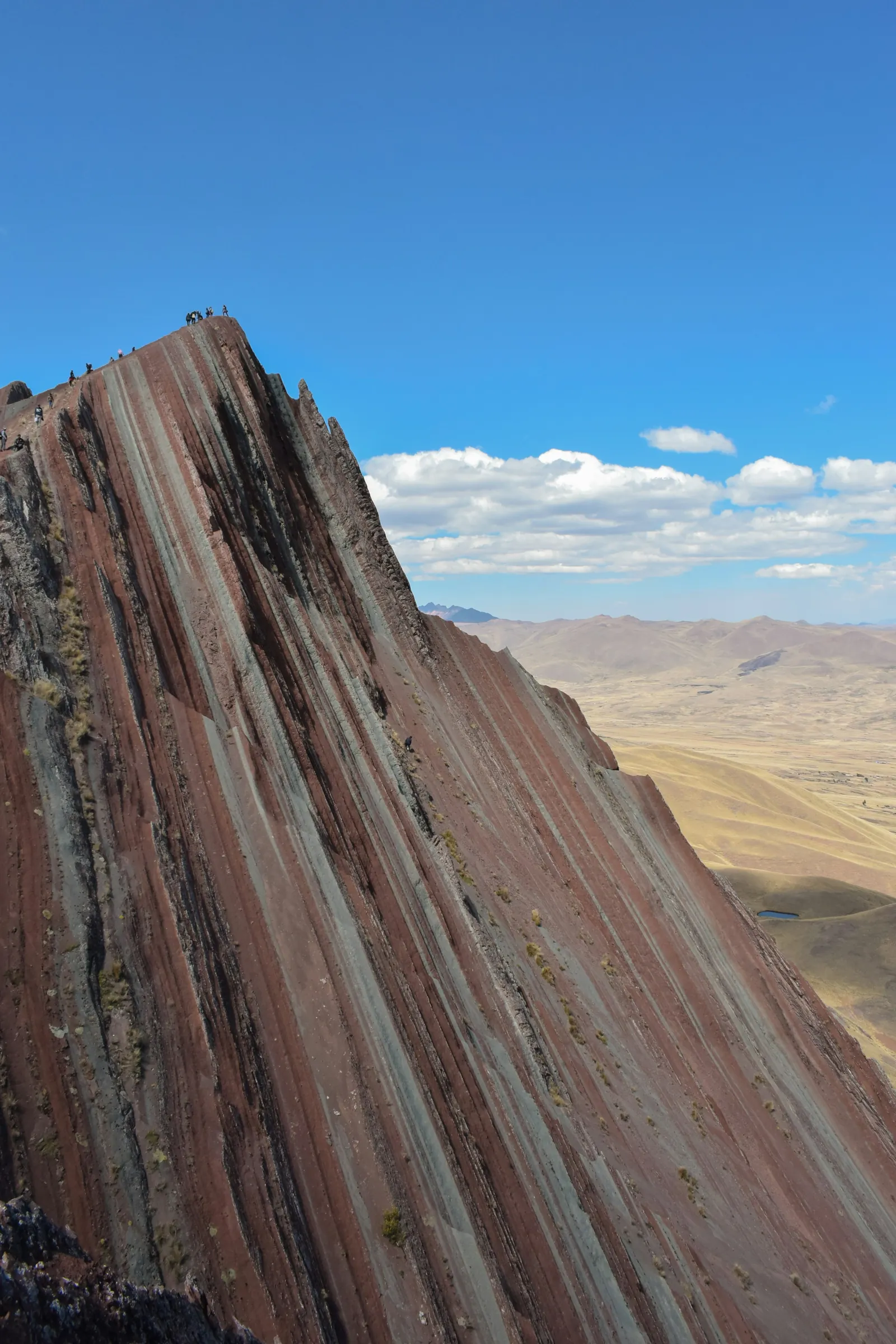
Palcoyo, also spelled Palccoyo, is near Checacupe, in Canchis province, about 100 km south of Cusco, at roughly 4,900 metres according to PromPerú. PromPerú says its colours come from "several minerals, such as iron oxides and clays". We found no study comparing its layers with Vinicunca's, so we cannot tell you they are the same rock.
On our Palcoyo trekking day, the walk starts at 4,200 m and reaches 4,900 m, passing the stone forests before the three coloured peaks come into view. The guides explain the origin of the mountain along the way.
The stone forest is a field of rock pillars along the route. Andina says it formed naturally millions of years ago. PromPerú puts the landscape down to natural erosion over thousands of years. Those timescales differ by a factor of a thousand and neither cites a study, so the age is open. Both agree on erosion.
Seeing the colours: Vinicunca or Palcoyo
Both are private day trips from Cusco in our programme. The Rainbow Mountain trek to Vinicunca climbs to 5,036 m by our tour page (some sources give up to 5,200 m) and takes about 2.5 hours up. Palcoyo tops out at 4,900 m, with about 1.5 hours of trekking to get there on our itinerary. We compare them side by side in Palcoyo vs Vinicunca, and the practical details of the second are in our Palcoyo Mountain guide.
Questions people ask about the colours
Is Rainbow Mountain real or edited?
The mountain is real. Some of the most shared pictures of it are edited; Snopes documented one in 2017. The unretouched colours are those of the rock layers listed above.
Why is Rainbow Mountain striped?
Because the rock beneath the surface is layered, and the layers contain different clays, sandstones and mineral-rich sediments. The oxidation Muñoz describes, plus erosion, turned them into bands you can read from the viewpoint.
Do Palcoyo and Vinicunca have the same minerals?
Unknown. Both are described with iron oxides and clays, but no comparative analysis exists in the sources we could reach.
If you want to see them on a day that suits your acclimatisation and the season, write to us with your dates and the number of travellers and we will tell you which of the two fits.
Keep reading
Photography: Andrea Pasquali / UnsplashDylan Shaw / UnsplashAndy Salazar / UnsplashJonathan Phelps / UnsplashJean Vella / UnsplashJonathan Phelps / UnsplashEddie Kiszka / UnsplashJonathan Phelps / UnsplashMcKayla Crump / UnsplashMauro Lima / UnsplashIvan Vicente / UnsplashJonathan Phelps / UnsplashEduardo Flores / Unsplash