

Journal
The Uyuni Salt Flat in the Rainy Season: Mirror or Open Island?
The Uyuni salt flat rainy season is when the mirror appears, and when access can close. Dry vs wet months, risks, altitude, packing and how to get there.
The mirror effect on the Uyuni salt flat only exists when there is water on it, so it belongs to the rainy season. In the dry months, May to October, you get a white crust, salt patterns, Incahuasi Island and clean skies, but no reflection. Between roughly December and April a thin sheet of water can turn the flat into a mirror. The same water can close the island and reroute your tour. So the Uyuni salt flat rainy season is a different trip, with a different risk.
Dry season: a hard white surface and no reflection
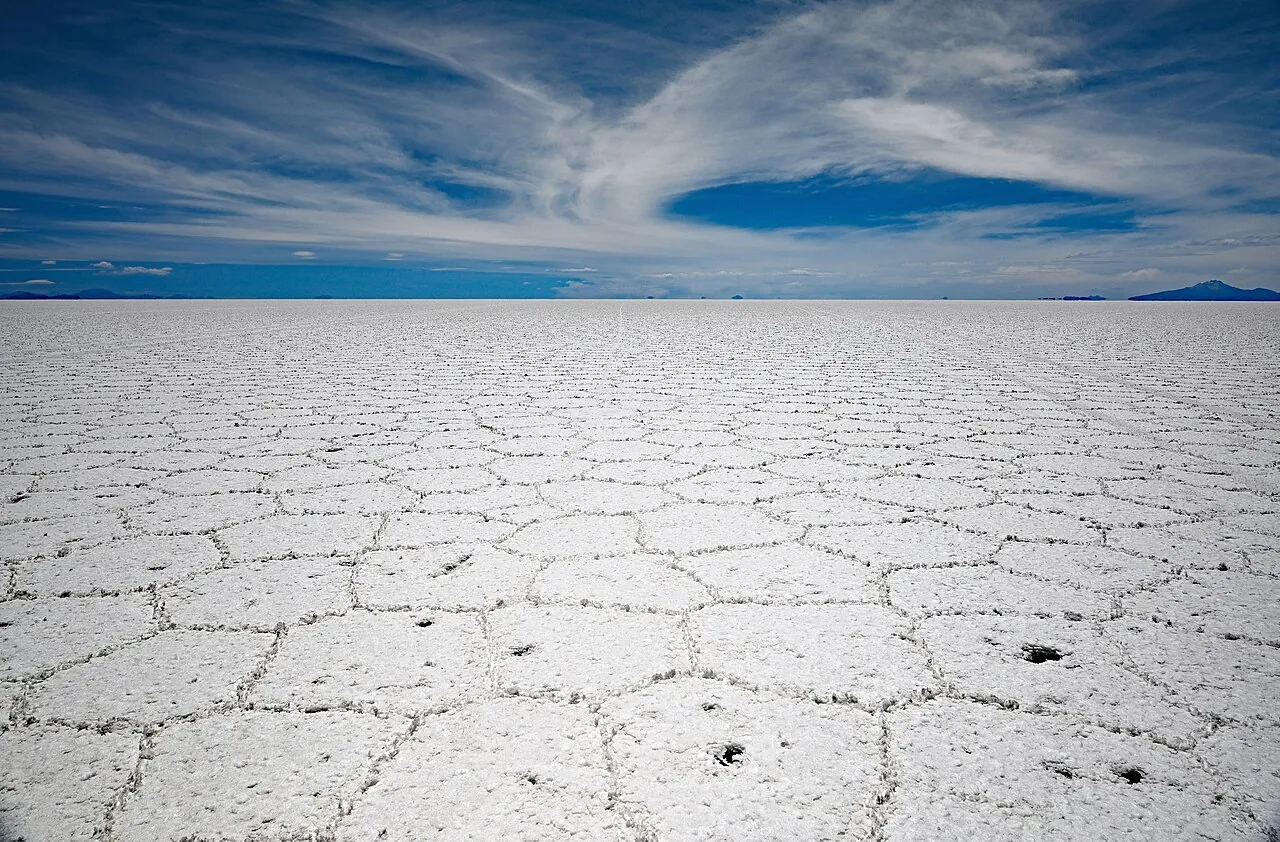
Dry means a hard, white surface, and the guides we checked agree that the flat is accessible from May to October. Our Bolivia FAQ describes it as dry with geometric patterns. Those are salt polygons, honeycomb shapes between one and two metres across, which researchers have linked to brine circulating under the crust.
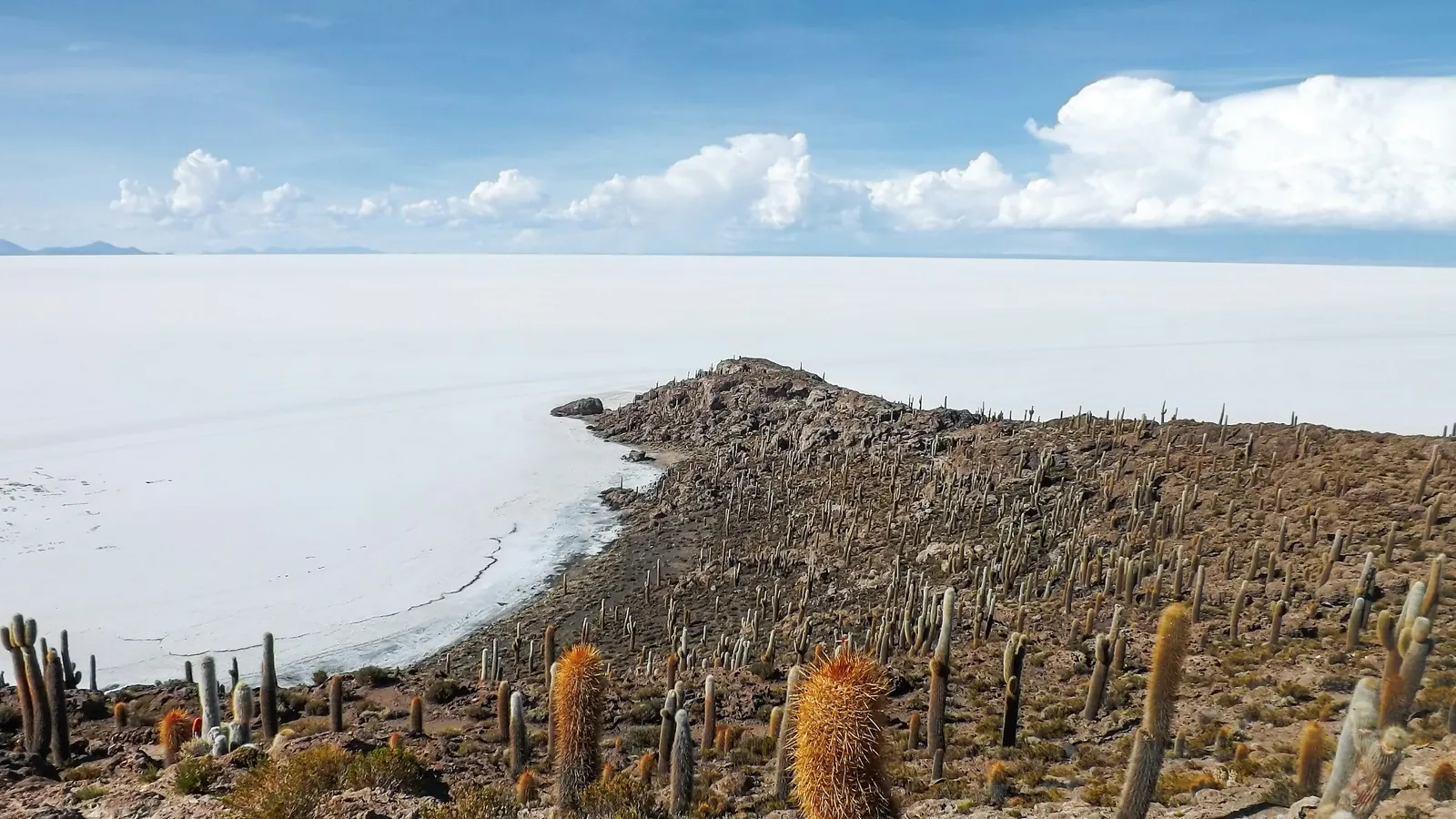
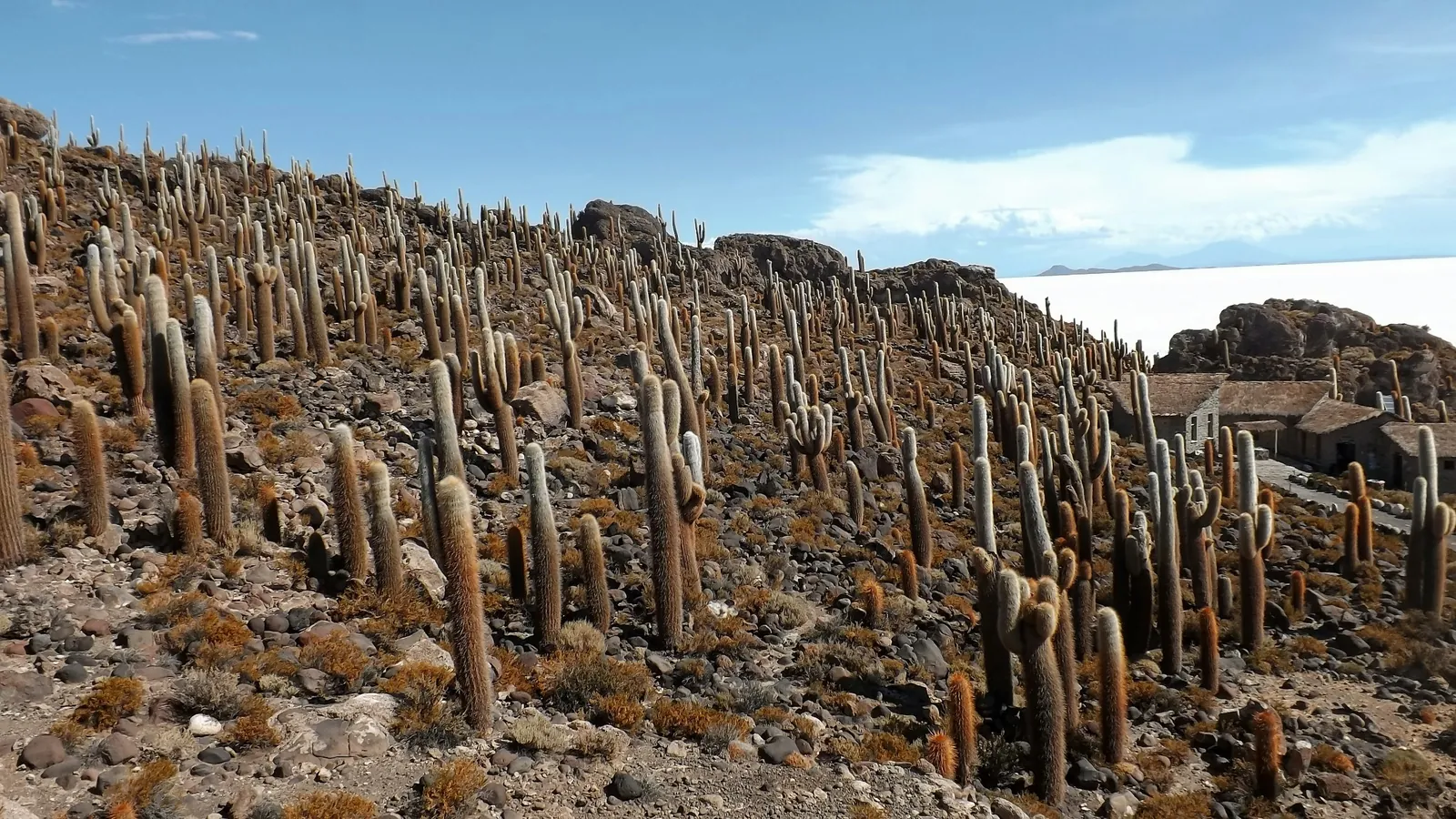
The dry season is also when the whole route is open. Incahuasi Island, 102 km from the town of Uyuni, is reachable, and on our itinerary you walk to the top for the view over the flat. The skies are clearer, which our FAQ calls sunny days and clear skies. Expect cold and company: nights fall well below freezing in mid-winter, and operators list May to September as peak season, when departures fill up.
When does the mirror effect appear on the Uyuni salt flat?
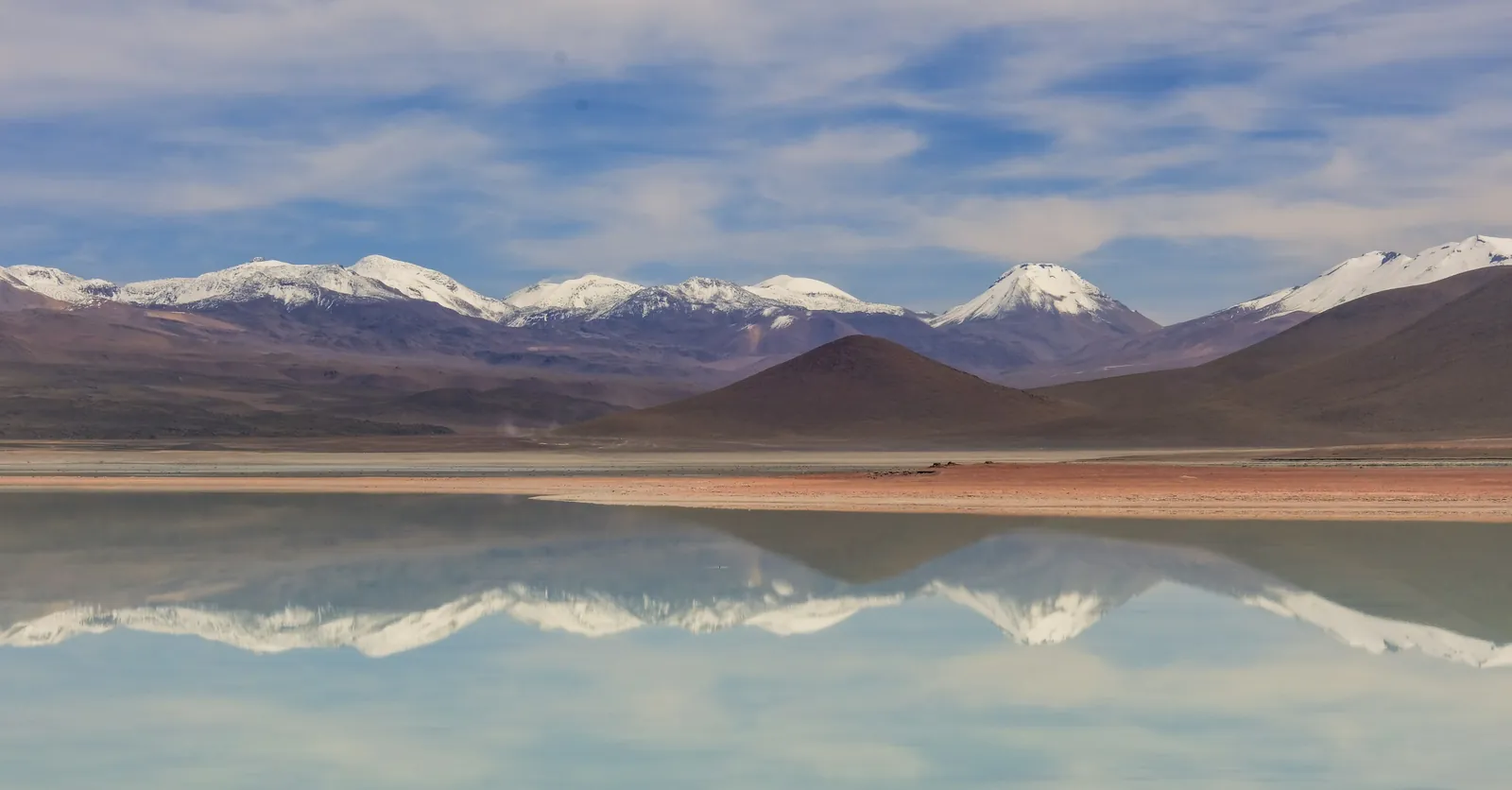
Our Bolivia FAQ gives the green season as November to April and places the mirror between December and April. Other guides narrow it: Bolivia Hop, an operator based in the region, reports the most consistent reflection from late December to March, with January and February the deepest and November and April as patchy transition months.
The mirror needs rain to have fallen, and it needs the right amount of water in the right place. Too little and you have damp salt. Too much and the flat becomes a lake you cannot drive on. In March 2025 an official from the Potosí region reported about 30 centimetres of water at Playa Blanca and around Incahuasi, and up to 50 centimetres along the shores. Nobody can promise you a mirror on a given day, including us.
What can go wrong in the Uyuni salt flat rainy season?
Four problems come up regularly in the sources we checked.
- Access to the flat is restricted. In January 2022 the Potosí authorities prohibited crossing the salar and reaching Incahuasi because of flooding, and NASA's Earth Observatory reported temporary prohibitions on crossing the flat that year. In March 2025, with water on the shores and in the middle, the Potosí government limited entry to the salar to between 07:00 and 17:00, with tourist police checking that no one stays overnight.
- Routes change. Bolivia Hop writes that excessive rain melts parts of the crust and leaves large sections impassable for 4x4 vehicles, and that operators sometimes reroute multi-day trips to the lagoons and Eduardo Avaroa Reserve. It also notes that Incahuasi is usually closed to tours from January to March.
- Flights are less reliable. The same guide says weather delays and cancellations on the El Alto to Uyuni flight are common in the rainy season.
- It is cold, and wet feet make it worse. The guide puts daytime temperatures at 15 to 21 degrees in the rainy season, with nights a few degrees either side of zero.
Our own tour page carries a warning for the first day: during the rainy season, visits to attractions inside the salt flat may be suspended without prior notice for safety reasons, and the itinerary can change with the weather on the last day. Our day-one sunset on the flat would be hard to keep under a 17:00 rule like the one from March 2025. If your dates are between January and March, tell us when you write and plan at least a spare day on either side.
Dry or wet: which season should you pick?
It depends on which photograph you have in mind. If the mirror is the reason you are going, choose the green season and accept that you may get half of it: reflections without Incahuasi, or Incahuasi without reflections. If you want the full circuit, the island, the polygons, the southern lagoons and the least chance of a rerouting, choose the dry season and accept a white, cracked surface with no mirror.
The best mirror months (January to March) are also the months with the most access problems. The edges of the rainy season, December and April, can be a compromise, but they are less reliable on both counts, and we would rather tell you that than sell you a date.
How high is Uyuni, and how does altitude change the trip?
The salt flat sits at about 3,656 metres, according to our Bolivia FAQ, and rain does not change that. The height matters more on the second day: the Los Flamencos ecolodge, where the tour sleeps, is at 4,500 metres, and the Stone Tree in the Siloli Desert is at 4,600. The US CDC advises raising your sleeping altitude gradually when you travel high (see its page on high-altitude travel), so take this tour after a few days in Cusco, La Paz or Sucre, not straight from sea level.
Bolivia Hop makes the same point: altitude illness depends on how fast you ascend and how high you sleep, not on rainfall. If you fly in, spend a night in Uyuni before the tour. If you have a heart or lung condition or have had altitude sickness before, ask your doctor before you book.
One day or three on the Uyuni salt flat
One day covers the flat. Three days cover the flat and the high-altitude lagoons, which is the version we run. Our Uyuni Salt Flat and Laguna Colorada tour is 3 days and 2 nights. It runs like this:
- Day 1: meeting at about 10:00, the Train Cemetery, Colchani, the Ojos del Salar, the salt hotel at Playa Blanca, Incahuasi Island and a sunset on the flat. Night at Hotel Cielo & Sal.
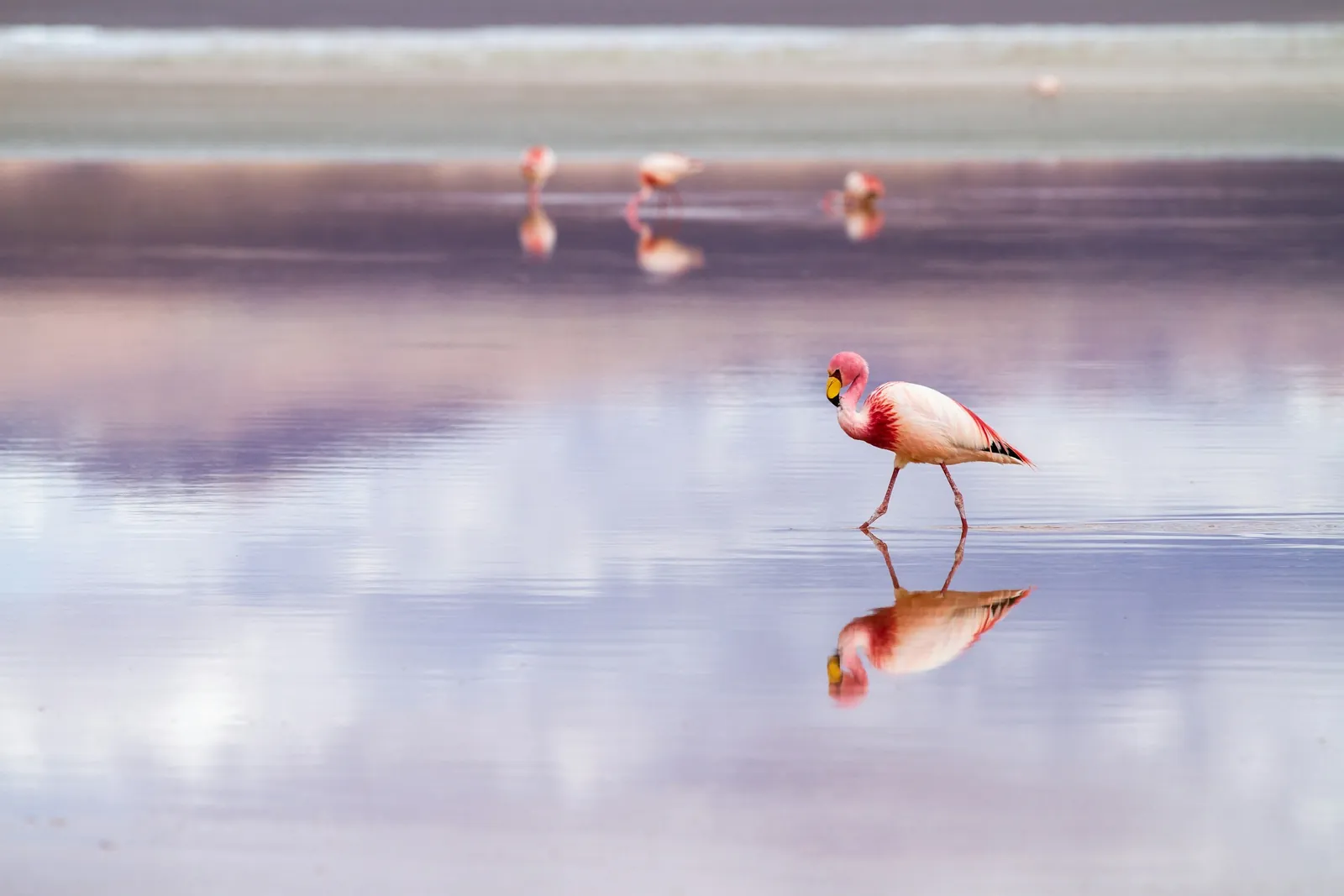
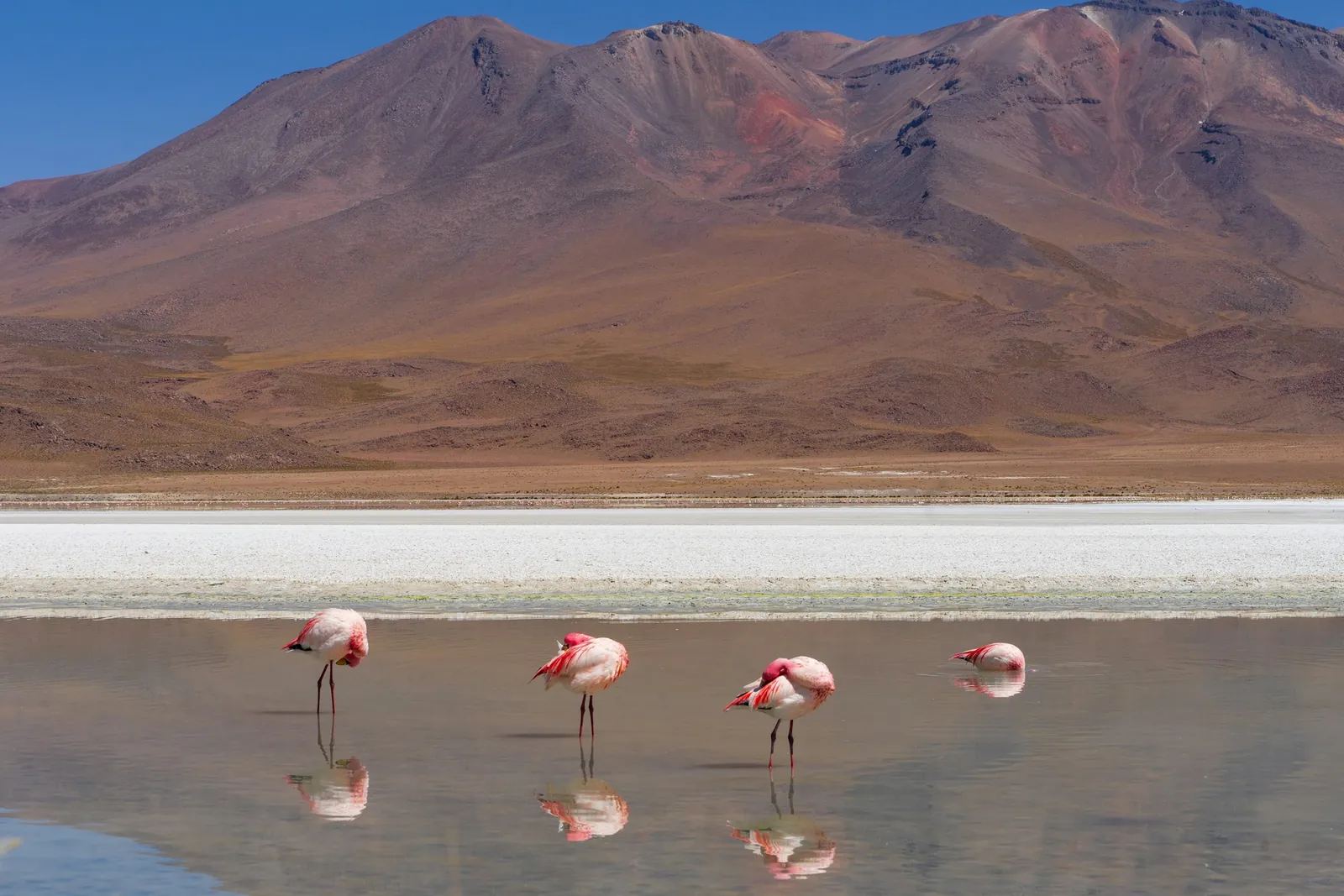
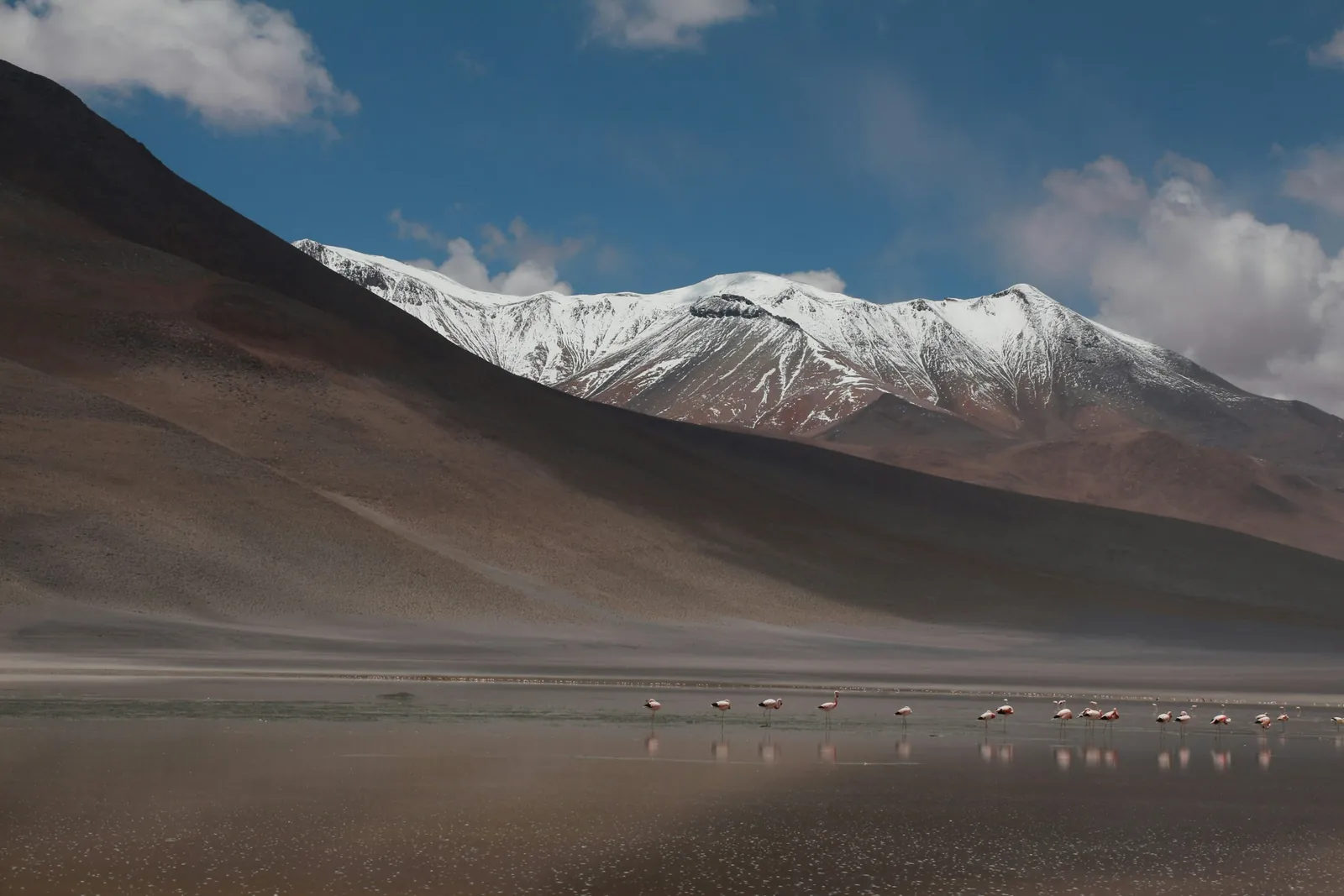
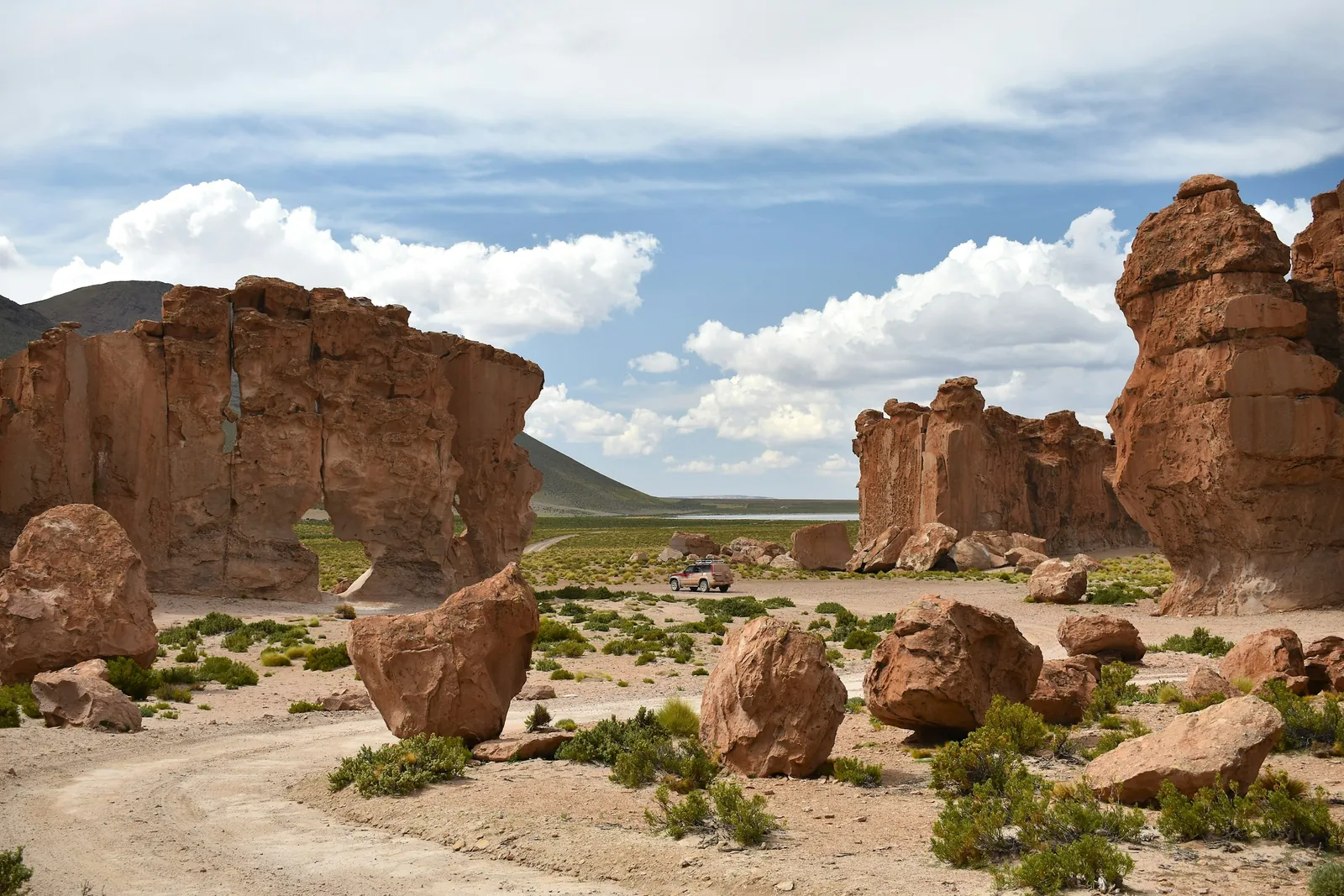
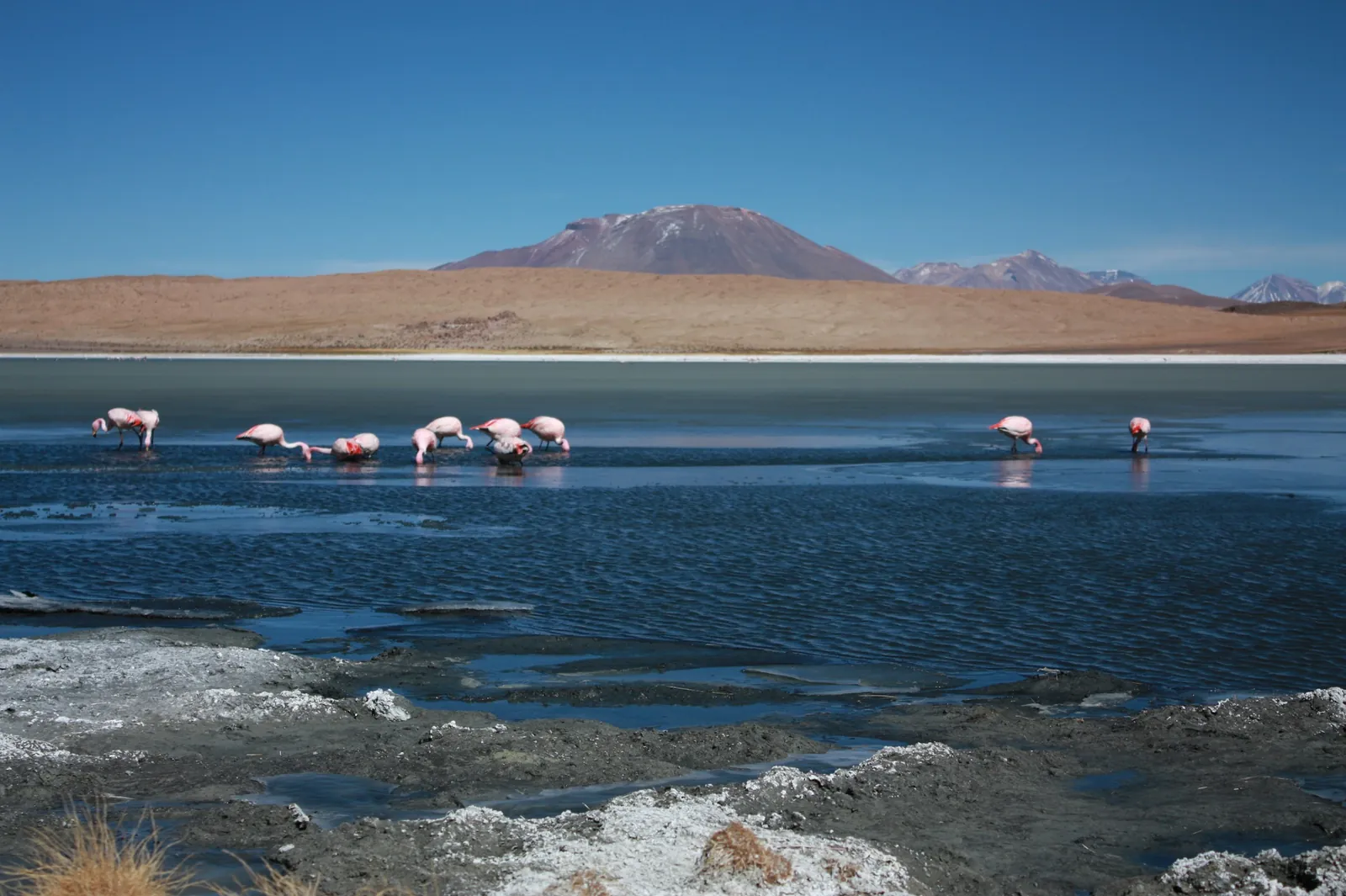
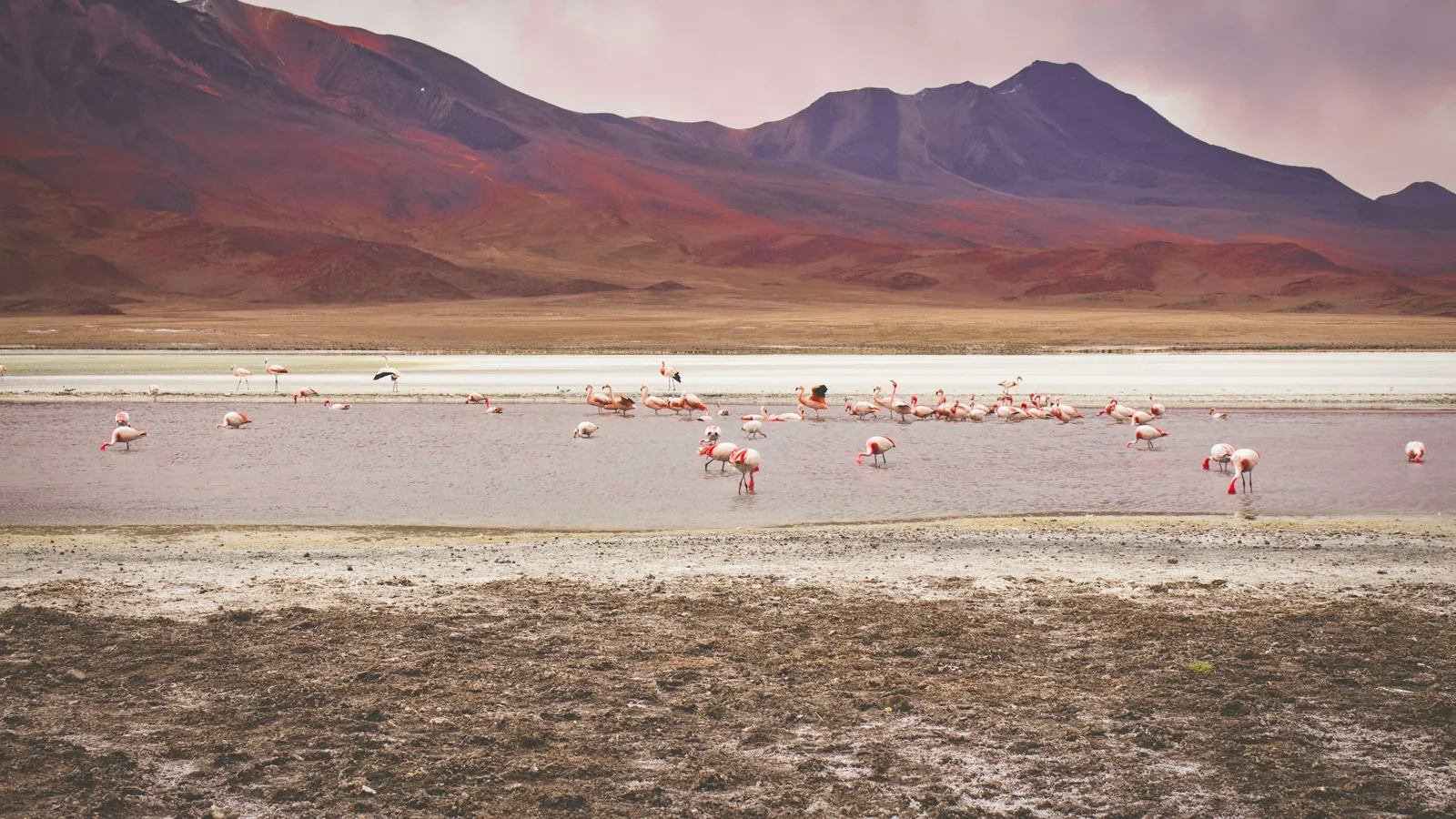
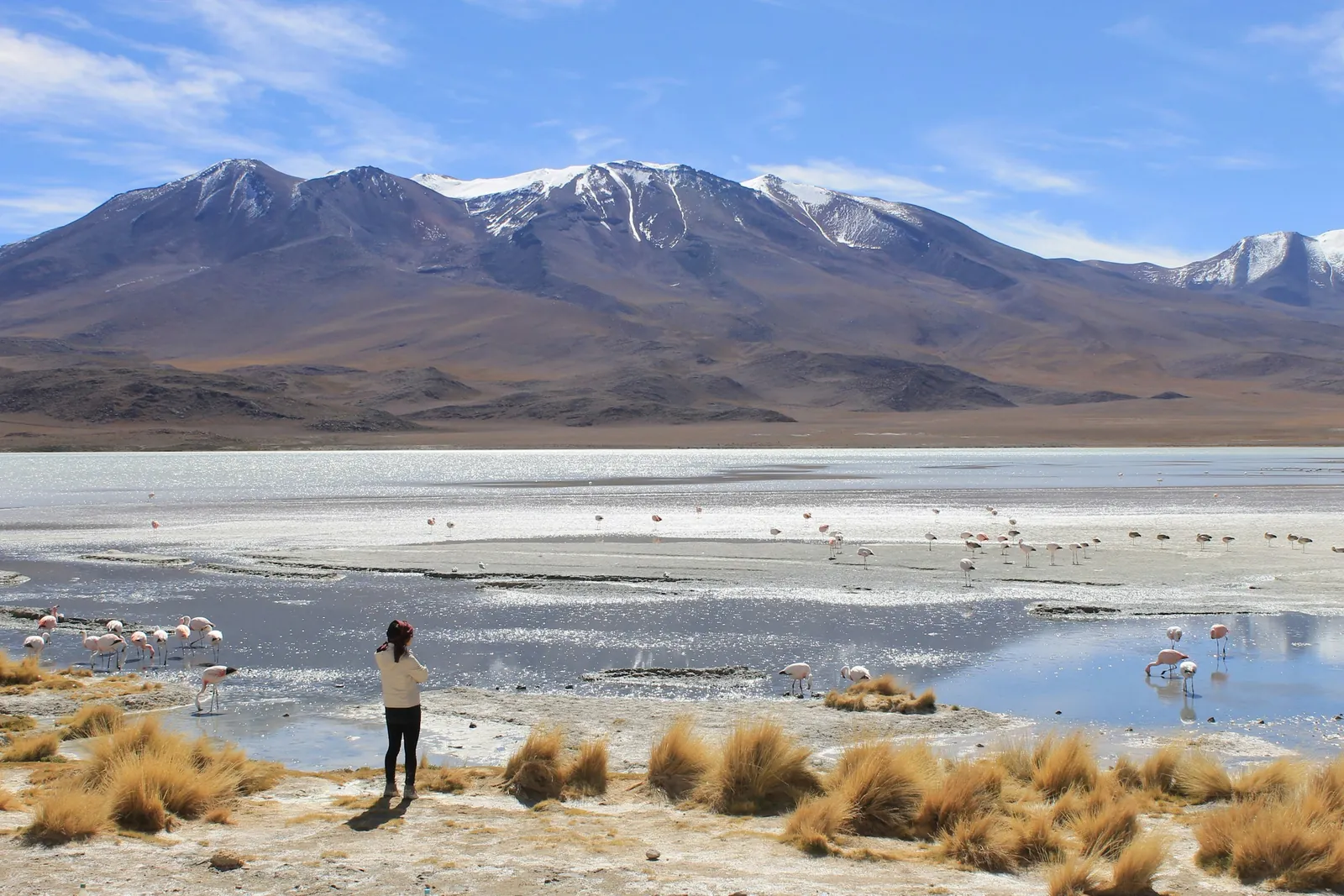
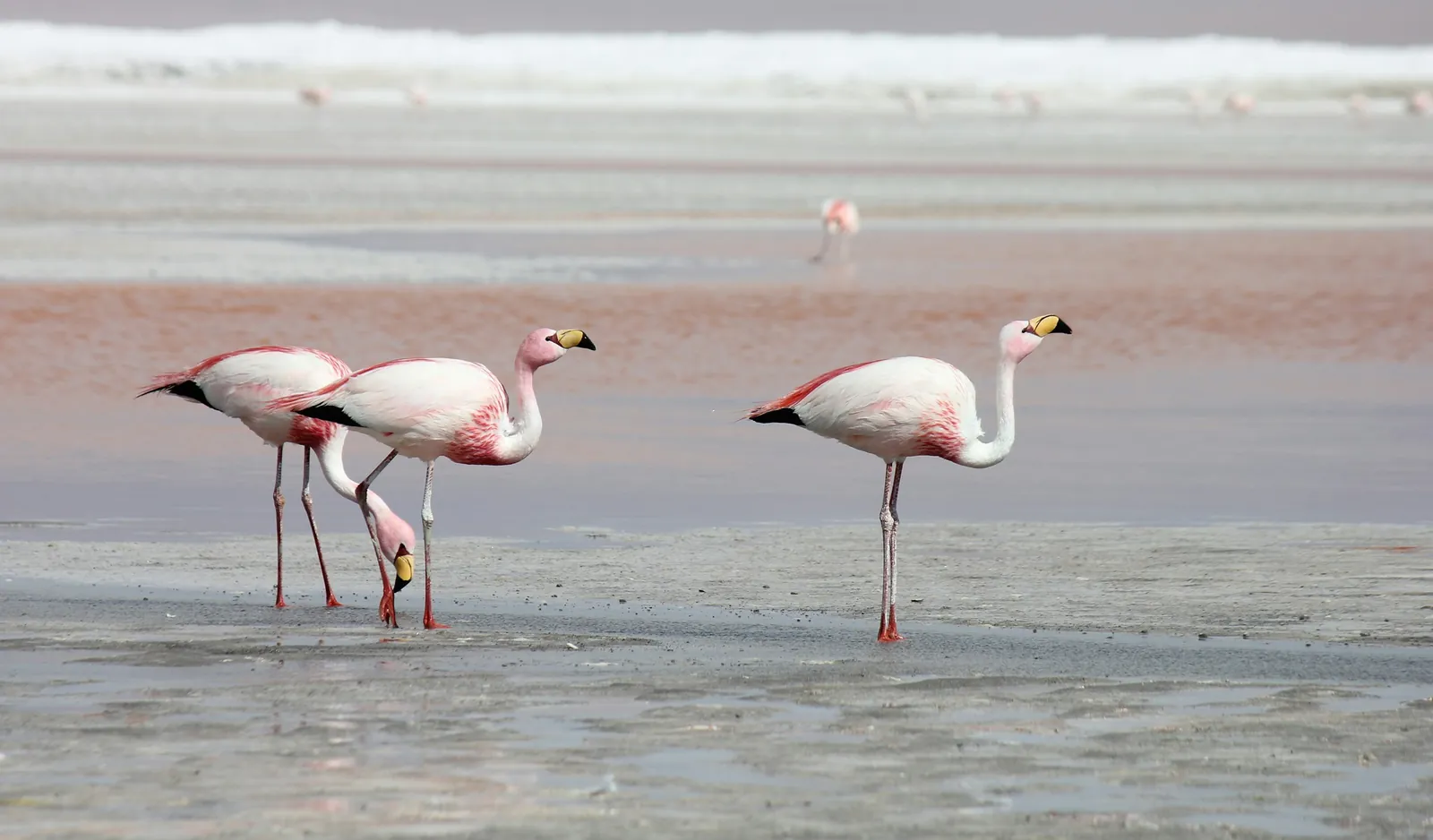
- Day 2: departure around 9:00 to the Ollagüe volcano viewpoint, Cañapa Lagoon and Hedionda Lagoon, with flamingos. Night at the Los Flamencos ecolodge.
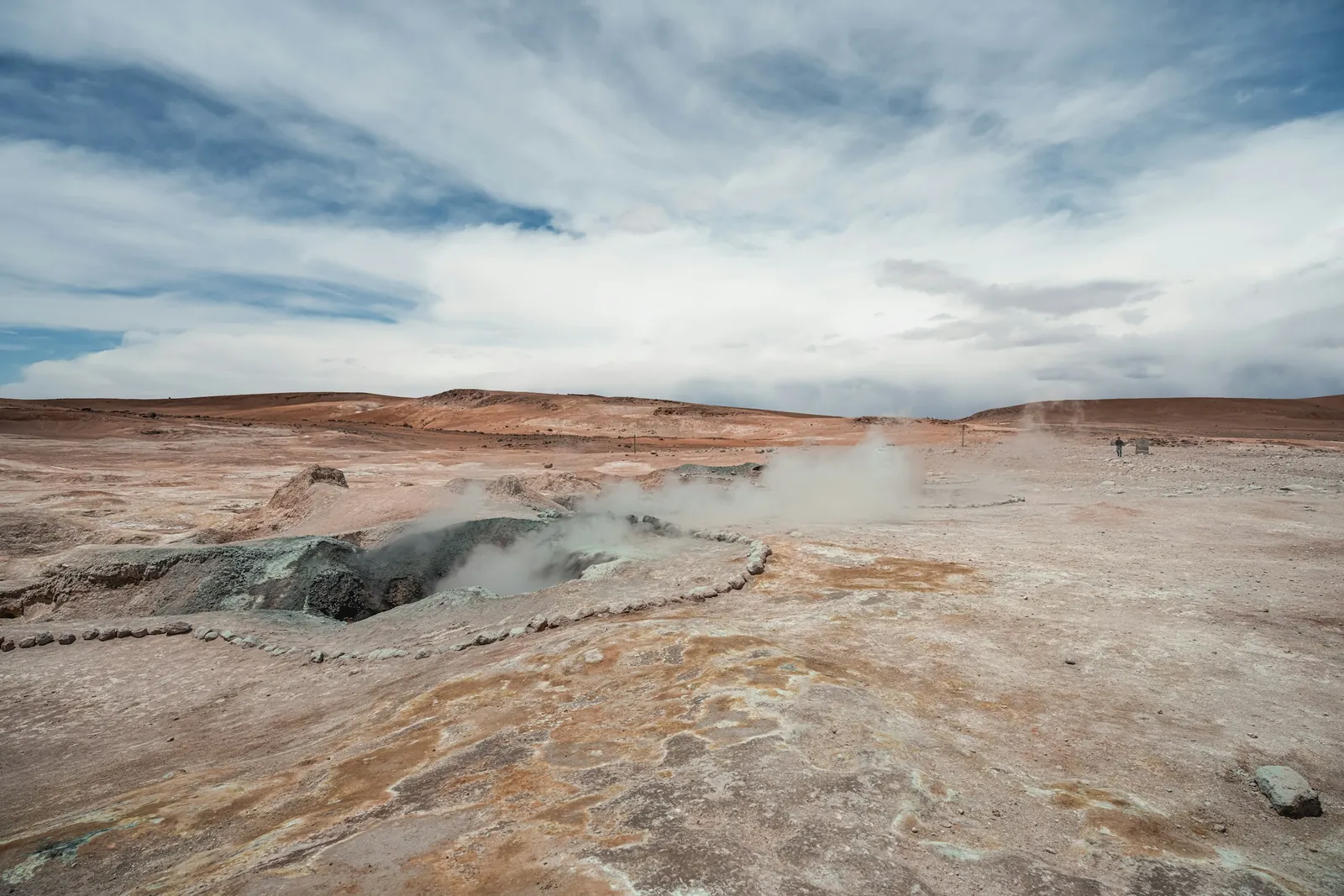
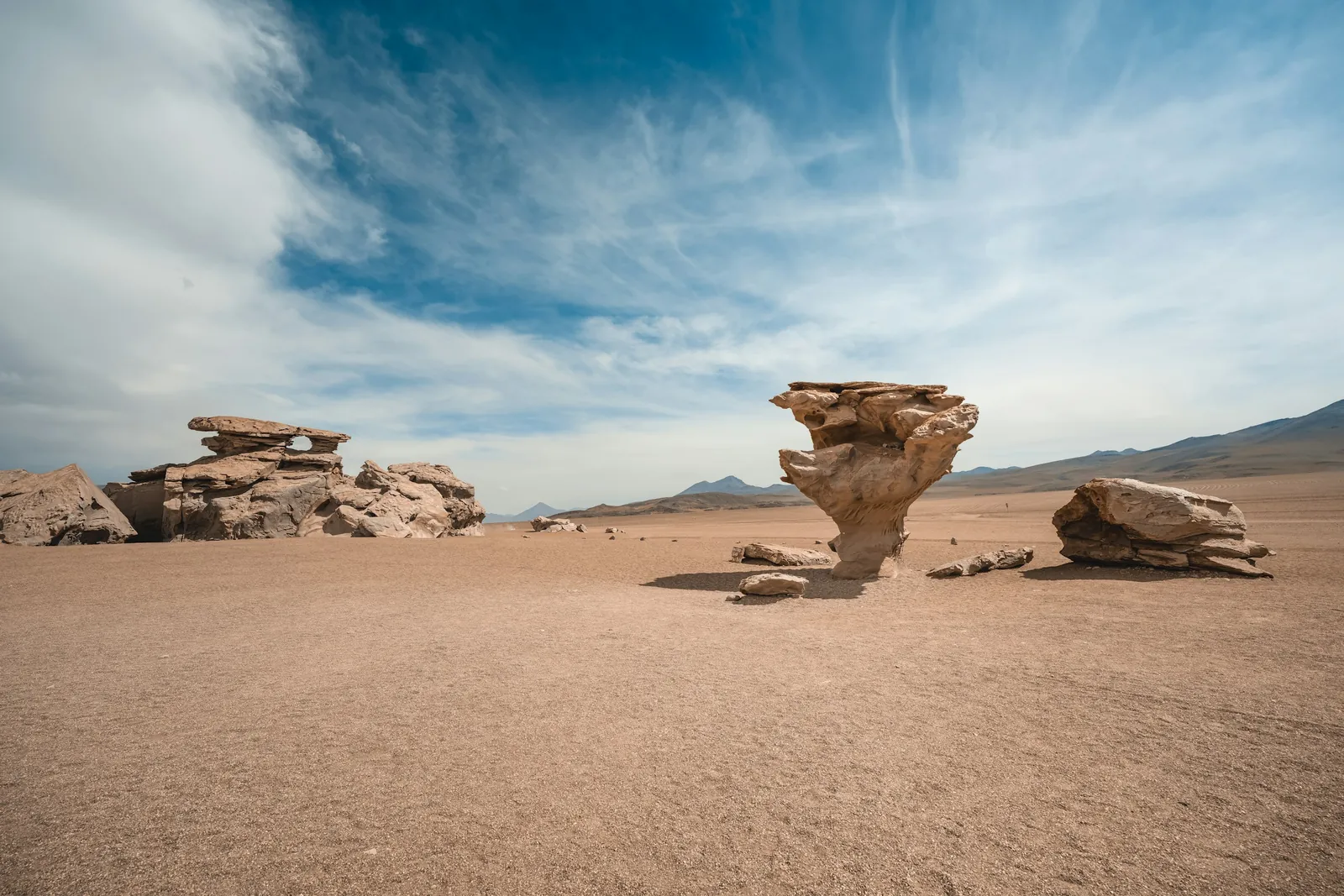
- Day 3: departure around 6:30 to the Stone Tree, the Sol de Mañana fumaroles and Laguna Colorada, then about six hours back to Uyuni, arriving around 18:00.
The tour is a shared departure: a 4x4 with up to four travellers and an English audio guide. The price includes two nights of accommodation and the meals listed, which are two breakfasts, three picnic lunches and one dinner. It does not include flights or transport to and from Uyuni, entrance fees, personal expenses, tips or travel insurance. The tour page lists the entrance fees as 30 bolivianos (about US$5) for Incahuasi Island and 150 bolivianos (about US$22) for the Eduardo Avaroa Reserve, so bring cash.
Shared means you split the vehicle with other travellers. If you prefer your own, our Bolivia FAQ says we can also arrange this route as a private tour with your own vehicle and guide. Prices are quoted for your dates rather than published, because no two departures run the same.
Packing for the Uyuni salt flat in the rainy season
- Layers, including something properly warm for the early mornings and for the night at 4,500 metres.
- Waterproof footwear with grip. Our FAQ recommends water-resistant shoes in the rainy season, and guides suggest sandals or flip-flops for walking in water on the flat.
- A waterproof jacket, not a shower-resistant one.
- Sunscreen, sunglasses and a hat.
- A dry bag or sturdy zip bags for the camera and phone.
- Cash in bolivianos. Guides report that ATMs in Uyuni are often empty, and the tour page lists the entrance fees in bolivianos.
We send a detailed packing list before departure.
How do you get to Uyuni from La Paz, Sucre or Chile?
Our tour starts in Uyuni and does not include getting there. Timetables and fares change and several guides are out of date, so read these as a measure of the effort, not as a timetable.
- From La Paz: an overnight bus takes about 10 to 12 hours. The flight from El Alto takes about one hour, though it is the leg that cancels most often in the rainy season. A third option is a bus to Oruro, about four hours, then a train of about seven hours.
- From Sucre: the road goes through Potosí. Guides disagree on the times, so plan on most of a day and check the departure at the terminal.
- From Chile: buses link Calama and San Pedro de Atacama with Uyuni. One older guide put the Calama leg at nine to ten hours, so check the current timetable before you plan around it.
Many travellers arrive from Peru. Our Bolivia FAQ says we arrange transport, border crossings and accommodation for multi-country itineraries, such as Cusco and Machu Picchu followed by La Paz and the salt flat. The Bolivia destination page shows the rest of the country.
Uyuni salt flat rainy season: frequently asked questions
Can you see the mirror effect in the dry season?
No. The reflection comes from a thin layer of water on the salt, and from May to October the surface is dry.
Which months are the Uyuni salt flat rainy season?
Our Bolivia FAQ gives November to April as the green season and December to April for the mirror. Other guides place the best reflections between late December and March.
Will my tour be cancelled if it rains?
It may be changed rather than cancelled. Our tour page says visits inside the flat may be suspended without notice for safety, and the itinerary can change with the weather. Access rules set by the Potosí authorities can also change at short notice.
Is Uyuni cold in the rainy season?
Yes, at night. Guides report daytime temperatures of 15 to 21 degrees and nights near freezing, and it is colder at the Los Flamencos ecolodge, at 4,500 metres.
Keep reading
Photography: P. Hughes / Wikimedia Commons, CC BY 4.0Elizabeth Gottwald / UnsplashMark Kuiper / UnsplashWILLIAN REIS / UnsplashGus Lepe / UnsplashMauro Lima / UnsplashChrysanthi Ha / UnsplashMauro Lima / UnsplashMatheus Oliveira / UnsplashJulie Ricard / UnsplashWILLIAN REIS / UnsplashHugo Kruip / UnsplashWILLIAN REIS / UnsplashJeison Higuita / Unsplashsuansita k / UnsplashFabien Moliné / Unsplash