

Journal
Bird Watching in Costa Rica: Where, When and With Whom
Bird watching in Costa Rica, planned by region: Arenal, Monteverde and the Pacific coast, key species, migrant season, guides and the gear worth packing.
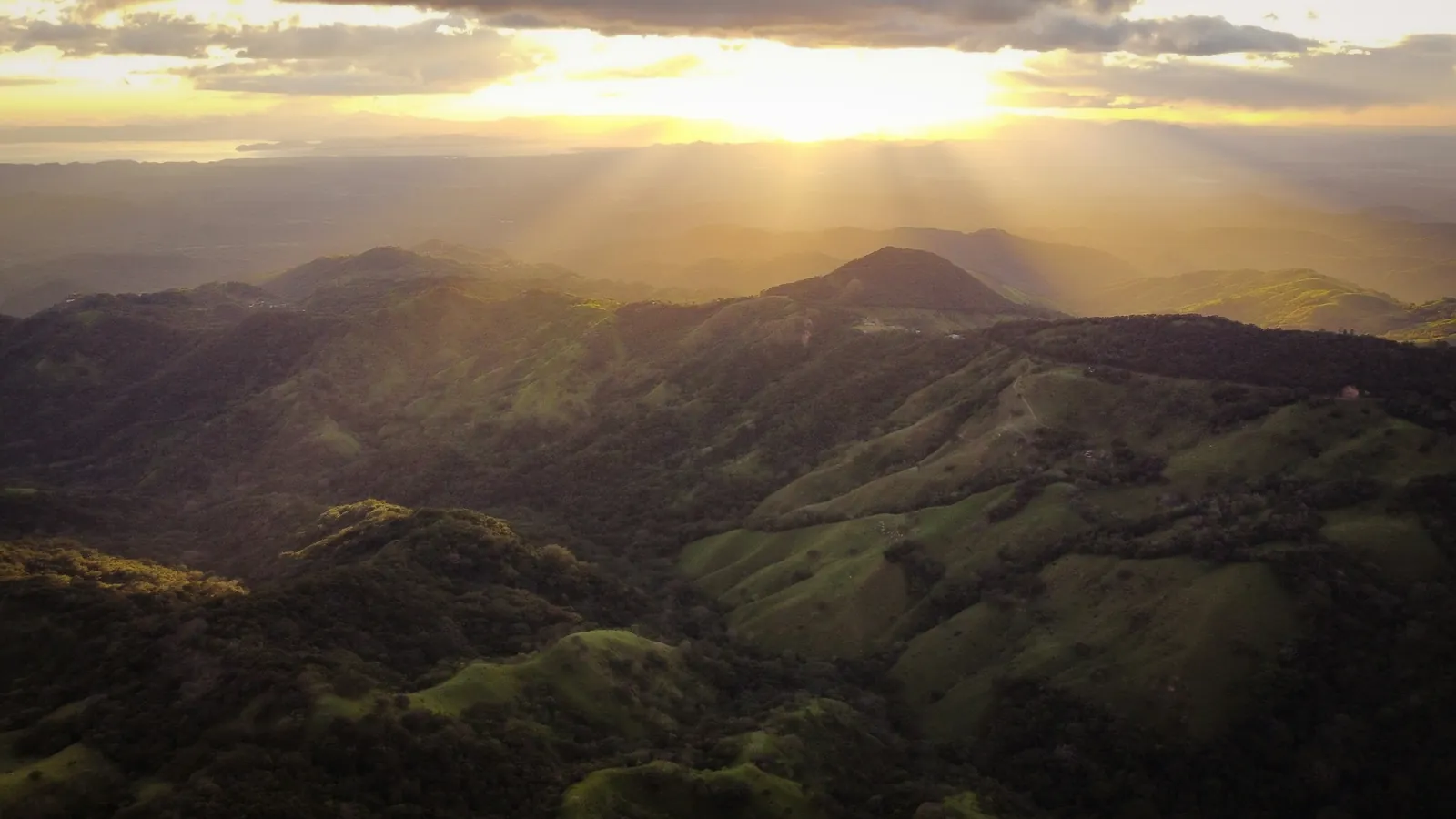
Bird watching in Costa Rica works best when you stop thinking about the country as one destination and start thinking in altitudes. A morning in the lowland rainforest around Arenal, a morning in the cloud forest of Monteverde and an afternoon on the Pacific coast near the Tárcoles River will show you almost completely different birds, and all three fit into less than a week.
The country is small, but its official bird list is long. The Asociación Ornitológica de Costa Rica keeps that list and updates it in its journal Zeledonia; recent updates put it at more than 900 species for mainland Costa Rica and Cocos Island. You will not see a fraction of that on one trip. What you can do is choose the right habitats, go out early, and go out with someone who knows the calls.
Which regions are worth your time for bird watching in Costa Rica?
Each region below is a different habitat. Pick two or three, not six. Long drives eat the early mornings, and early mornings are when birds are most active.
Arenal: lowland and foothill rainforest
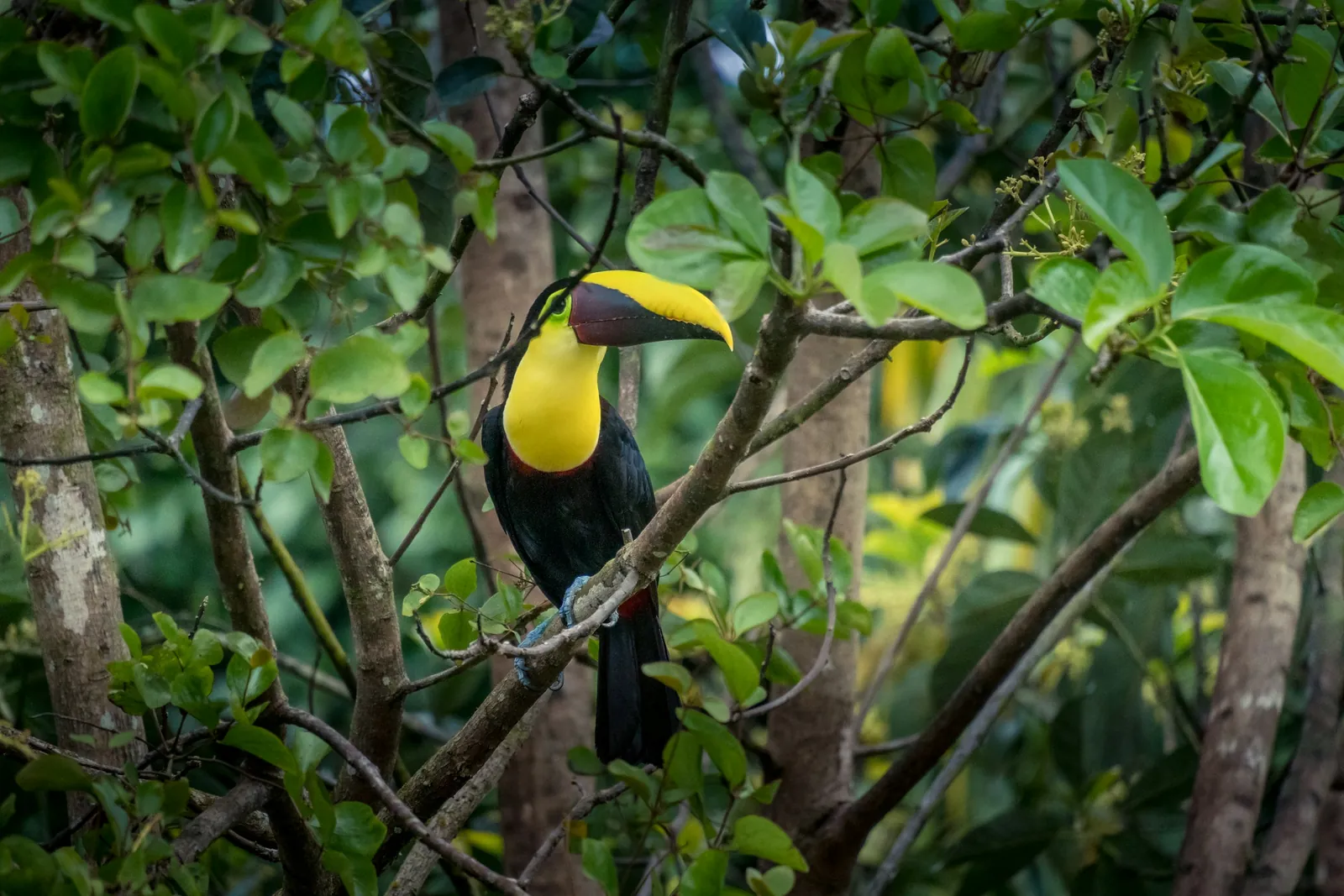
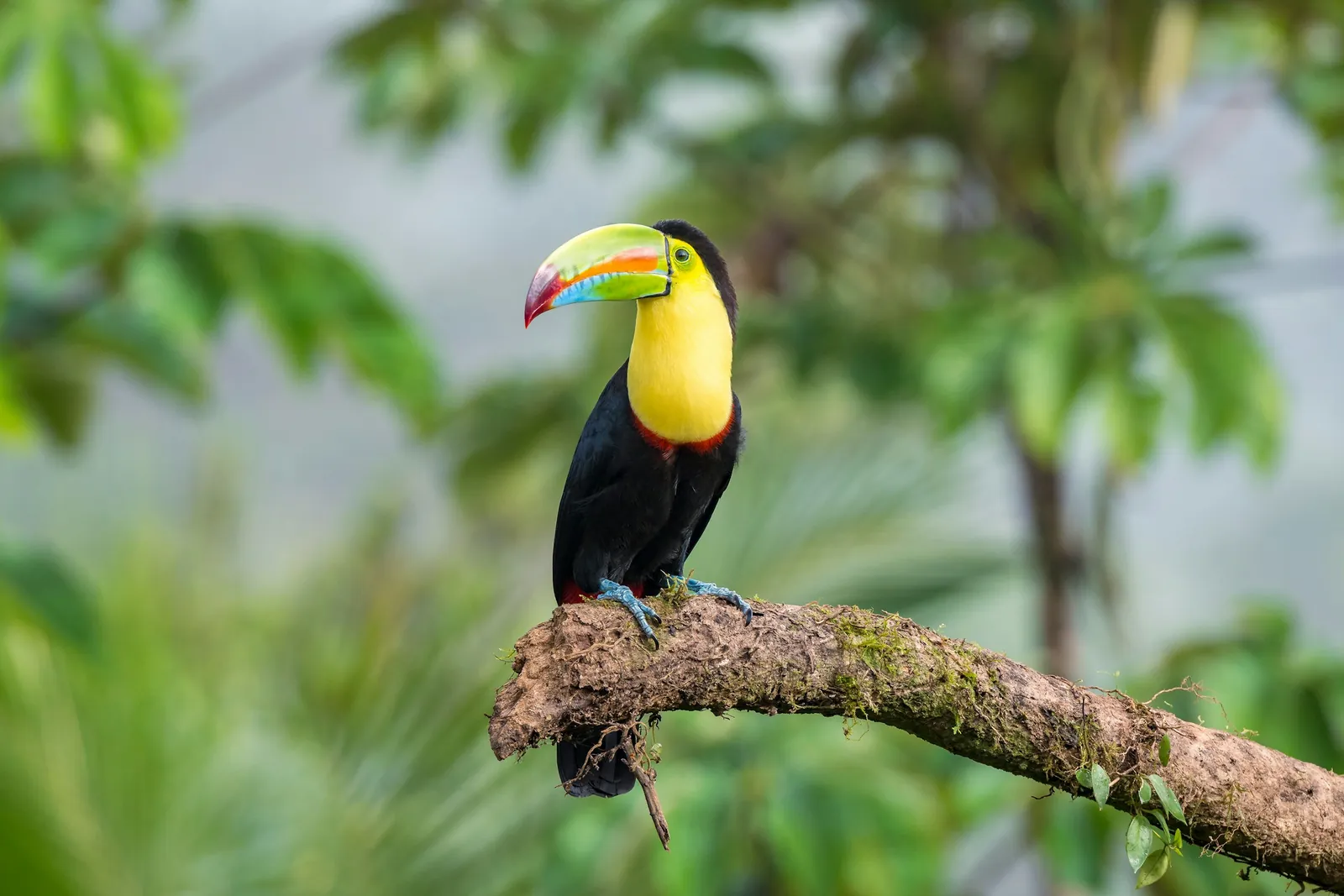
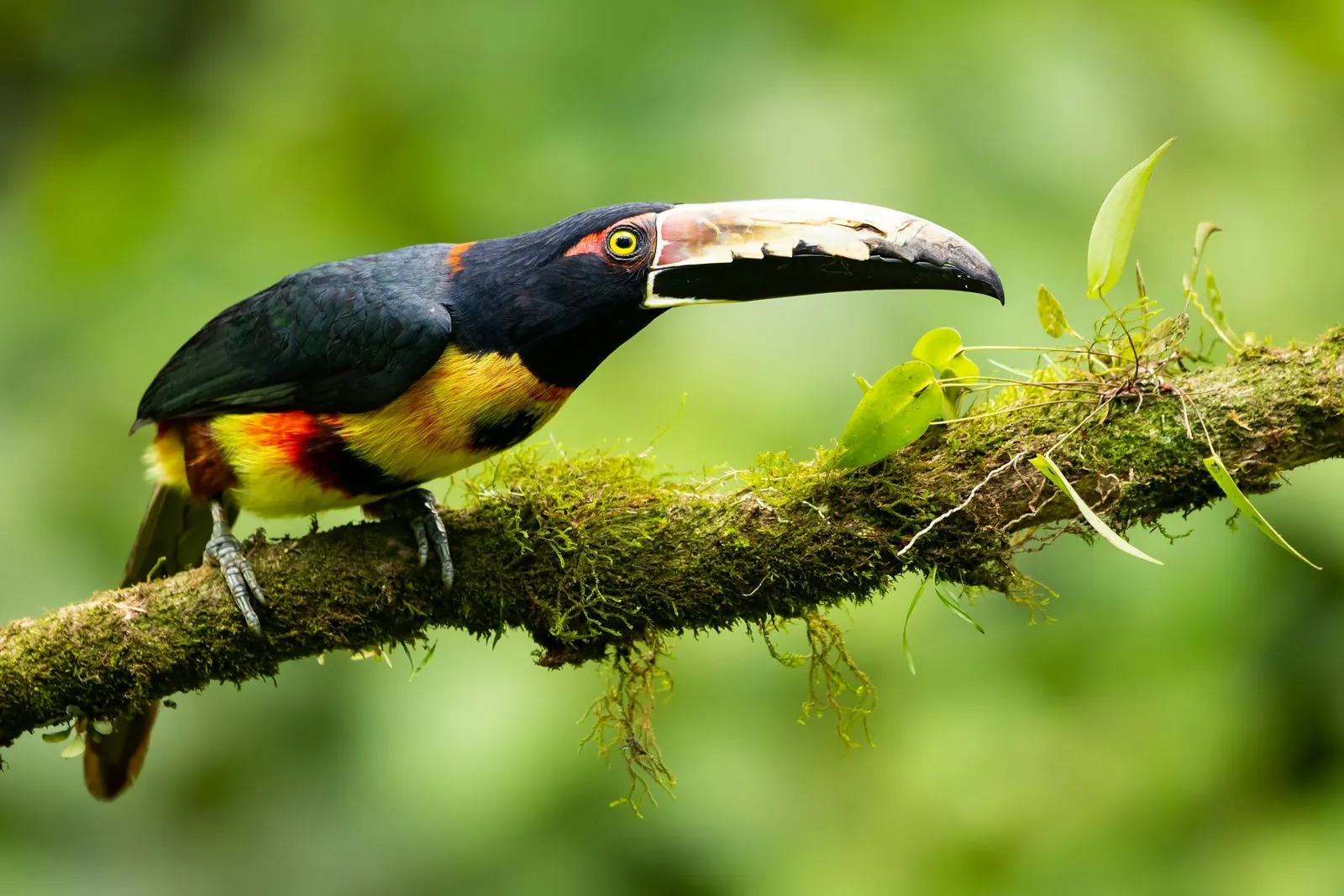
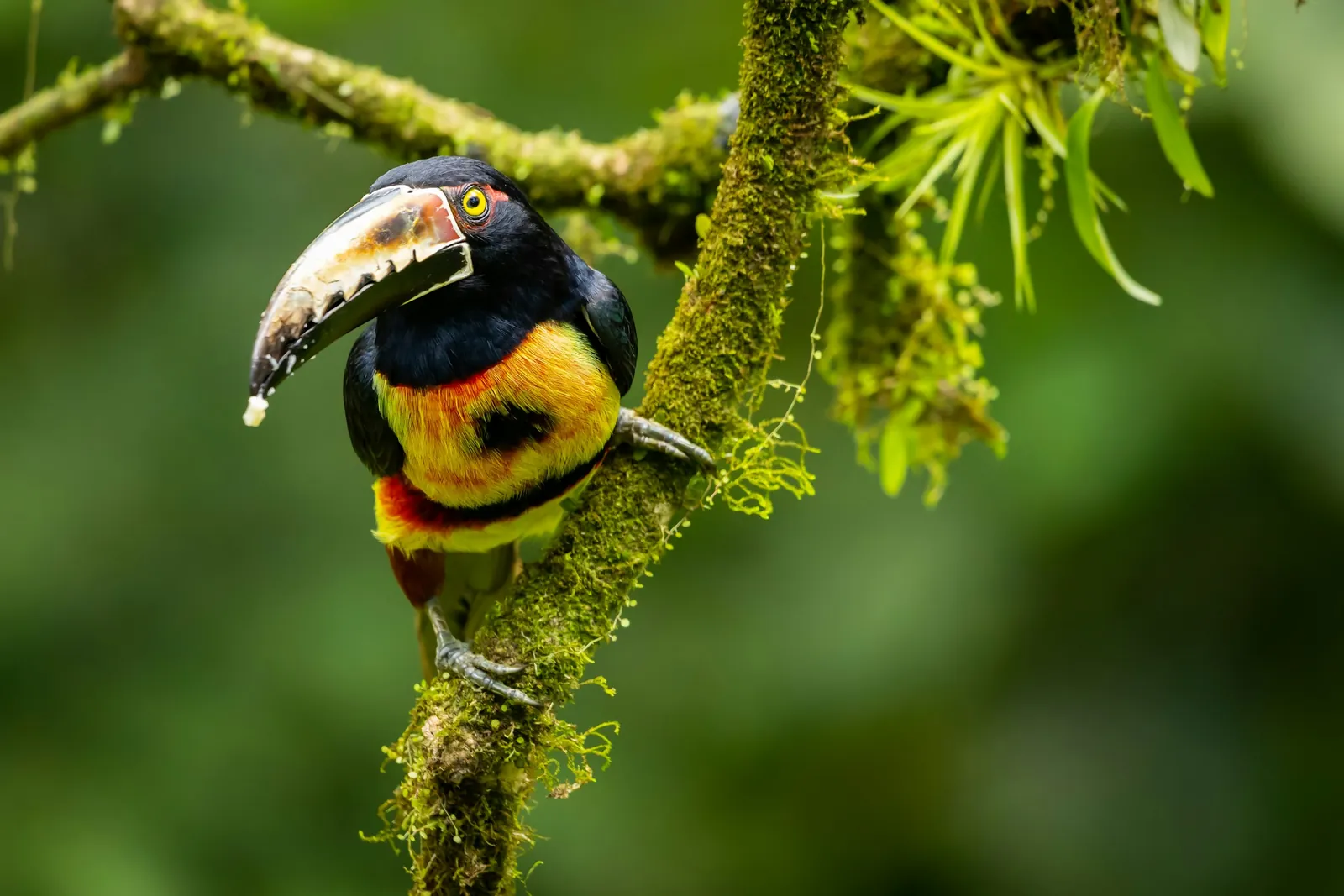
The area around Arenal Volcano, on the Caribbean slope, mixes rainforest, forest edge and open farmland. That edge habitat is generous for a first-time visitor. Toucans, parrots, oropendolas and tanagers are the birds most people come home talking about. Experienced birders tend to go after quieter targets in the forest interior, which is where a local guide with a scope makes the difference.
Monteverde: cloud forest
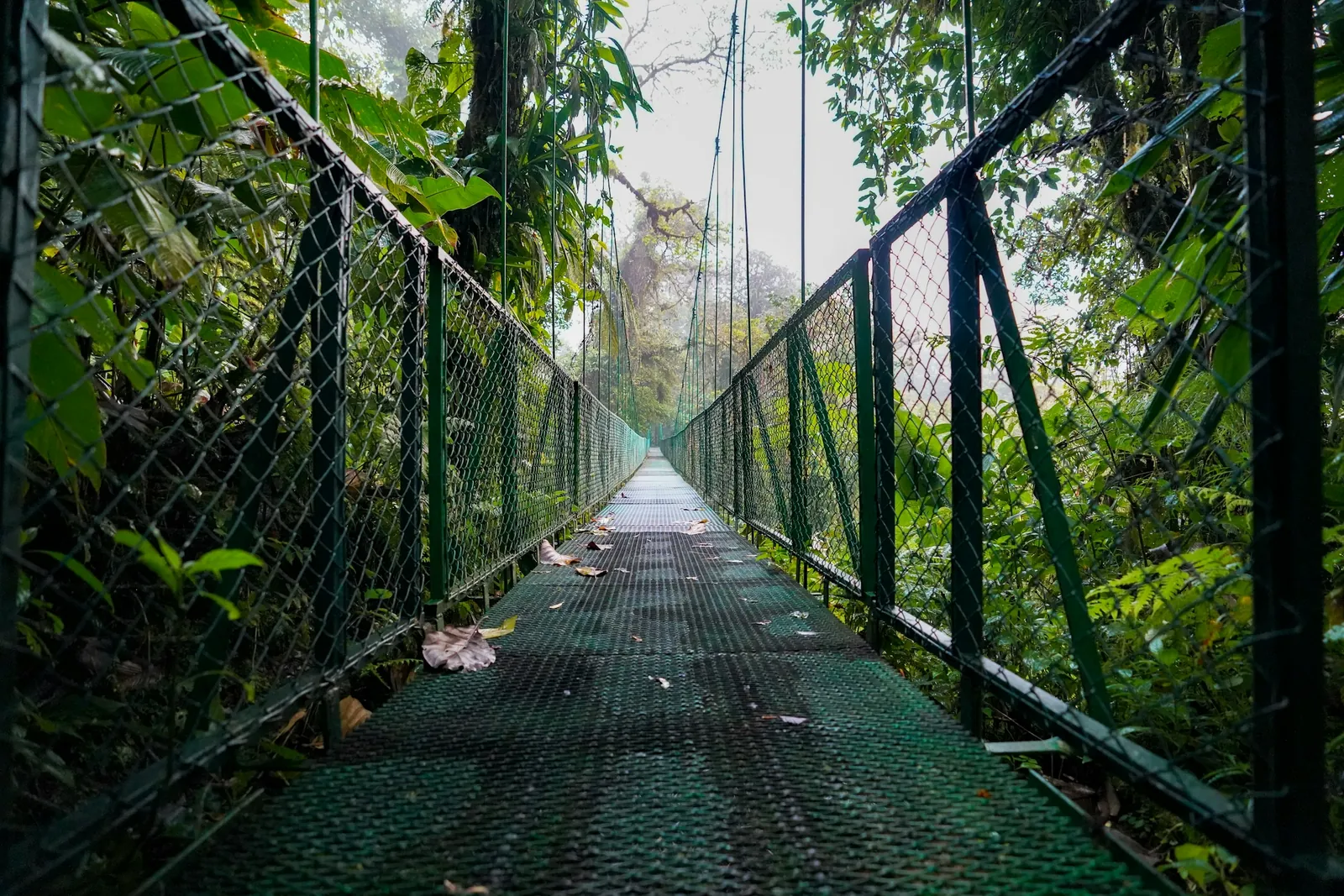
Monteverde sits higher, on the continental divide, and the forest is wet, mossy and often in cloud. This is the classic place to look for the resplendent quetzal, along with trogons and the emerald toucanet. Trails inside the reserves are narrow and visibility under the canopy is low, so expect to hear far more than you see. Bring a layer: mornings up there are cool and damp compared with Arenal.
Tárcoles and the Central Pacific
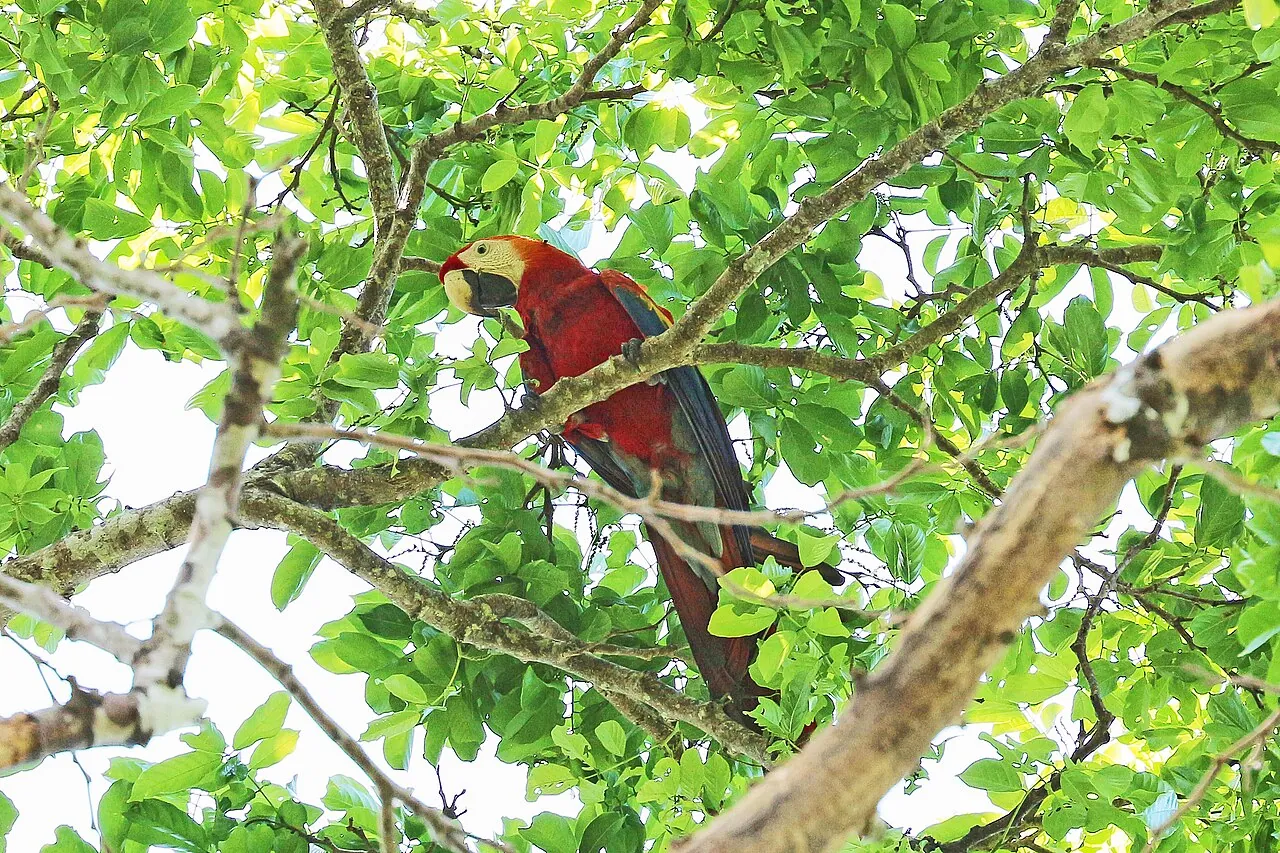
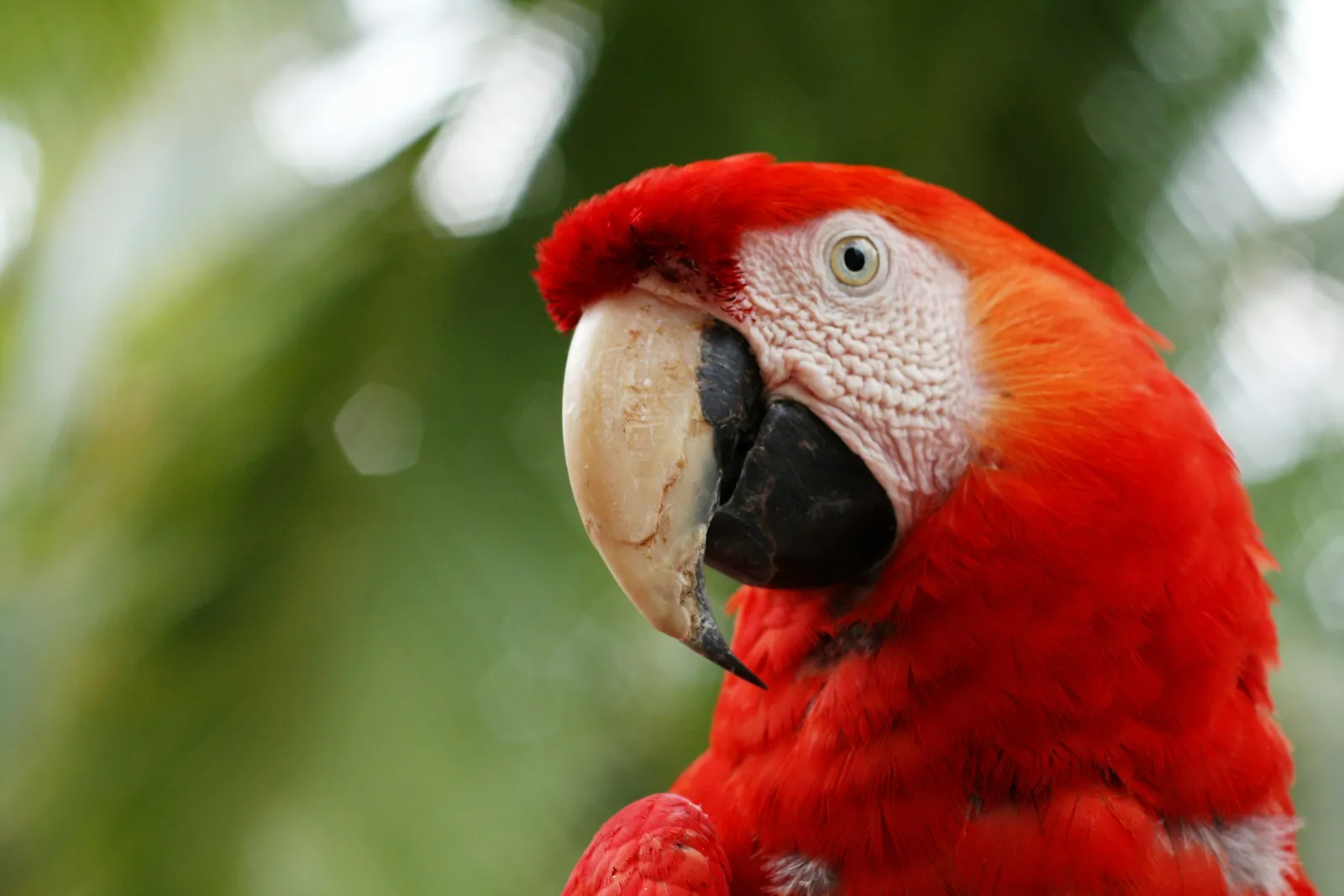
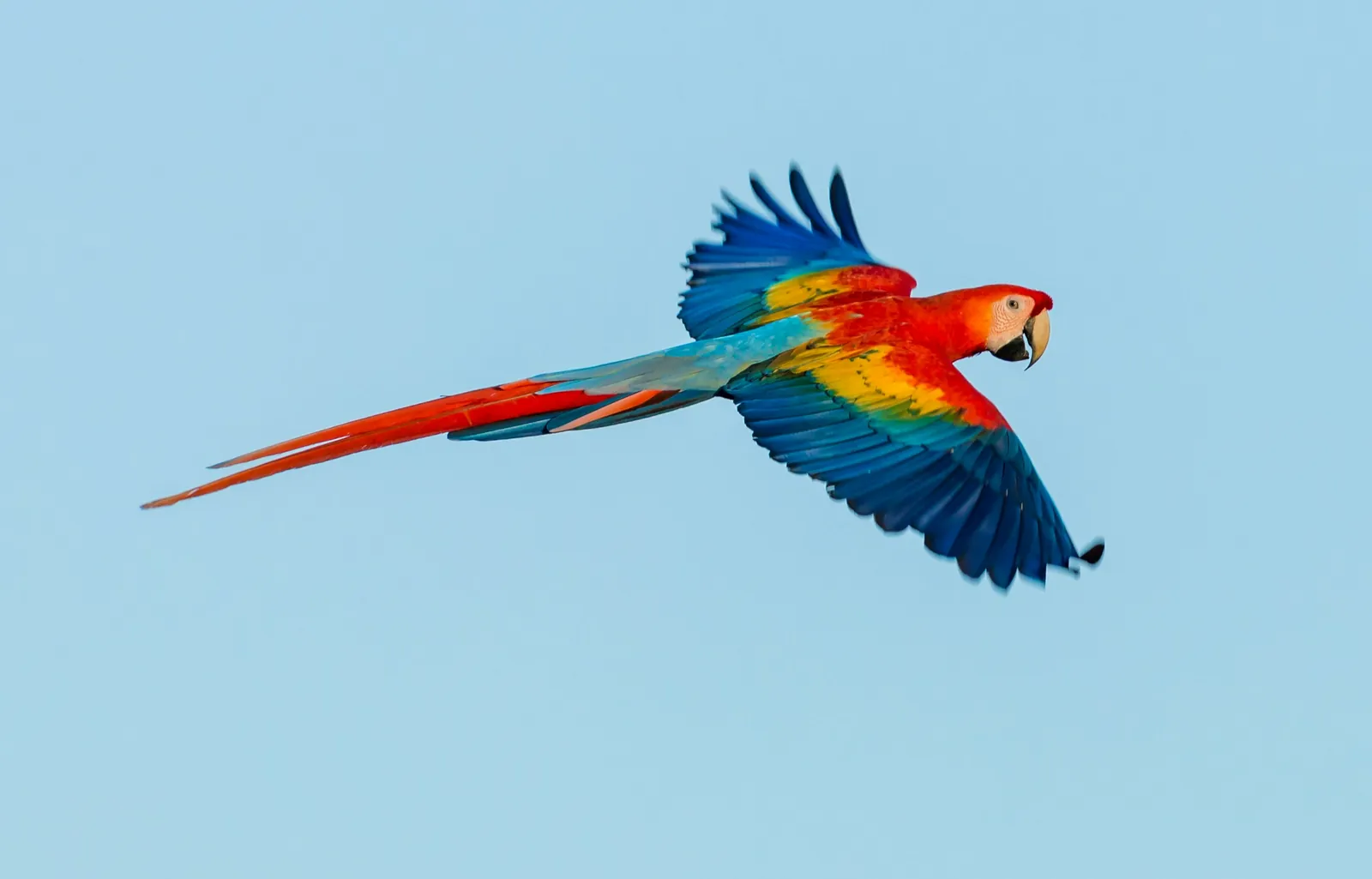
Where the Tárcoles River reaches the Pacific, dry forest, mangrove and river mouth meet. It is the area most associated with scarlet macaws on the central coast, and the mudflats and riverbanks add herons, egrets and shorebirds. Carara National Park, managed by SINAC, is close by and is a common stop for forest birds on the same day. It is also the easiest of the three regions to reach from the airport, which makes it a sensible first or last stop.
Regions to add on a longer trip
With more time, the Caribbean canals of Tortuguero add waterbirds seen from a boat, and the highlands of the Talamanca range hold mountain species you will not find at Monteverde's altitude. The southern Pacific, around the Osa Peninsula, is wetter lowland forest again. Each of these adds at least two travel days, so they suit a trip of ten days or more.
Where can you see the resplendent quetzal?
The quetzal is the bird most visitors ask about, and the honest answer is: in highland and cloud forest, with a guide, early, and with no guarantee. Monteverde and the highlands of the Talamanca range are the areas most associated with it. Quetzals feed heavily on small wild avocados, so guides tend to know which fruiting trees to watch in a given week. That local knowledge changes week to week, which is one more reason not to go alone.
Many guides consider the first half of the year, during the breeding season, the easier time to find quetzals, because the birds stay close to nest sites. We have not found an official source that fixes exact months, so treat it as a tendency and ask your guide what they have been seeing recently.
When is the best time for birding in Costa Rica?
There is good birding all year. What changes is the mix of birds and the weather you birdwatch in.
- Migrant season: many North American migrants (warblers, flycatchers, raptors) spend the northern winter in Costa Rica or pass through on migration. Roughly, think of late in the year through early spring, and check eBird for the species you care about.
- Breeding season for many resident birds falls in the first half of the year, which means more song and more display.
- The dry season on the Pacific side runs roughly from December to April. The Caribbean slope, including Arenal, can be wet in any month, so rain gear is not optional there.
For the weather month by month, see our guide to the best time to visit Costa Rica and our other destinations. If birds are the whole point of the trip, the most useful free tool is eBird, run by the Cornell Lab of Ornithology: its bar charts show, for a given hotspot, how often each species is reported in each week of the year. Search the hotspot on eBird's explore page before you fix dates.
Do you need a specialist birding guide?
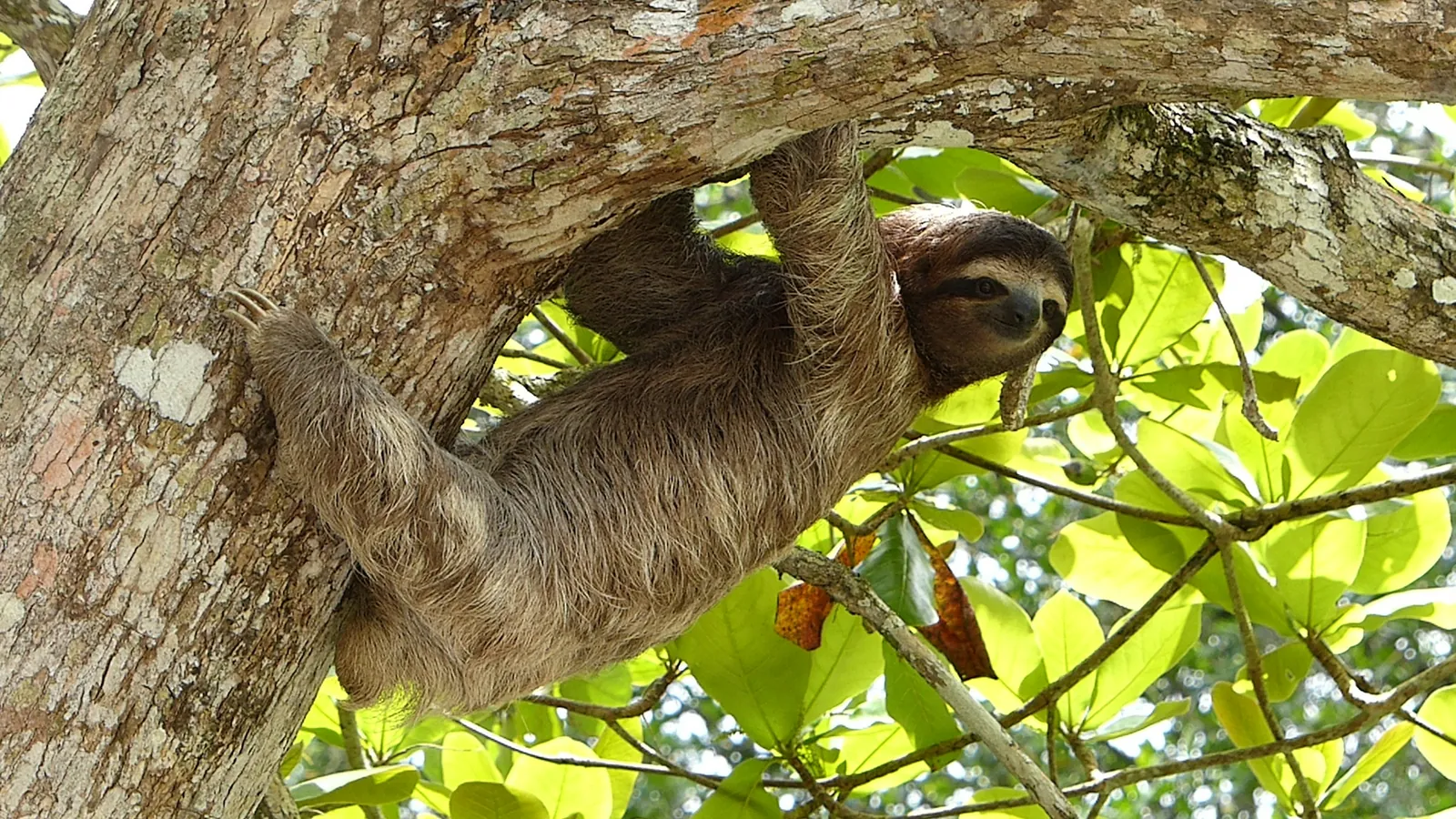
For a first trip, yes. A general nature guide will show you sloths, monkeys and the obvious birds. A birding guide knows the calls, carries a spotting scope, and knows that a particular fruiting tree or a particular bend of a trail is where a target species has been showing this week. In the cloud forest, where most birds are heard before they are seen, that is the difference between a list of twenty species and a list of sixty.
Ask any guide three things before you book: which species they expect for your dates, whether a scope is included, and how many people will be in the group. Small groups matter. Five people talking on a narrow trail will flush the birds you came for.
Official guides in Costa Rica are accredited through the Instituto Costarricense de Turismo (ICT). It is reasonable to ask a guide or an operator about their accreditation.
What gear should you pack for birding?
- Binoculars, ideally 8x42 or similar: bright enough for dark forest, light enough to carry for hours. Bring your own; borrowing works, but you lose time.
- A rain jacket and a dry bag for the binoculars and phone, especially for Arenal.
- A warm layer for Monteverde mornings.
- Closed shoes with grip. Cloud forest trails are muddy.
- Insect repellent, sunscreen and a hat for the coast.
- A field guide or an app. The Merlin app from the Cornell Lab works offline once you download the Costa Rica pack, and its sound identification helps when a bird stays hidden.
A camera with a long lens is a separate decision. If photography matters to you, tell the operator before the trip: photographers need more time at each stop and fewer people around them, and a mixed group rarely suits both.
A six-day birding route: Arenal, Monteverde and Tárcoles
Our 6-day Costa Rica birding tour follows the three regions above in a logical order, as a private group. You land at Juan Santamaría International Airport (SJO) and transfer to a lodge in the Arenal area. Day 2 starts very early with a specialist birding guide, looking for toucans, parrots, oropendolas and tanagers, and, for more experienced birders, species such as the royal flycatcher or the cinnamon woodpecker.
On day 3 you cross Lake Arenal by boat on the way to Monteverde, with a chance of kingfishers and herons from the water, then climb to the cloud forest. Day 4 is a morning walk in the reserve with the quetzal, the orange-bellied trogon and the emerald toucanet as the main targets. Day 5 drops to the Tárcoles River on the Central Pacific for scarlet macaws and shorebirds, and day 6 is the transfer back to SJO.
The price includes the airport welcome, transfers as described, the boat on Lake Arenal, five nights of accommodation, daily breakfasts, the specialist-guided birding in Arenal and Monteverde, reserve entrance fees and hotel taxes. Flights, travel insurance, other meals, tips and personal expenses are not included.
This route is not for you if you want to chase regional specialities in the high Talamanca or the southern Pacific: six days does not stretch that far. It also packs three regions into five nights, so each region gets one main birding morning. If you would rather stay two nights in Monteverde, or add the Caribbean, the itinerary can be changed.
If you are travelling with children who want more than birds, the family trip to Costa Rica is a better fit, and our comparison of Arenal and Monteverde helps if you can only stay in one of them. More nature-focused trips are on our nature travel page.
Frequently asked questions
Is Costa Rica good for beginner birders?
Yes. Toucans, macaws, parrots and hummingbirds are large or colourful enough to enjoy without experience, and a guide with a scope will show you birds you would never find alone. Beginners usually enjoy a mix of guided mornings and free afternoons more than full days in the field.
How many bird species can you see in a week?
It depends on the regions, the season, your guide and how many hours you spend in the field. We prefer not to promise a number. eBird checklists from the hotspots you plan to visit, on the same dates in past years, give a realistic picture.
Can I go birding on my own in Monteverde?
You can walk the reserve trails on your own once you pay the entrance fee. You will see birds. Without a guide you will miss most of the cloud forest species, because they are high, quiet and often in cloud.
Can the birding tour be booked for just two people?
The tour runs as a private group, so it is built around your party. Write to us through the contact page or on WhatsApp at +51 906 974 952 with your dates, how experienced you are and the species you most want to see.
Keep reading
Photography: Bernard Gagnon / Wikimedia Commons, CC0Aleksandar Popovski / UnsplashFabio Fistarol / UnsplashJoseph Piña / UnsplashJavier Mazzeo / UnsplashOmar Mena / UnsplashAdrián Valverde / UnsplashRico Meier / UnsplashJames Ting / UnsplashCésar Badilla Miranda / UnsplashFrames For Your Heart / UnsplashCésar Badilla Miranda / UnsplashFrank Williams / UnsplashFran Pencliffe / UnsplashZdeněk Macháček / UnsplashJ. Amill Santiago / Unsplash