
Journal
Uyuni 3 Day Tour to Laguna Colorada: What to Expect
A Uyuni 3 day tour to Laguna Colorada, night by night: the altitude you sleep at, cold, lodging, the Eduardo Avaroa fee, packing and who should skip it.
A Uyuni 3 day tour is a road trip more than a sightseeing tour. You spend most of three days in a 4x4, you sleep one night at about the height of the salt flat and one night roughly 900 metres higher, and the last morning starts before sunrise in the cold. The reward is the run south from the salt into the lagoons of the Eduardo Avaroa reserve, ending at Laguna Colorada.
This guide covers the route itself: what each day looks like, how high you sleep, how cold it gets, what the lodging is really like, the fees you pay on the spot, and who should think twice. If your question is about water on the salt and the reflection, that has its own guide.
For the season question, read our Uyuni salt flat rainy season and mirror effect guide. Here we stick to the three days on the ground.
What happens on a Uyuni 3 day tour, day by day
The route below is the one in our Uyuni Salt Flat and Laguna Colorada tour. Other operators run similar loops, but stops, times and lodges vary, so compare itineraries line by line rather than by name.
Day 1: the salt flat
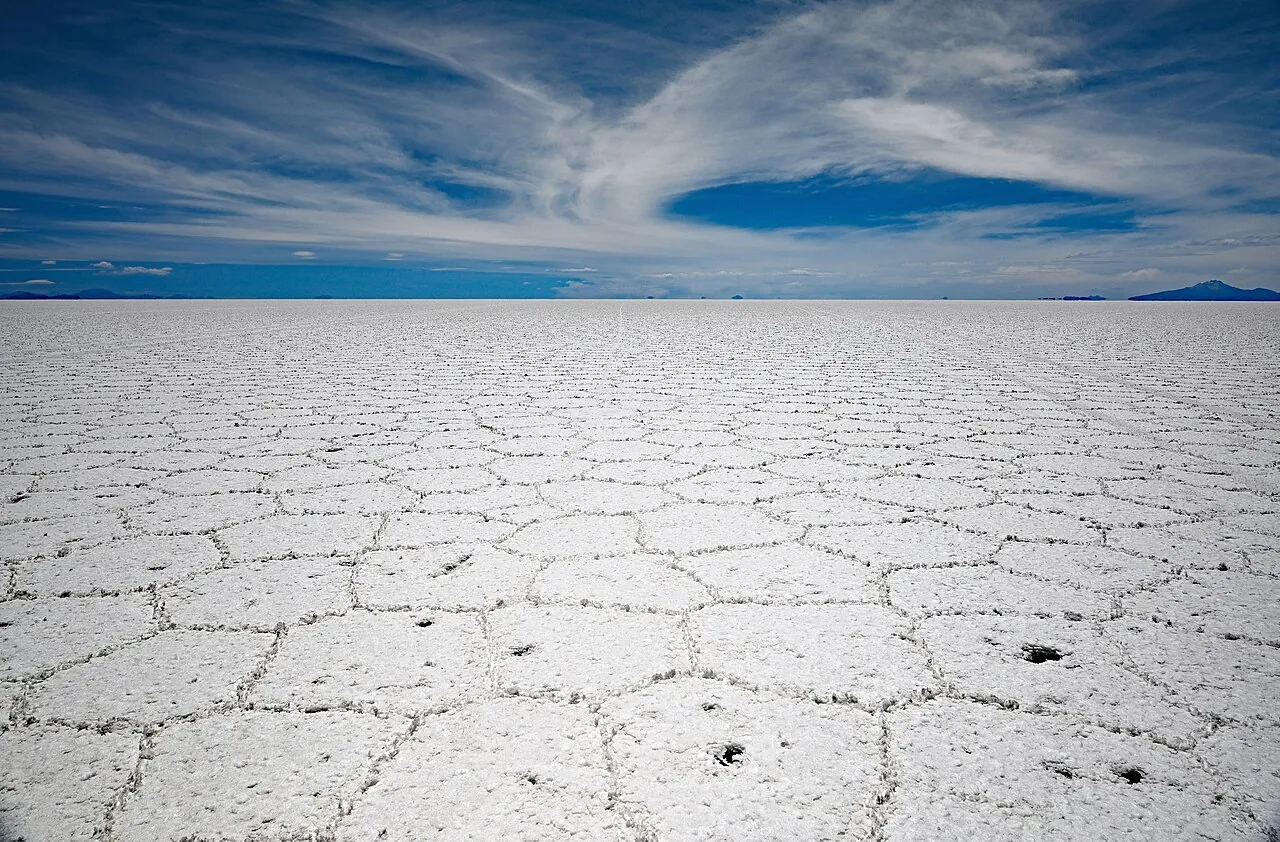
You leave Uyuni at about 10:00. The first stop is the Train Cemetery, a yard of old steam locomotives and wagons just outside town. Then Colchani, where families still cut and process salt by hand, and onto the salt itself: the Ojos del Salar, where brine bubbles up through holes in the crust, and the Playa Blanca salt hotel.
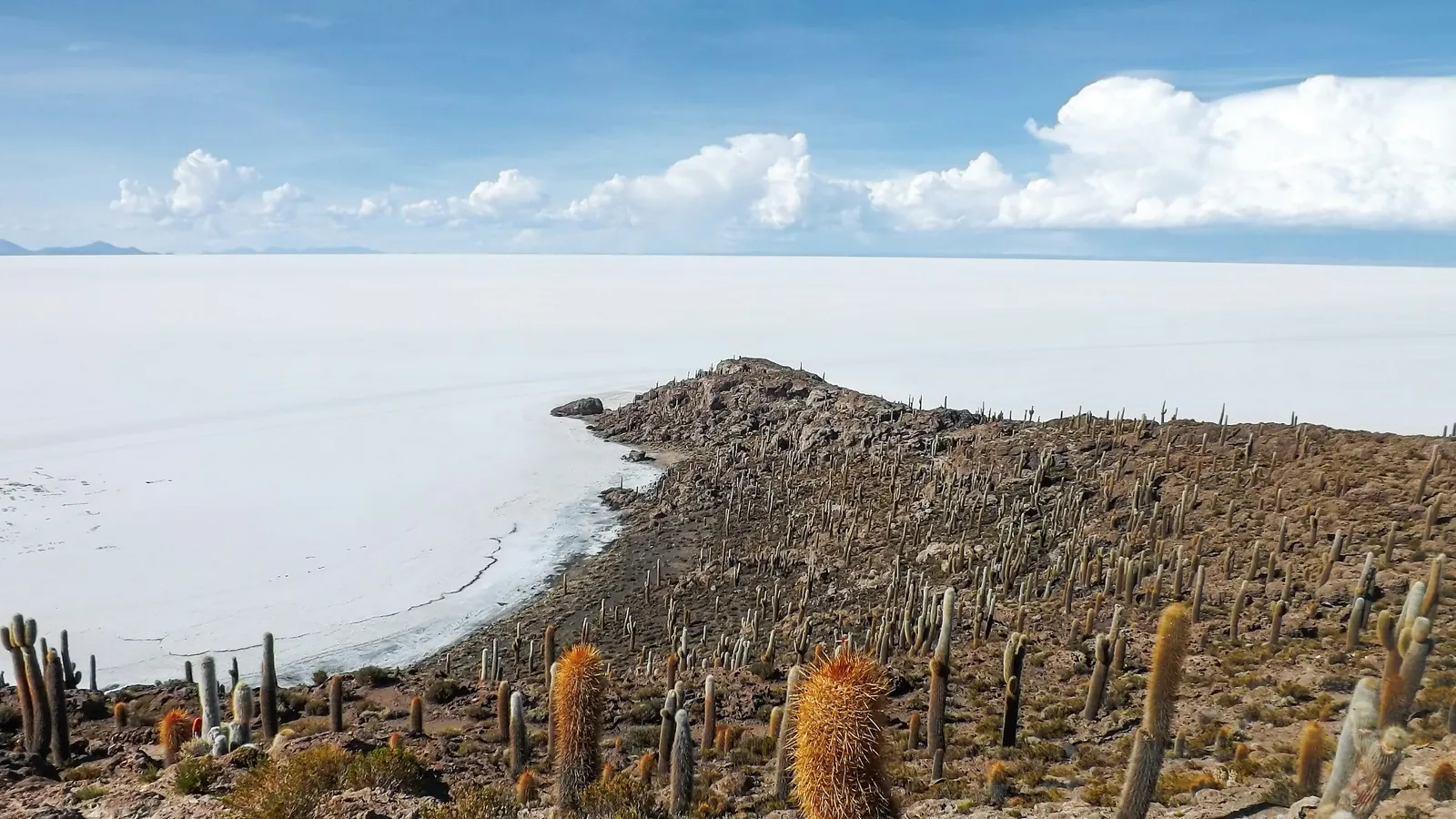
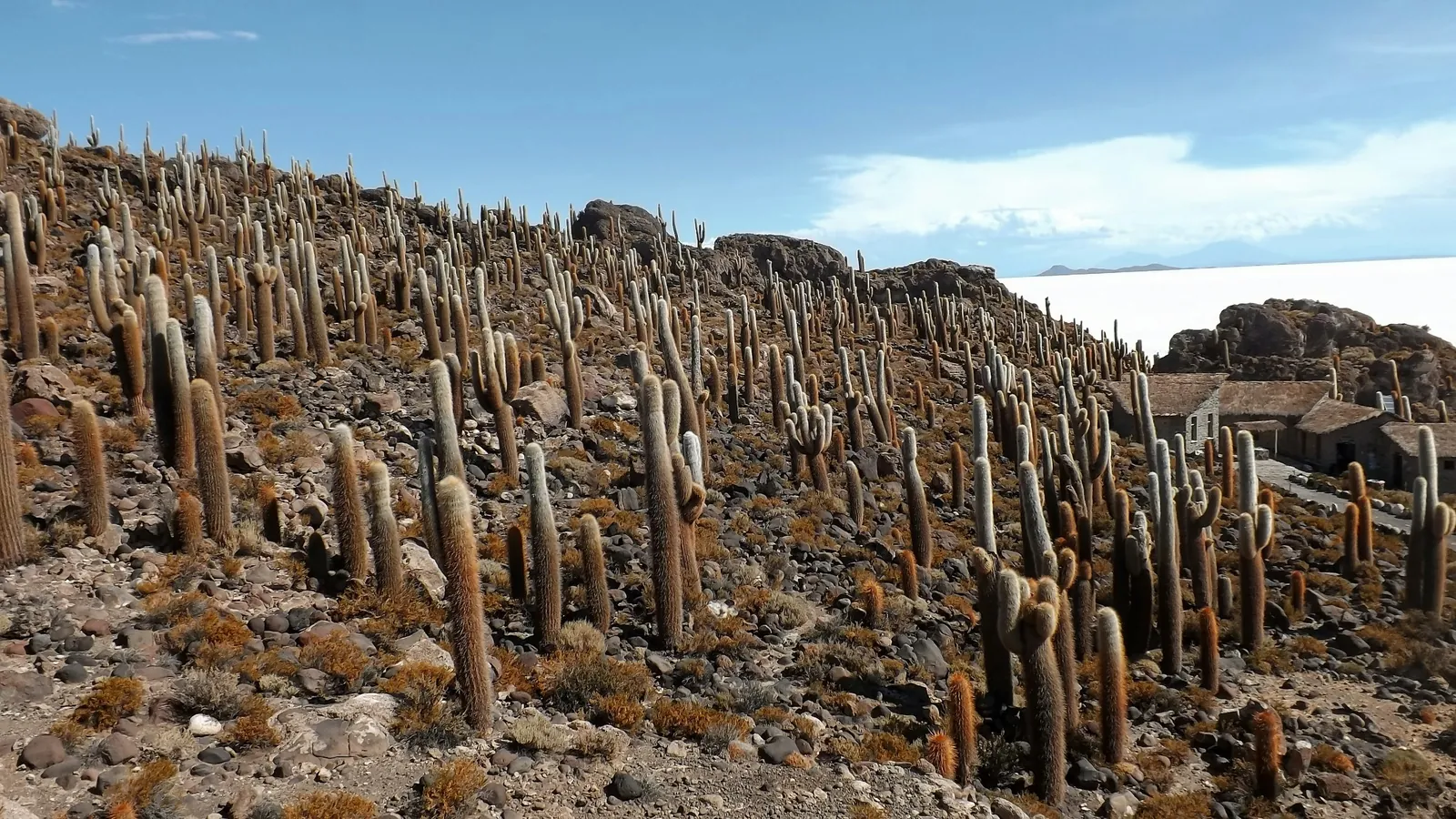
The long leg is to Incahuasi Island, 102 km from Uyuni according to our itinerary, a rocky hill with cactus in the middle of the white. There is a short walk to the top. After that comes time on the open salt for photos, and the drive back towards Uyuni at sunset. Lunch is a picnic. The night is at Hotel Cielo & Sal.
Day 2: south to the high lagoons
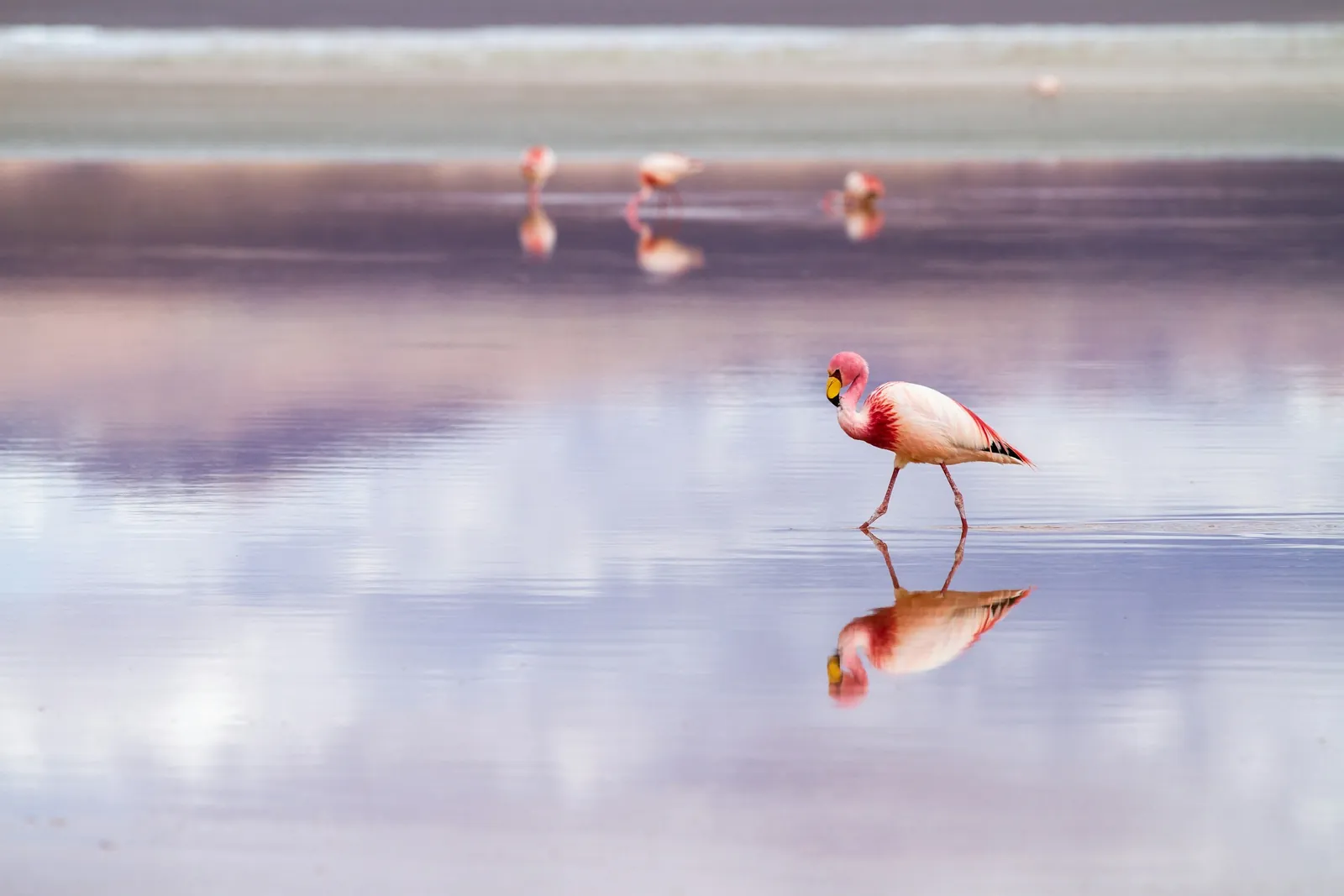
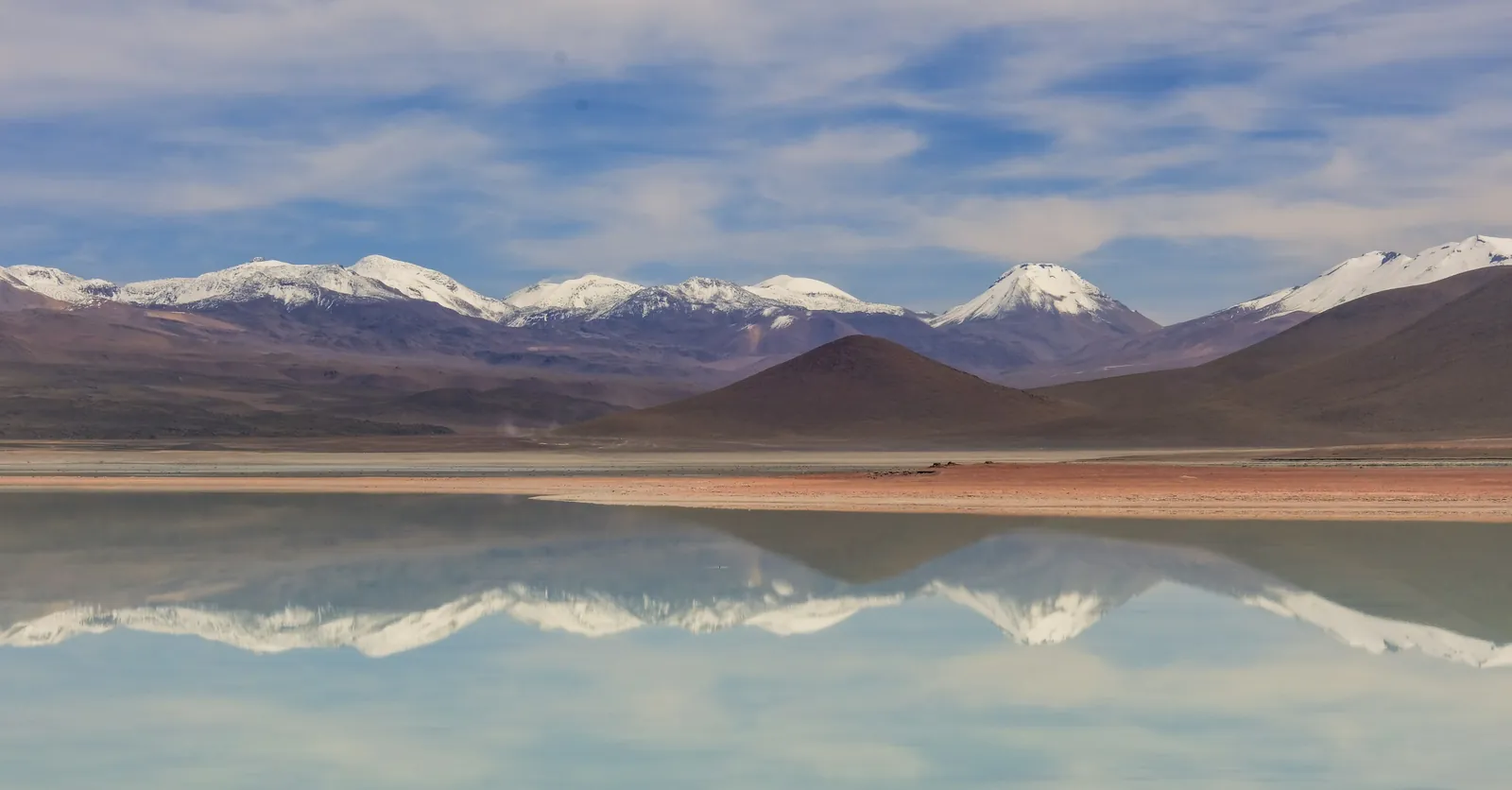
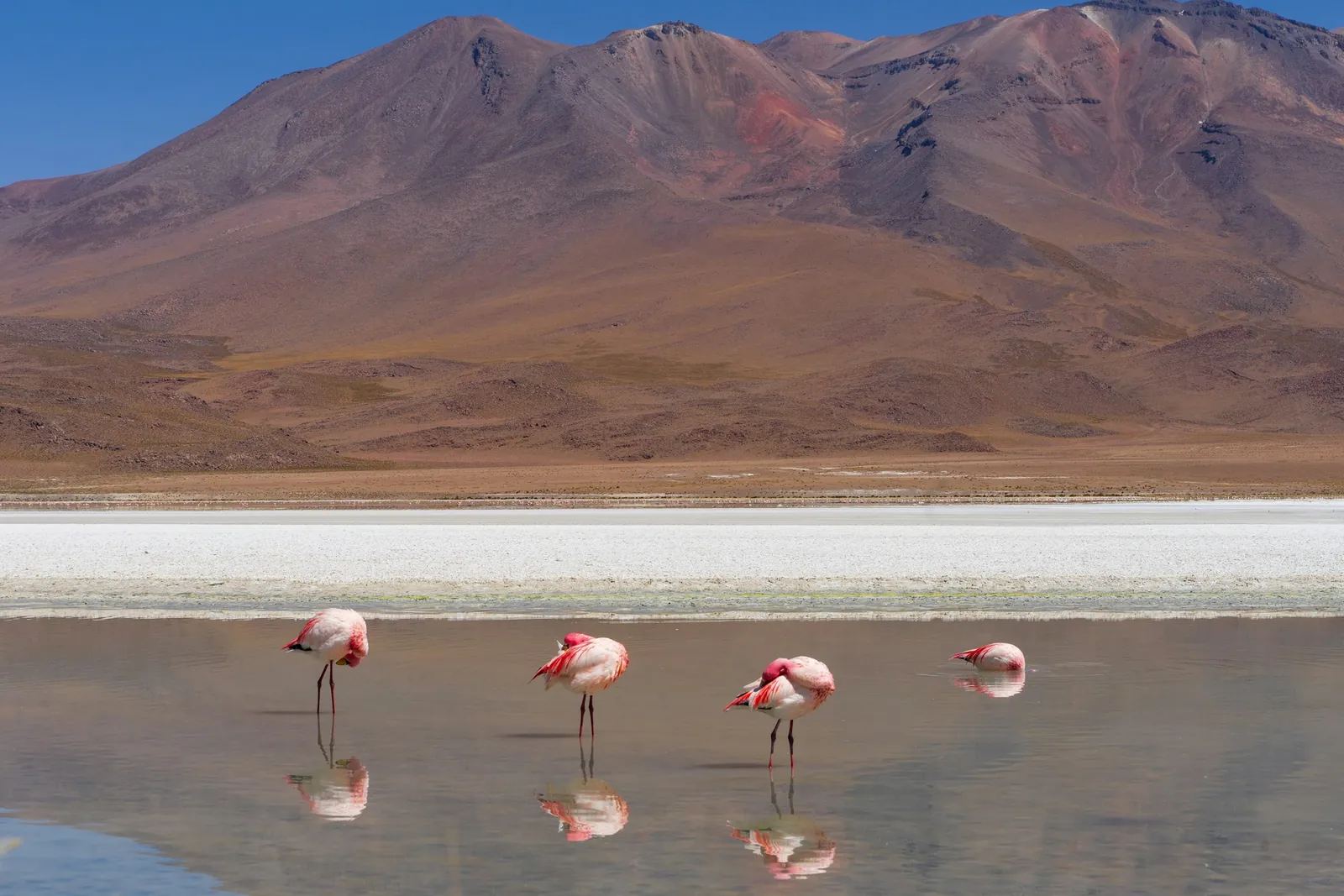
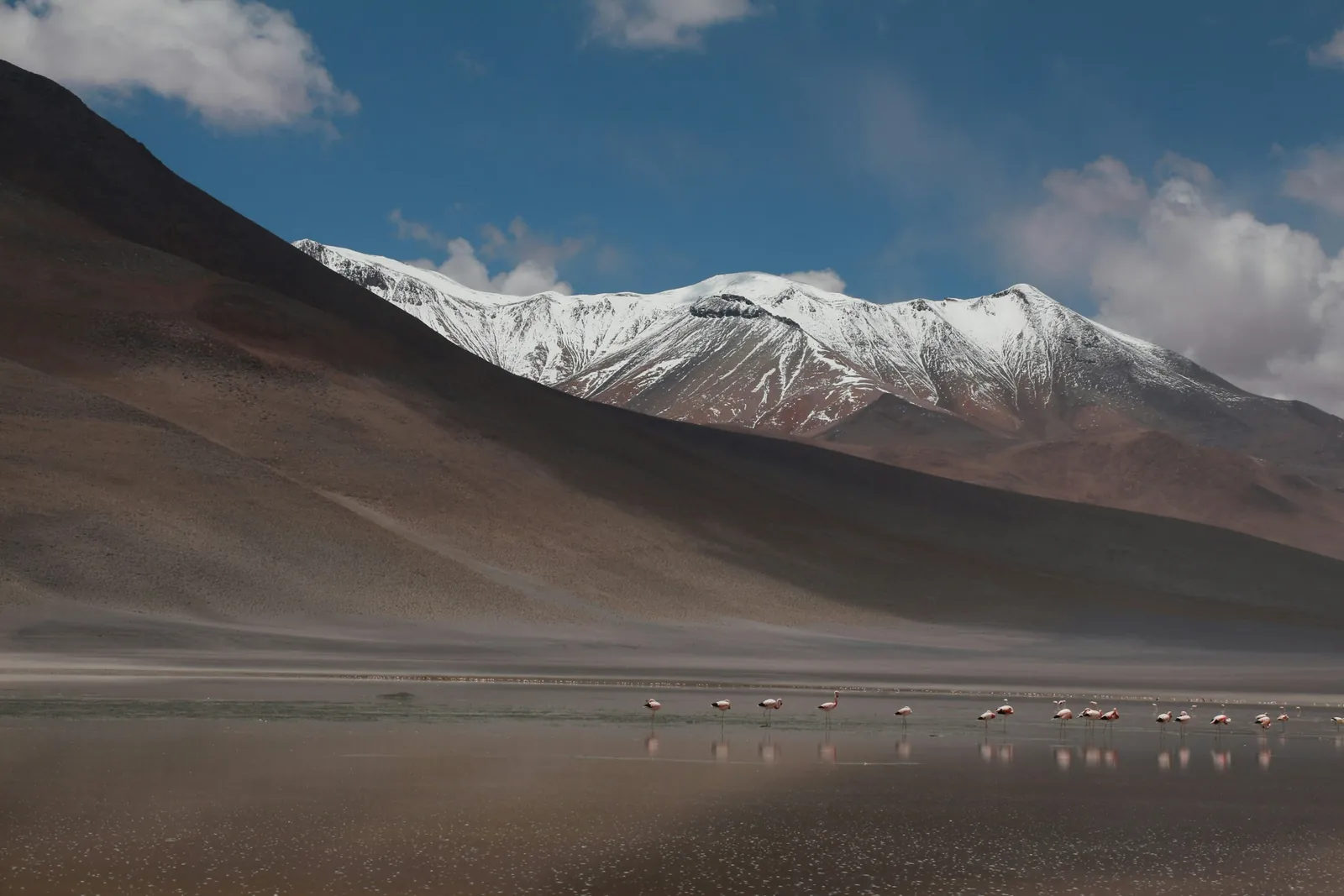
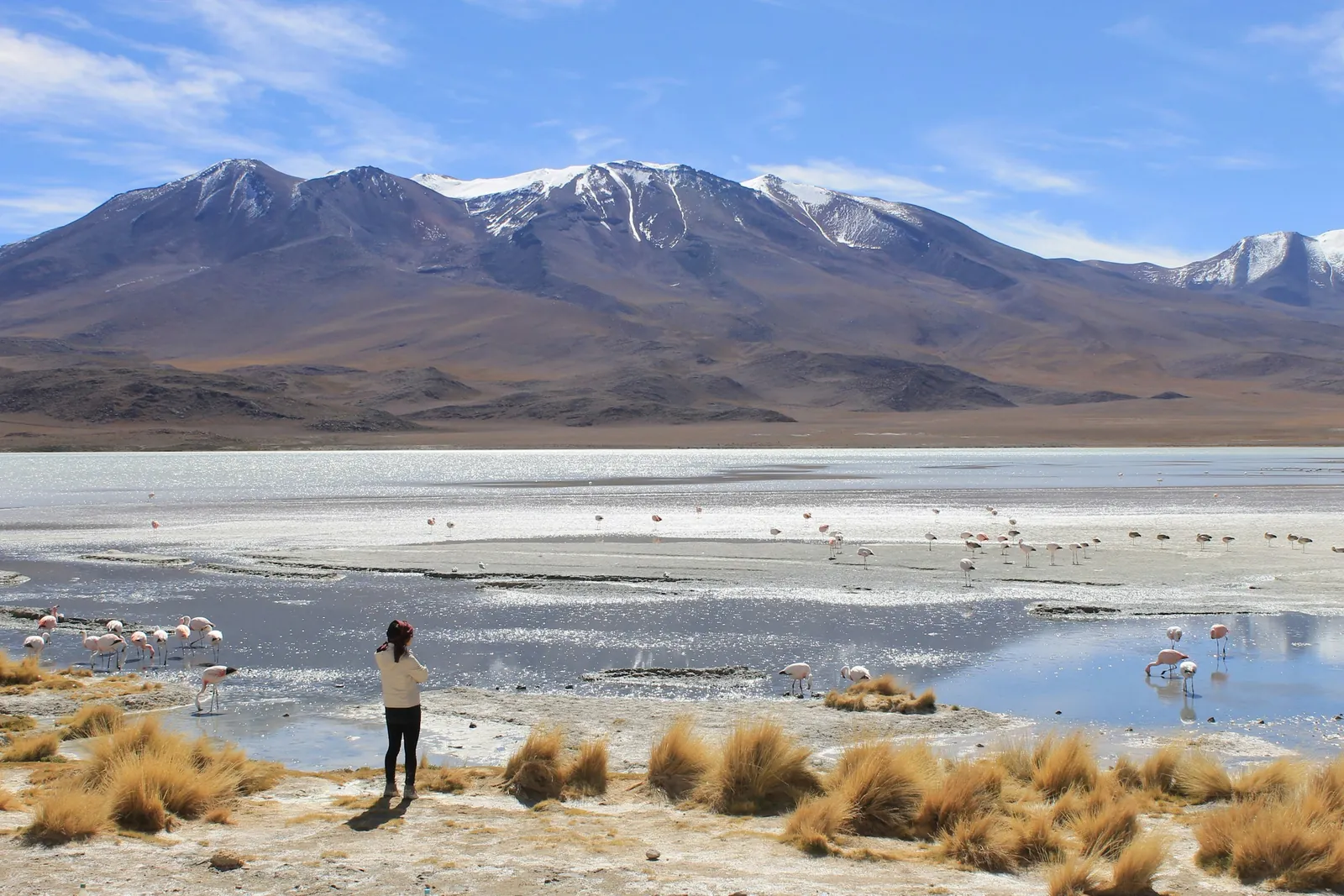
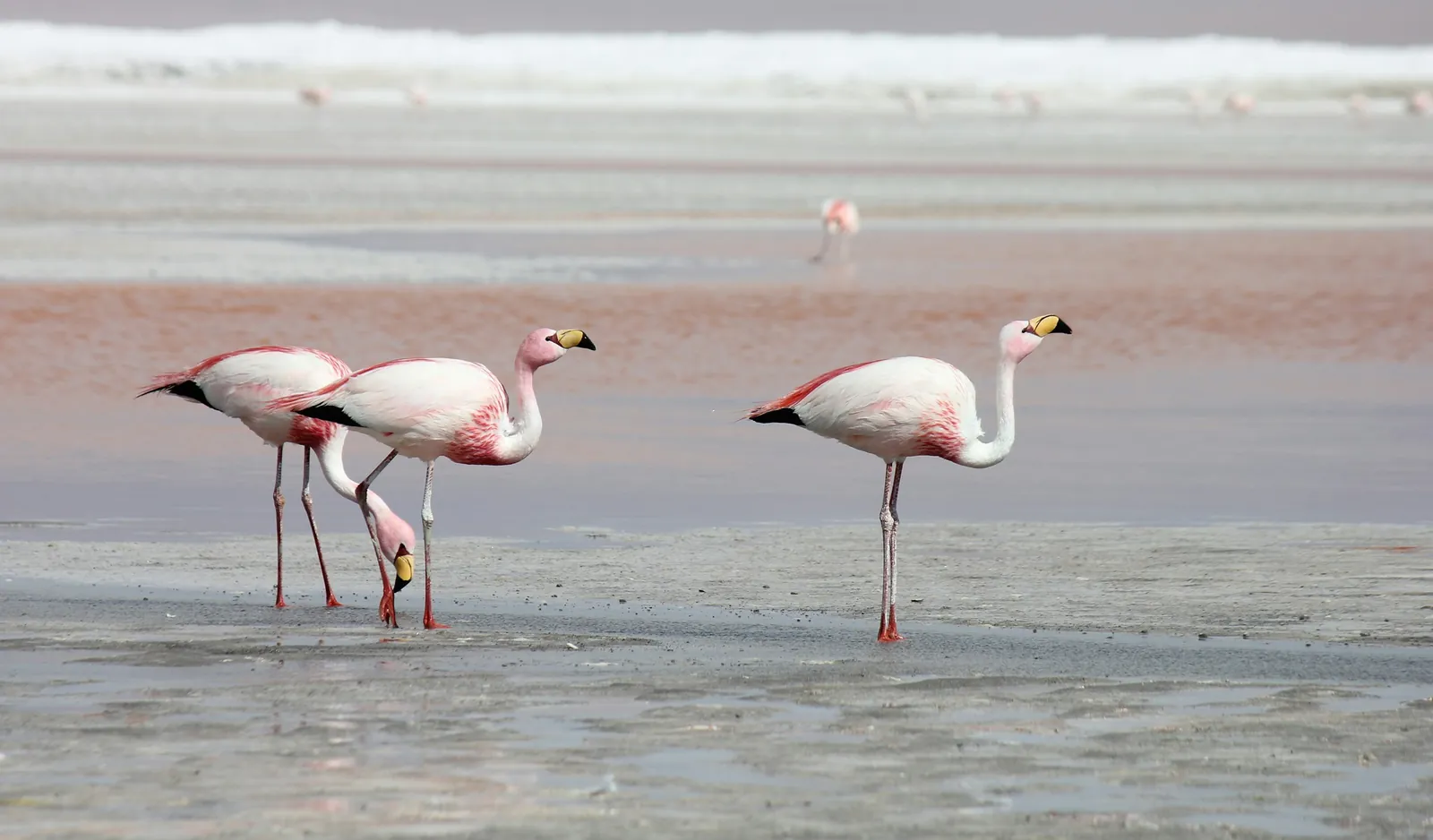
Departure is around 09:00. You stop at a viewpoint facing Ollagüe, an active volcano on the Chilean border with fumaroles near the summit. Then the lagoons start: Cañapa, green water and flamingos, then Hedionda, which smells of sulphur and also holds flamingos, ducks and partridges.
You sleep at Ecolodge Los Flamencos, at 4,500 m. This is the night that decides how the trip feels.
Day 3: Laguna Colorada and the long drive back
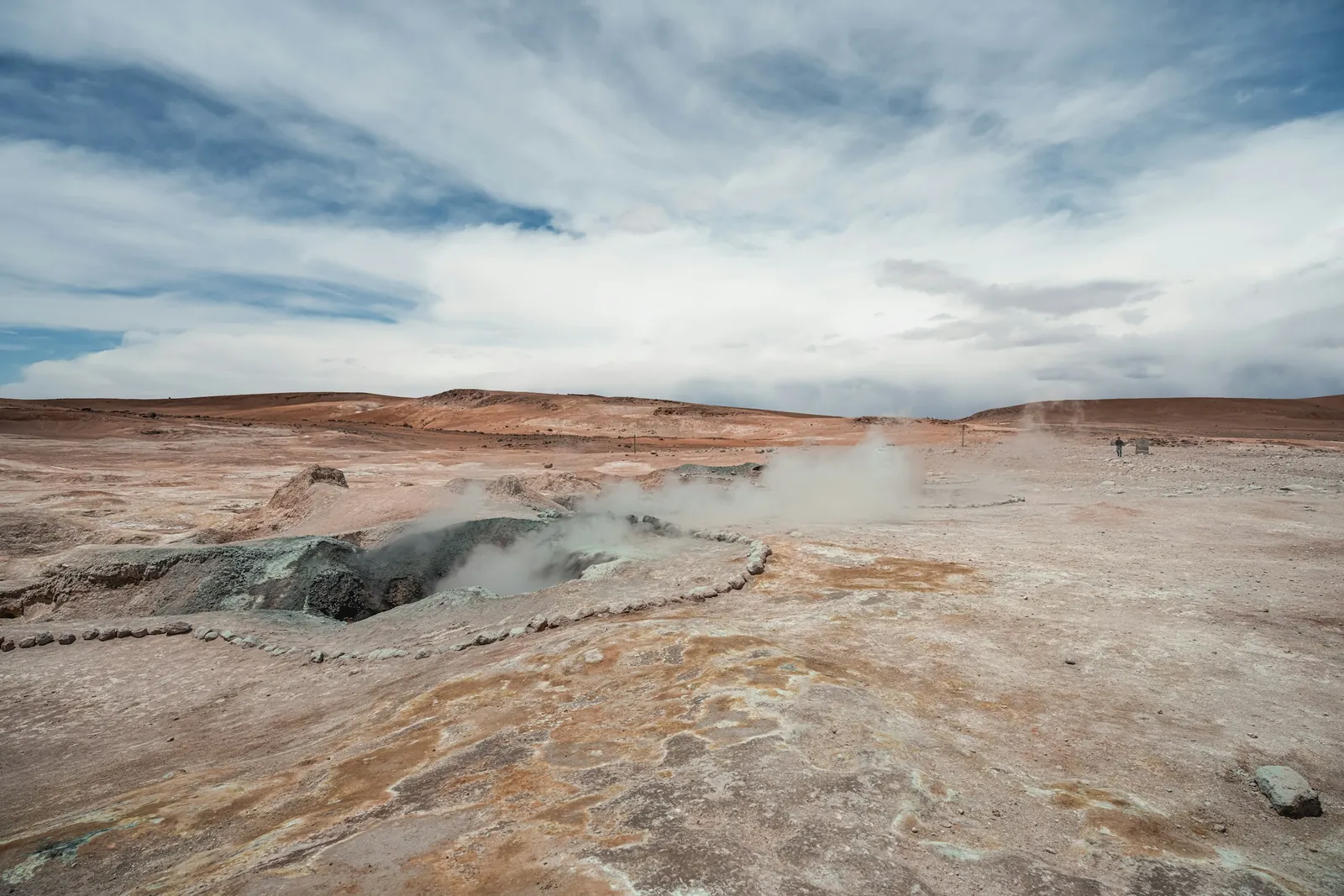
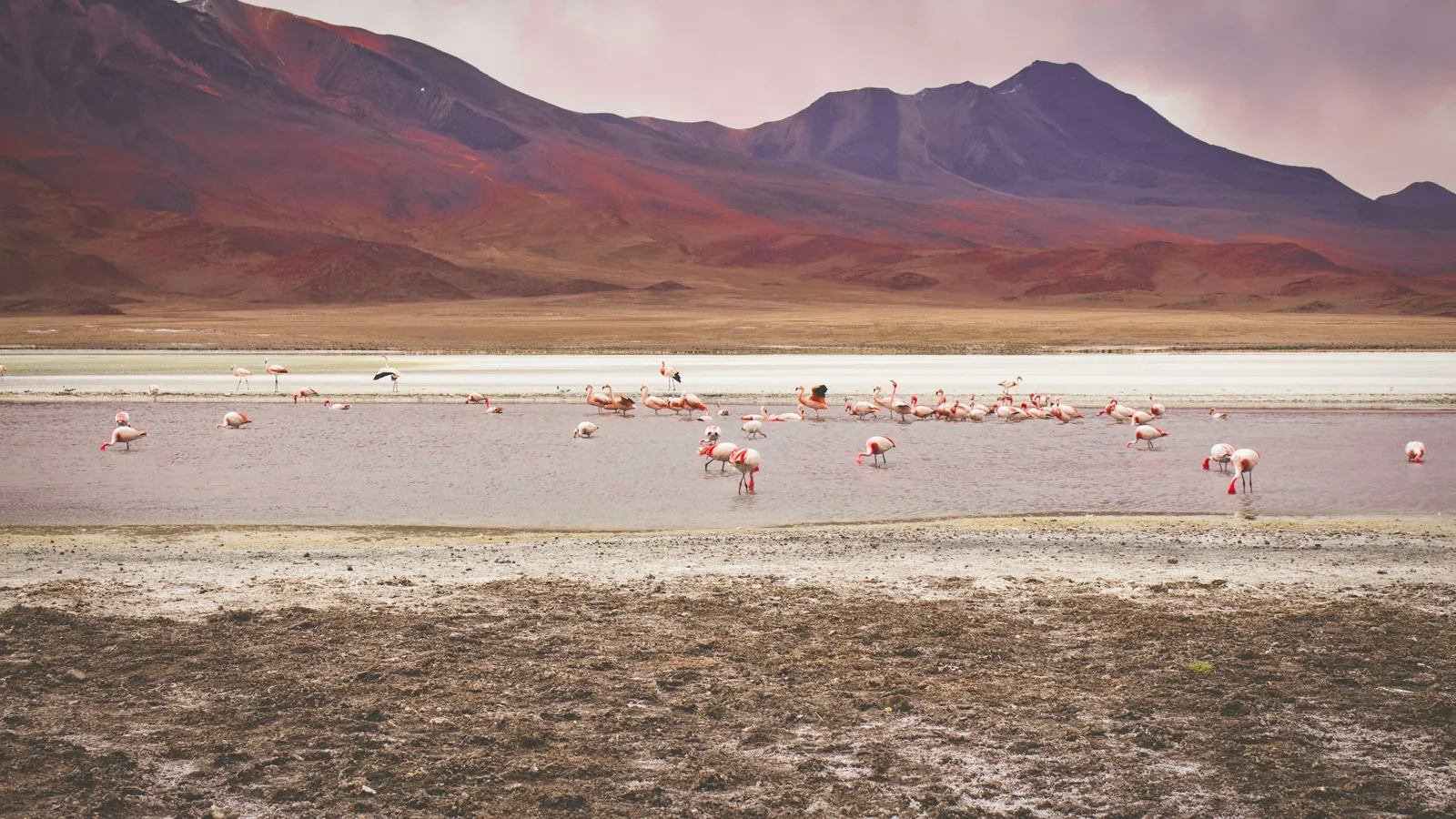
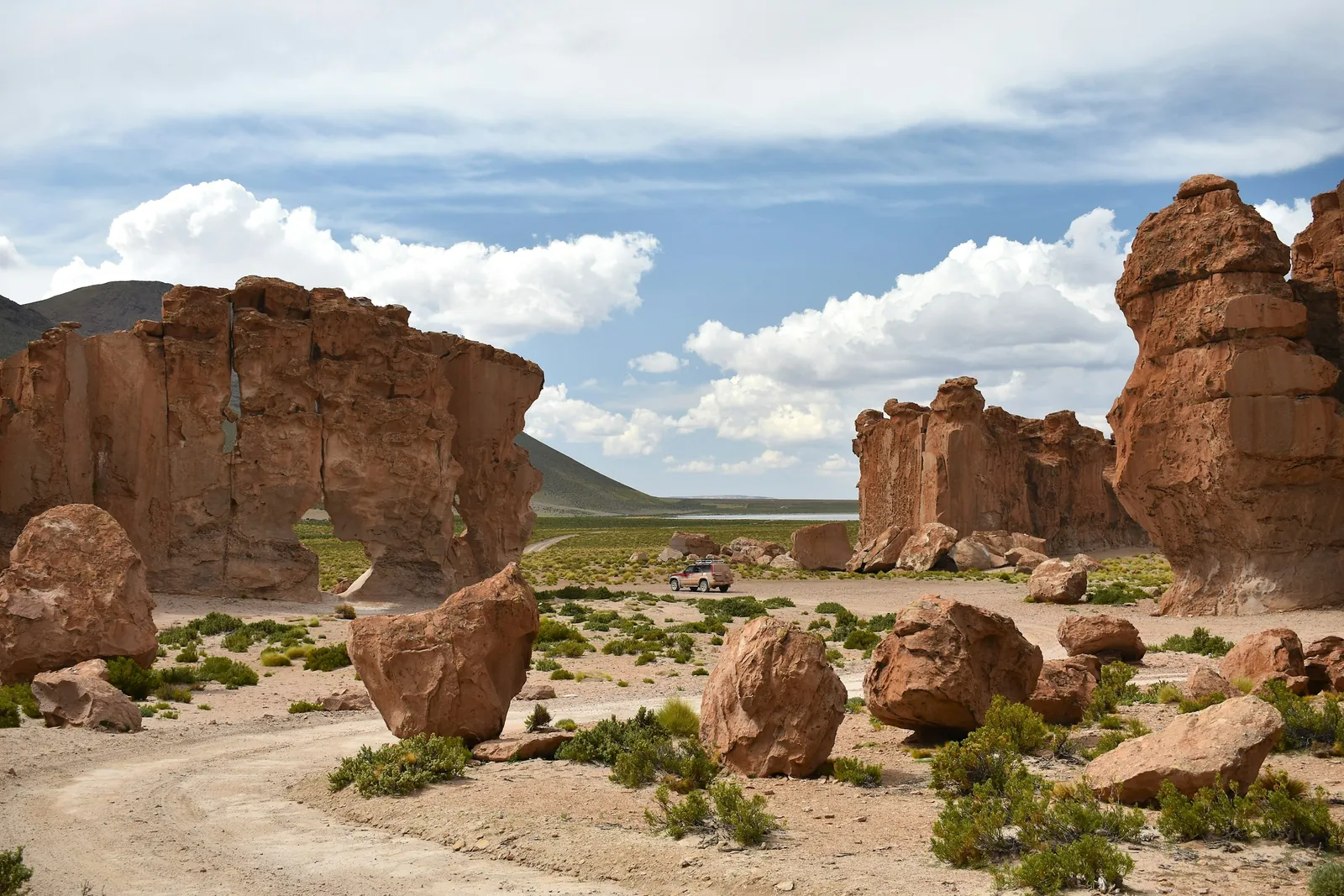
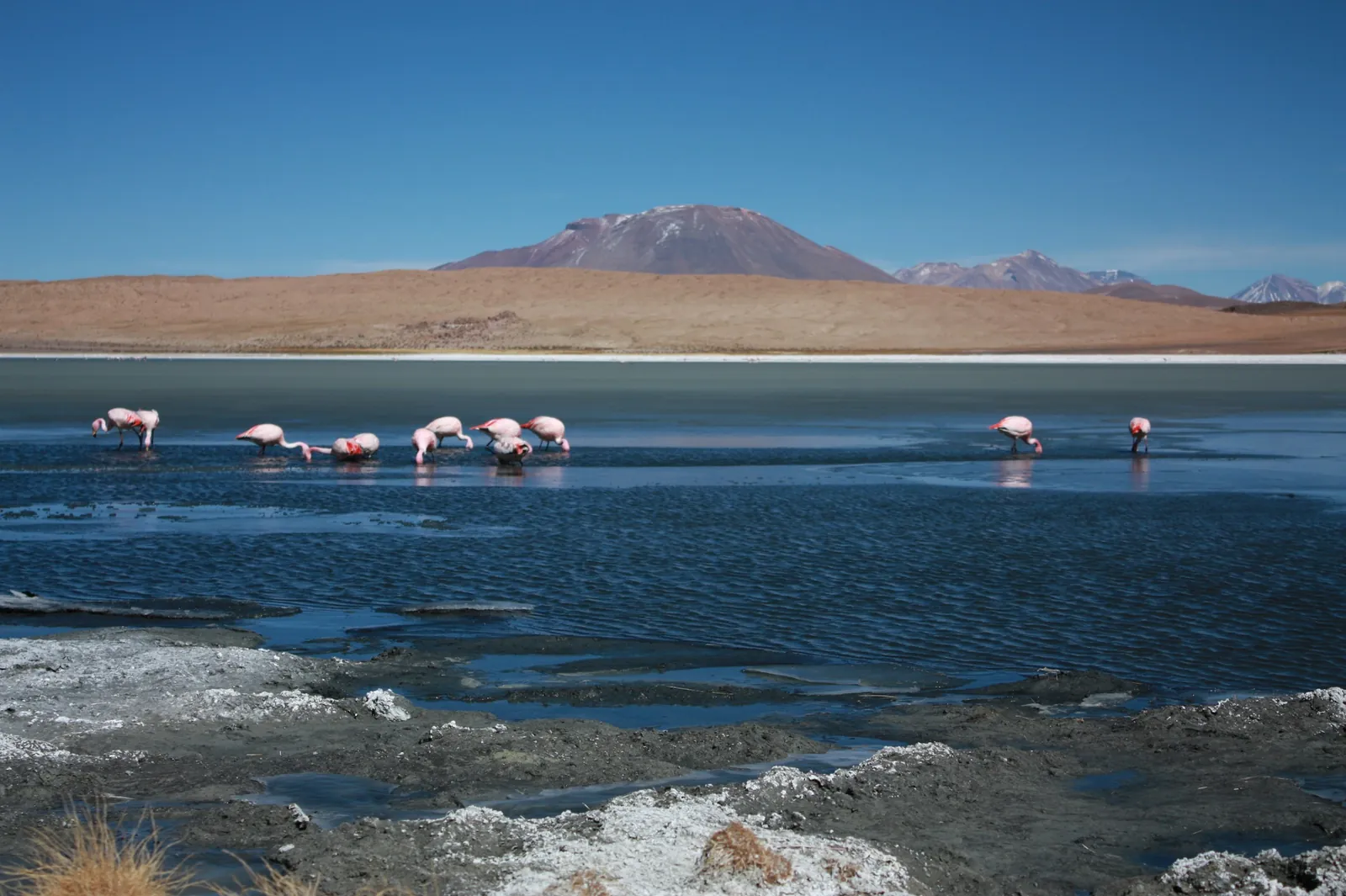
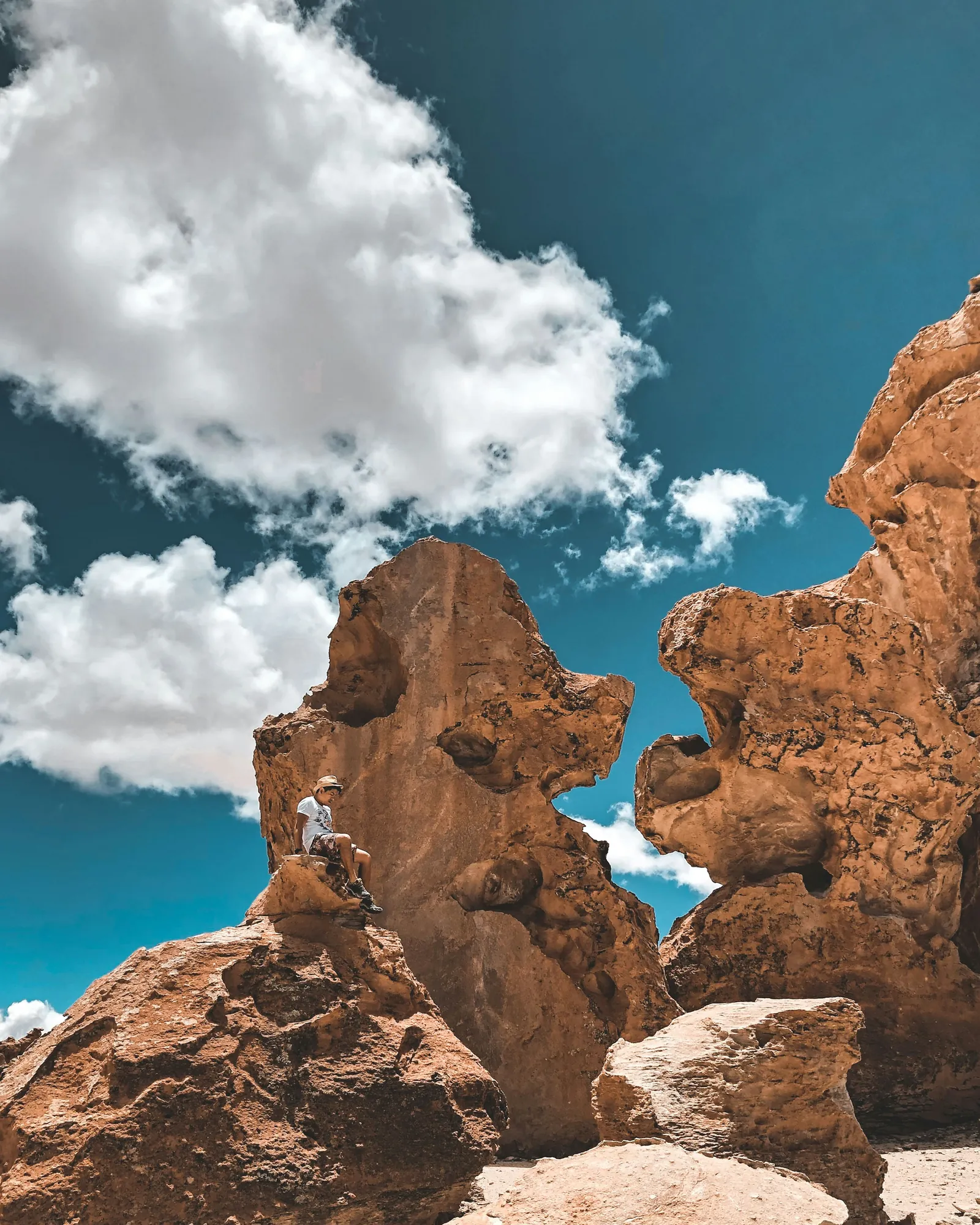
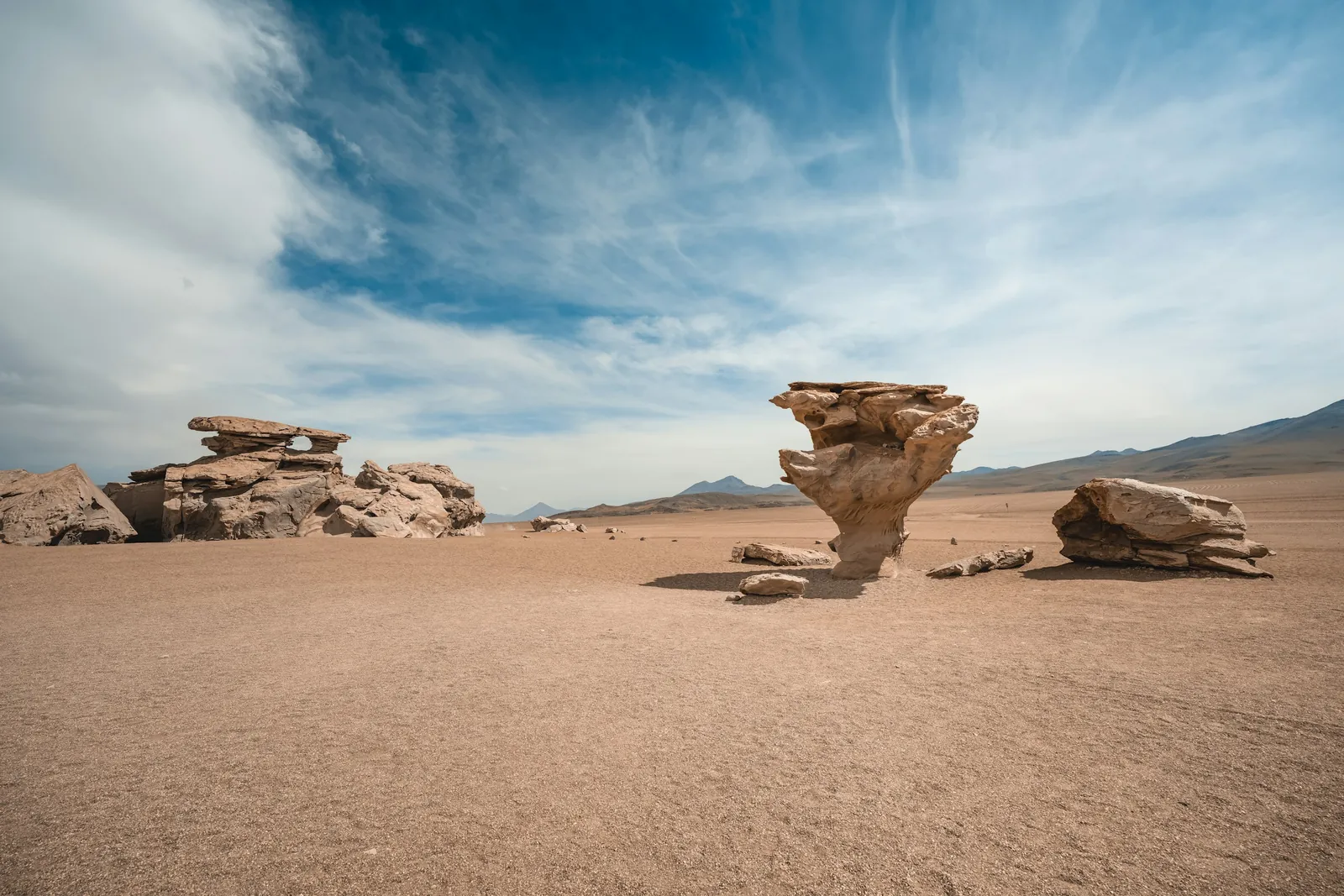
Wheels roll at about 06:30. You cross the Siloli Desert to the Stone Tree, a wind-carved rock at 4,600 m, then the Sol de Mañana geothermal field, with boiling mud pools. Laguna Colorada comes next. Its red tones come from a microscopic alga, Dunaliella salina, and the colour tends to be stronger in winter.
After lunch the drive back to Uyuni takes around six hours, through the Valley of the Rocks and the town of San Cristóbal. You reach Uyuni at about 18:00. Plan nothing demanding for that evening.
How high do you sleep each night?
Altitude is the main thing that separates a good trip from a miserable one here, and it is mostly about where you sleep, not where you stand for photos.
- Before the tour, Uyuni area: the salt flat sits at about 3,656 m.
- Night 1, Hotel Cielo & Sal: back towards Uyuni, close to the level of the salt flat.
- Night 2, Ecolodge Los Flamencos: 4,500 m, a jump of roughly 850 m in one day.
- Day 3 high point: the Stone Tree at 4,600 m, and stretches of road around it.
- Night after the tour: Uyuni again, back near 3,656 m.
If you arrive in Uyuni straight from sea level, that second night is a big ask. Spending a few days at altitude first helps: La Paz, Cusco or Lake Titicaca are common ways to do it. Our guide to acclimatising in Cusco explains the logic. Talk to your doctor before you go, especially about any heart or lung condition or about medication for altitude.
How cold does it get?
Cold, especially at night and at dawn. Daytime sun on the salt can feel warm. After dark at 4,500 m the temperature drops fast, and during the dry winter months (roughly June to August) nights go well below freezing. The 06:30 start on day 3 is the coldest part of the trip for most people.
Do not count on heating. Some lodges have it for a few hours, some do not, and it is never something to build your comfort around. A warm sleeping layer and a hat for bed solve more than any promise from a lodge.
What is the lodging really like?
Plain. Both nights are in simple lodgings on a remote circuit, and the second one is high and far from any town. Expect a bed, shared spaces, limited hot water and limited electricity. Wifi may not exist or may not work.
We name the two lodgings in the itinerary because the standard on this route varies a lot and you should know where you sleep. That does not make them luxury hotels. If a private room, reliable heating and a proper shower matter to you, say so before booking: some upgrades are possible on parts of the route, others are not available at that altitude at any price.
What does the tour include, and what do you pay on the spot?
- Shared 4x4 transport, four passengers per vehicle
- English audio guide
- Two nights of lodging (Hotel Cielo & Sal and Ecolodge Los Flamencos)
- Two breakfasts, three picnic lunches and one dinner
It does not include flights or transfers to and from Uyuni, entrance fees, drinks and meals not listed, tips or travel insurance.
The Eduardo Avaroa reserve fee
The lagoons, the Stone Tree and Sol de Mañana sit inside the Eduardo Avaroa Andean Fauna National Reserve, managed by Bolivia's protected areas service, SERNAP. Visitors pay an entrance fee in cash at the park control. Our tour page lists it at 150 Bs (about 22 USD), and the Incahuasi Island fee at 30 Bs (about 5 USD).
As of November 2026 we could not find an official SERNAP tariff table online confirming the current amount, so treat those figures as a guide. Carry bolivianos in small notes, and enough for both fees, toilets at stops and anything you want to buy. Cash machines in Uyuni are not something to rely on at the last minute.
Can you finish the tour in Chile?
Many travellers ask about ending on the Chilean side, at San Pedro de Atacama, instead of driving six hours back to Uyuni. Some operators do run that variant, crossing at a border post south of Laguna Colorada.
Our published itinerary does not do this. It returns to Uyuni. A Chile ending would have to be arranged as a custom route, and it depends on transfer availability, border opening hours and the immigration requirements for your passport on the day, all of which change. If it matters to you, ask before booking and we will tell you whether it can be done for your dates. Check entry rules for Chile, including what food you may carry across, with official sources for your nationality.
What to pack for three days on the altiplano
- A warm down or synthetic jacket, plus fleece and thermal base layers
- Hat, gloves and a buff for the dawn starts
- A sleeping bag or liner if you feel the cold (ask whether the lodge provides extra blankets)
- Sunglasses with real UV protection, high-factor sunscreen and lip balm: the light on the salt is harsh
- Comfortable walking shoes; waterproof ones if there is any water on the salt
- Water bottle, snacks and any personal medication
- Head torch for the lodge at night
- Cash in bolivianos for fees
- Power bank: charging at the second lodge may be limited
- Wet wipes and toilet paper
Keep a small daypack inside the vehicle with your jacket and camera. Luggage often travels on the roof and is not easy to reach during the day.
Who this tour is not for
This is the uncomfortable part, and it is worth reading before you pay.
- People flying in directly from sea level with no days at altitude first.
- Anyone with heart or lung conditions who has not discussed sleeping at 4,500 m with a doctor.
- Travellers expecting hotel comfort every night. The second night is basic.
- People who get carsick or struggle with many hours on rough unpaved tracks.
- Families with babies or very young children, for whom altitude and cold are harder to manage.
- Anyone who needs a private vehicle and a live guide by default: our standard departure is shared, with an audio guide.
If one of those points rules out the standard version, a private route can change the pace, add an acclimatisation night or swap the order. Tell us what worries you through the contact page or on WhatsApp at +51 906 974 952, and we will answer with what is realistic. To fit Uyuni into a wider trip, see our Bolivia destination page.
Uyuni 3 day tour: frequently asked questions
Is the Uyuni 3 day tour worth it, or is one day enough?
A single day covers the salt flat. It does not reach the southern lagoons or Laguna Colorada, which are too far to do and return in one day. If you want the lagoons, you need the three days.
Is the tour private or shared?
Our standard departure is shared, four passengers per 4x4, with an English audio guide. It can be arranged as a private tour; the price is quoted for your dates.
What is the highest point of the tour?
In our itinerary, the highest named stop is the Stone Tree at 4,600 m, and the highest night is Ecolodge Los Flamencos at 4,500 m.
Can the itinerary change?
Yes. Weather and road conditions can change stops or times without notice, and in the wet months access to parts of the salt flat can be suspended for safety.
When is the best time to go?
It depends on what you want to see. Our guide to the best time to visit compares the seasons across Bolivia and the region.
Keep reading
Photography: Matheus Oliveira / UnsplashMauro Lima / UnsplashElizabeth Gottwald / UnsplashChrysanthi Ha / UnsplashP. Hughes / Wikimedia Commons, CC BY 4.0Mark Kuiper / UnsplashGus Lepe / UnsplashJeison Higuita / Unsplashsuansita k / UnsplashFabien Moliné / UnsplashMatheus Oliveira / UnsplashJulie Ricard / UnsplashEduardo Collazos / UnsplashWILLIAN REIS / UnsplashMauro Lima / UnsplashWILLIAN REIS / Unsplash